

 English
 Español

You notice a thin line of sawdust along the bottom of a wooden door frame. You tap the jamb, and a chunk of it sinks inward. Termites have spent months feeding on the cellulose inside the wood, and by the time the damage is visible, the structure is already compromised. This is exactly the failure scenario that pushes homeowners, contractors, and building managers to ask whether WPC doors are genuinely termite resistant.
The short answer is yes: WPC doors are termite resistant. The more useful answer is that wood-plastic composite doors are engineered so that termites cannot access, digest, or tunnel through the material the way they do through solid wood. However, the actual level of resistance depends on the wood-to-plastic ratio, the core structure, and the manufacturing quality of the door you choose.
What makes WPC doors termite resistant
WPC door material is a blend of wood flour or bamboo fiber, thermoplastic resin (typically PVC or HDPE), and processing additives such as calcium carbonate, stabilizers, and colorants. The compound is heated, mixed, and extruded under pressure into door skins, stiles, and rails. The finished structure is dense, and the wood particles are completely encapsulated inside a continuous polymer matrix.
Key fact: Typical WPC formulations range from roughly 40:60 to 70:30 wood-to-plastic by weight. Doors with 50 percent or more polymer content are significantly harder for termites to penetrate than wood-heavy blends.
Termites survive by eating cellulose, the structural carbohydrate in wood. In a WPC door, wood particles are present, but every particle is coated in plastic. A termite cannot easily reach the wood, and even if it bites through the surface layer, the polymer matrix is indigestible. The extrusion process also removes the continuous cellulose pathways that termite colonies rely on to establish feeding tunnels. Combined with the moisture resistance of the thermoplastic, the door never becomes the damp, edible, tunnel-friendly environment that natural timber offers.
This is the same material logic used across the wider WPC product family. Bamboo wood fiber WPC wall cladding, interior composite planks, and even outdoor decking depend on the same principle: encapsulate the wood and you remove the food chain.
 Indoor WPC Wall Panel with Wood-Bamboo Fiber for Gym and Home InteriorsThis cladding panel combines PVC resin with wood or bamboo fiber, offering water resistance, soundproofing, and B1 fire retardance. It suits gym and interior decoration where durable, low-maintenance surfaces are valued, and its low water absorption helps resist moisture-related issues.View Product →
How WPC doors compare with wood, PVC, and metal doors
Five factors matter most in a termite-prone climate. The table below compares the main door material categories across those factors.
| Material | Termite resistance | Moisture resistance | Strength and stiffness | Maintenance |
|---|---|---|---|---|
| Solid wood | Poor – termites attack cellulose directly | Poor – swells and rots | Good | High – sealing and repainting needed |
| Engineered wood | Moderate – veneer edges are vulnerable | Moderate | Good | Moderate |
| Hollow PVC | High – no cellulose present | High | Low – flexes under heavy doors | Low |
| Solid WPC | High – wood is encapsulated in plastic | High | Good – similar to dense fiberboard | Low |
| Metal or steel | High – termites cannot eat it | High | Good | Low, but dents are visible |
Solid wood doors are quiet and rich in appearance, but they are also a direct food source for termites. Engineered wood doors improve dimensional stability, yet their exposed edges still contain wood layers that termites attack. Hollow PVC doors remove cellulose altogether, but thin-wall profiles lack the rigidity required for heavy door slabs. Solid WPC sits in the practical middle: it contains wood for stiffness and screw-holding strength while locking those wood particles inside a polymer matrix that termites have very little reason and very little ability to attack.
Where termite-resistant doors matter most
Termite pressure is not uniform across a building. Five locations within a typical project demand the highest level of protection:
- Ground-floor rooms. Soil contact means termite colonies are closest to door thresholds and frames.
- Bathrooms and kitchens. Steam and splashing raise moisture levels, and moisture-softened wood is far more vulnerable to termite attack.
- Coastal and tropical regions. Year-round humidity keeps termite activity at peak levels throughout the year.
- Unattended storage and utility rooms. Damage can progress for months before anyone opens the door and notices.
- Doors with direct outdoor exposure. Rain splash, condensation, and organic debris accumulate at the base of the door and attract termite scouts.
For exterior and semi-exterior applications, the same anti-termite logic applies across the building envelope. Outdoor WPC fences are manufactured with the same encapsulated-wood formulation, so termites cannot use the garden perimeter as an entry point to the structure.
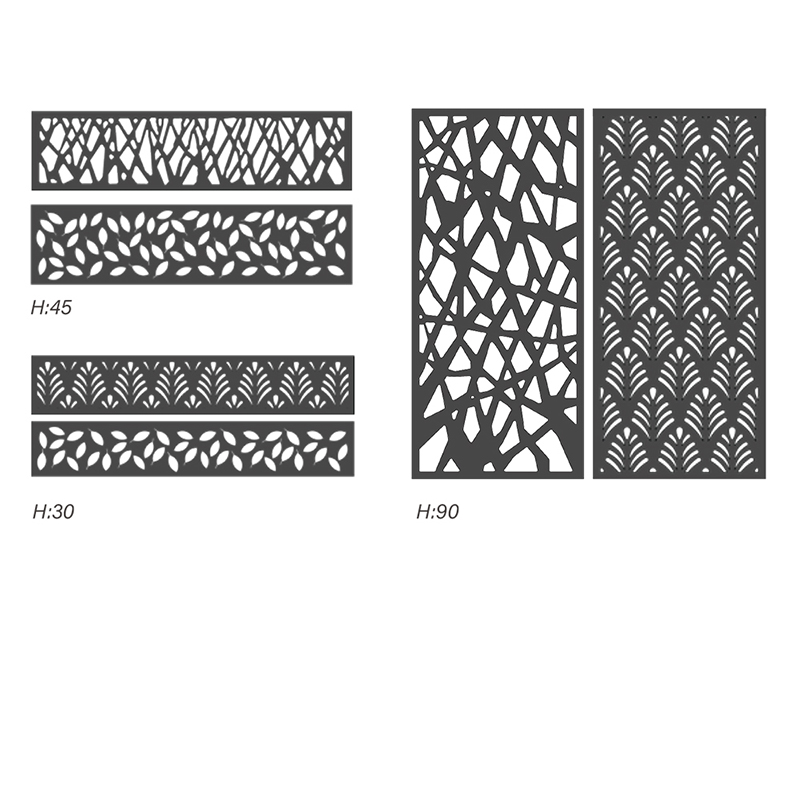 WPC Privacy Fence Panel for Gardens and Courtyards with UV ProtectionDesigned for exterior privacy, this fence uses encapsulated wood fiber in PVC with anti-ultraviolet additives. Its waterproof, insect-proof composition supports the article's point about blocking termite entry from garden perimeters, making it a practical boundary solution.View Product →
The moisture-and-termite problem is not limited to interior door leaves. Exterior wall cladding, bathroom facades, and outdoor partition panels made from water-resistant WPC profiles use the same material strategy: no continuous cellulose, no termite food chain, and no damp shadow where a colony can establish itself. The documented lifespan of indoor WPC wall panels in residential settings shows that polymer content, core density, and edge sealing are exactly the factors that determine whether a composite product serves for 15 years or 30.
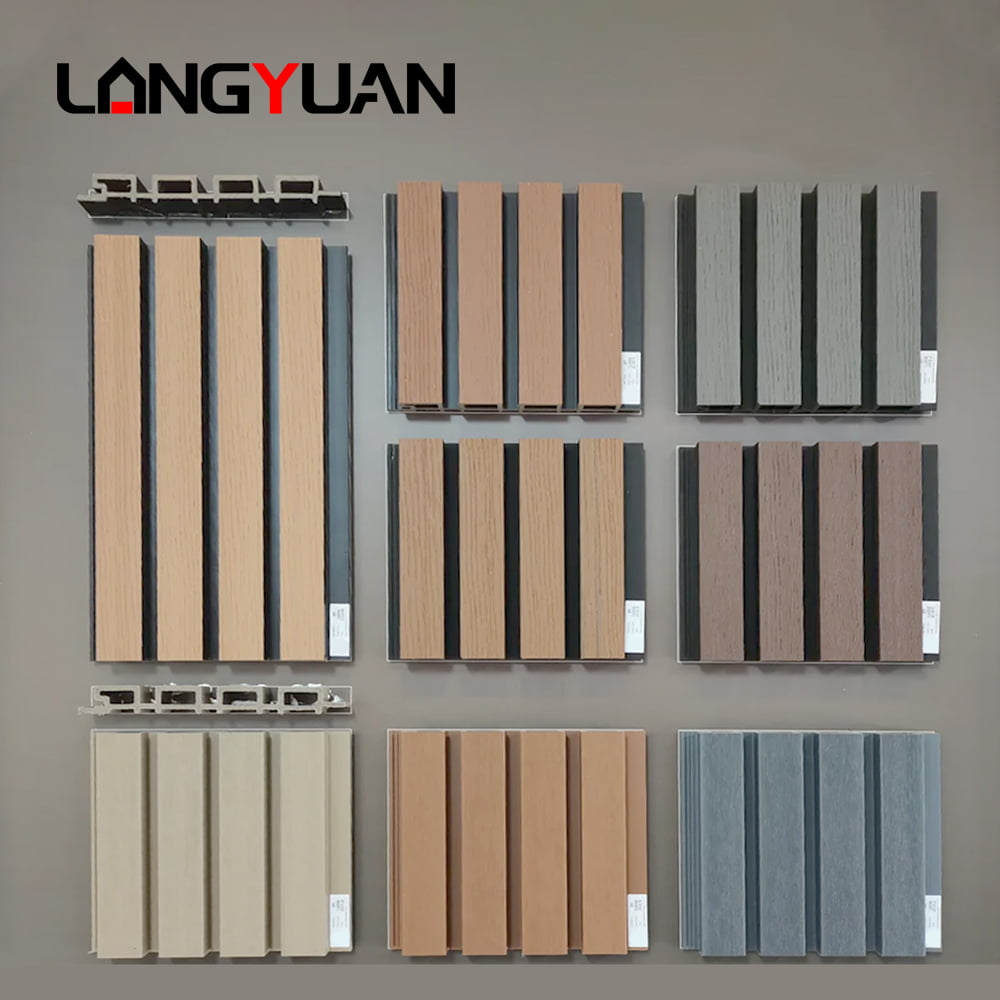 Water-Resistant WPC Fluted Wall Panel with Brushed Surface for FacadesThis exterior slat panel features co-extruded recycled wood fiber and plastic, giving a natural texture with waterproof, insect-proof, and mildew-resistant properties. Its fluted design and brushed finish suit outdoor and bathroom facades, while B1 fire rating adds safety for building envelopes.View Product →
Quality factors that separate a real termite-resistant WPC door from a cheap one
Not every door sold as "WPC" resists termites equally. Five variables separate a door that stays intact for decades from one that fails after a few seasons:
- Wood-to-plastic ratio. A formulation with 70 percent wood flour and only 30 percent plastic is closer to wood than to a composite. Termites can tunnel through the exposed edges of a wood-heavy board. A formulation with at least 40–60 percent polymer keeps the wood firmly locked inside the plastic matrix.
- Solid core versus hollow core. A solid extruded core has no internal air channels for termites to travel through. Hollow doors are lighter and cheaper, but any internal cavity becomes a potential route once the surface skin is breached.
- Surface skin integrity. A continuous, high-density outer skin stops termites from entering through the face of the door. Poor lamination, bubbles, or exposed raw edges are invitation points.
- Resin quality. Virgin PVC or HDPE performs better than heavily recycled material, which may contain impurities, degraded polymer chains, or inconsistent flow characteristics during extrusion.
- Edge and cutout sealing. Hinge recesses, lock mortises, and cut edges expose the internal material. Factory-applied edge sealing or PVC edge banding closes these openings so the core is never directly reachable.
One practical way to evaluate a WPC supplier is to look at the rest of their composite product line. A manufacturer who applies the same density and edge-sealing discipline to outdoor WPC wall panels, fences, and wall cladding is more likely to produce a consistent door extrusion than one who simply buys finished door skins from a third party. The material knowledge transfers directly from one product to the next.
Water-Resistant WPC Fluted Wall Panel with Brushed Surface for FacadesThis exterior slat panel features co-extruded recycled wood fiber and plastic, giving a natural texture with waterproof, insect-proof, and mildew-resistant properties. Its fluted design and brushed finish suit outdoor and bathroom facades, while B1 fire rating adds safety for building envelopes.View Product →
Solid core Sealed edges High polymer ratio — these three details matter more than any brand name. Ask the supplier for the density specification, the wood-to-plastic ratio, and a cross-section photo or sample before ordering.
Treat "100 percent termite proof" claims as marketing language. Real termite resistance is an engineering outcome, not a guarantee that comes automatically with the material name.
Do not forget the door frame
A termite-resistant door leaf leaves the building exposed if it hangs inside a solid wood frame. This is one of the most common installation mistakes in residential and commercial projects. The door panel may be composite, but termites enter through the wood frame, expand the cavity behind it, and can eventually reach the surrounding wall structure.
Pair the WPC door with a WPC or polymer door frame. If a wooden frame is required by design, apply an approved termite treatment to the frame and keep the gap between frame and wall free of organic debris. The door is one component; the entire opening is the enclosure.
Buying checklist for a termite-resistant WPC door
- Request the wood-to-plastic ratio in writing. A higher polymer share is better for termite resistance, but confirm that stiffness is still adequate for the door size.
- Confirm the core structure. A solid core resists termites and moisture better than a hollow core.
- Check hinge screw retention. A dense core holds screws firmly; a low-density core strips out after repeated use.
- Ask about edge banding and factory sealing on all cutouts, mortises, and machined recesses.
- Verify the frame material and installation method before approving the opening design.
Frequently asked questions
Q1: Can termites eat through a solid WPC door?
In normal conditions, no. Termites cannot digest the polymer matrix, and the encapsulated wood particles are too small and too scattered to support a colony. Termite damage to a WPC door is almost always limited to surface scratching or edge attack where the core was exposed during cutting or routing.
Q2: Is a "100 percent termite proof" claim realistic?
No material is 100 percent termite proof in every possible condition. WPC doors are engineered to be termite resistant, not termite immune. A correctly manufactured solid WPC door with sealed edges will be ignored by termites in the same way they ignore metal doors. But poor installation, exposed cut edges, or a wooden frame can change the outcome.
Q3: Do WPC doors need chemical termite treatment?
No. Unlike timber doors, WPC doors do not require periodic borate sprays, soil drenching, or chemical injection along the frame. The resistance is built into the material, which is one of the main reasons building owners choose WPC in termite-prone regions.
Q4: How long will a WPC door last in a humid climate?
Manufacturers typically rate solid WPC doors with a UV-stabilized surface for 15 to 30 years of residential service, depending on exposure. In interior locations with sealed edges, the material does not absorb enough moisture to warp, swell, or delaminate. The main variables are the surface skin quality, the edge sealing, and the hardware attached to the door.