

 English
 Español
Picture this: you are comparing wall materials for a bathroom renovation, and the supplier holds up a sheet printed with a deep marble pattern. The surface looks like polished stone, but the price tag does not. Before committing, you need a straight answer to a practical question: are PVC marble sheets waterproof?
Yes, PVC marble sheets are waterproof. The PVC core is a non-porous plastic that does not absorb water, and a well-made sheet with a printed marble layer and UV coating stays stable in high-humidity rooms. The longer answer, however, is that a panel is only part of the wall. Seams, cut edges, adhesive and the condition of the substrate all decide how dry that wall remains for years.
Waterproof Mold-resistant Lightweight
What Makes a PVC Marble Sheet Waterproof?
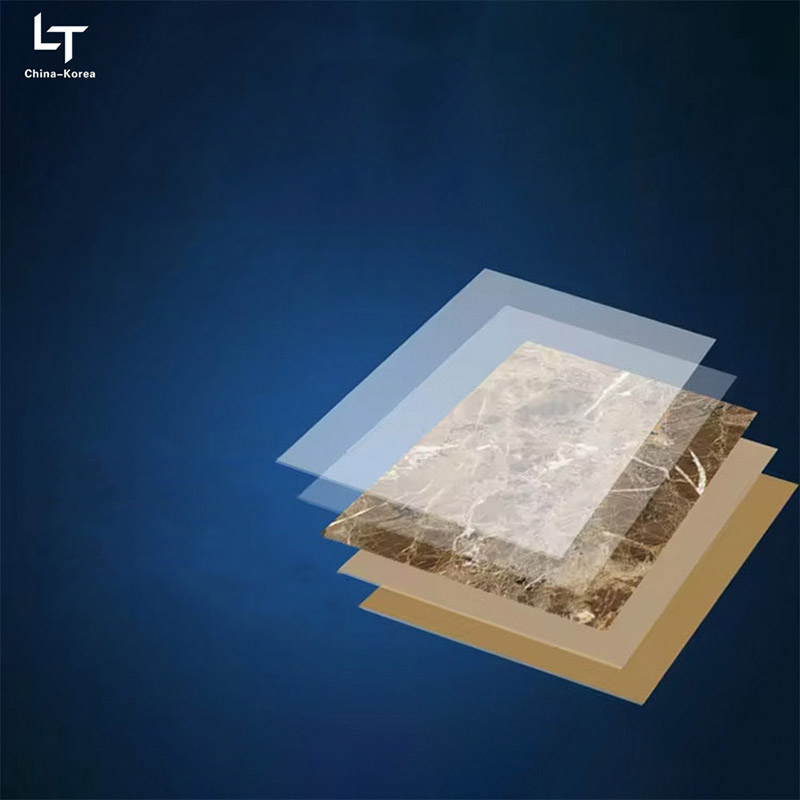
A PVC marble sheet is three layers bonded into one board: a rigid PVC core, a printed film that carries the marble pattern, and a transparent UV-resistant coating that protects the surface. The core is the part that does the waterproofing. Unlike MDF, plywood or gypsum board, the PVC core contains no wood fiber and no cellulose, so there is nothing inside it that can soak up moisture. Water beads on the surface and simply evaporates or gets wiped away.
For details on the layer structure and the raw materials, see what a PVC UV marble sheet is made of.
Compare that with real marble, which is porous and slowly absorbs moisture, leading to stains, mold growth or salt marks in damp rooms. A PVC marble sheet gives a close visual match to stone while removing that weakness. It is also much lighter, which means simpler fixing and less load on existing walls.
Where You Can Use Them in Wet Areas
The most common wet-area application is bathroom wall cladding. PVC marble sheets work well on walls around a bathtub, behind a vanity, and around toilets. In kitchens, they make a very practical backsplash behind the stove and sink: fewer joints than tile, and the surface wipes clean with a damp cloth. Laundry rooms, locker rooms and commercial washrooms are also frequent use cases.
For enclosed shower areas, pay extra attention to corner joints and the bottom edge. Water running down the wall will find any opening, so panels need to be sealed at the seams and finished with trim profiles. If the wall receives direct, frequent spray, a denser SPC board is a safer option than a standard PVC foam board, and the differences matter more than the material name suggests. If you are comparing the two, this guide to choosing between PVC and SPC wall panels for a waterproof bathroom upgrade explains the practical trade-offs.
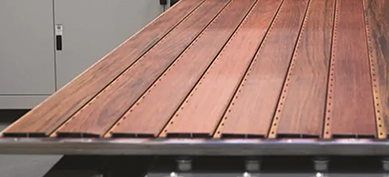
For floor-to-ceiling bathroom walls where impact resistance matters, a dedicated SPC bathroom wall board with a UV coating is worth checking:
 SPC Bathroom Wall Board with UV Coating: Waterproof and Fire-RetardantFor full-height bathroom walls needing impact resistance, this SPC panel combines low water absorption, B1 flame retardancy, and a UV coating for durability in moist environments.View Product →
The Parts That Fail First: Seams and Edges
Inside a complete wall, the panel itself is rarely the failure point; the joints fail. A single PVC marble sheet is waterproof, but a wall made of several sheets is only as waterproof as the gaps between them. If water enters a seam and travels behind the panels, it can weaken the adhesive or damage a gypsum substrate, even though the PVC sheet remains intact.
The same rule applies to cut edges. During installation, panels are cut to fit, and the exposed edge may reveal the inner foam structure. These bare edges should be sealed with a matching profile, edge banding or silicone before fixing, so moisture cannot climb into the board through the cut. Use a moisture-resistant adhesive and avoid leaving open joints at floor level, where mop water and cleaning solution tend to collect.
PVC Marble Sheet vs. Ceramic Tile vs. Real Marble
To see where a PVC marble sheet fits in a wet-area project, compare it with the two classic wall materials on the criteria that cause the most renovation headaches.
| Factor | PVC Marble Sheet | Ceramic Tile | Real Marble |
|---|---|---|---|
| Water absorption | Near zero on the core | Very low on glazed surface | Low but porous; needs sealing |
| Weight | Light | Heavy; needs solid backing | Very heavy; needs structural backing |
| Installation speed | Fast; few joints | Slow; grout and spacers | Slow; skilled craft labor |
| Joint care | Silicone at seams | Grout lines need regular cleaning | Sealant must be renewed |
| Surface cleaning | Damp cloth, mild soap | Wipes clean, grout does not | pH-neutral cleaner only |
| Heat tolerance | Moderate; keep hot objects away | Excellent | Excellent |
The table explains the main trade-off: ceramics and stone handle heat better, while PVC marble sheets win on weight, speed and joint reduction. For a typical bathroom wall, those advantages often matter more than the heat difference.
How to Choose a Sheet That Stays Dry
First, look at the core. Free-foam PVC board is light and economical, but a dense core is stiffer and more dimensionally stable in humid rooms, especially on tall walls. Thickness also matters: a 3 mm sheet is enough for a decorative wall in a bedroom, while a 5 mm or 8 mm board is a safer choice for shower enclosures and areas with strong temperature changes.
Second, check the surface finish. A UV-coated print resists staining, yellowing and light scratches, and it is the coating that makes the marble pattern so easy to clean. Third, look at production quality: consistent thickness, square edges, and clean print registration are signs of a reliable factory line.
One factory configuration that works well for full-height walls is a 1220 x 2800 mm UV-coated PVC marble sheet, which covers a standard wall height with fewer horizontal joints:
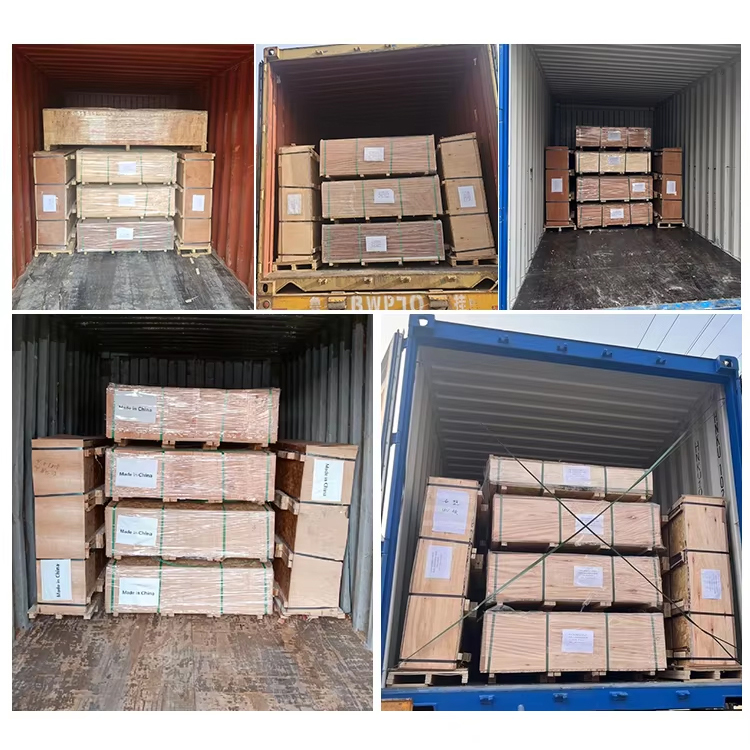 1220x2800mm UV-Coated PVC Marble Sheet for Full-Height WallsThis 2800mm-tall PVC sheet minimizes horizontal seams on full-height walls, with a UV coating providing wear and weather resistance. Its lightweight build suits quick residential and office fit-outs.View Product →
Where a lighter board is preferred for a quick fit-out, a 3 mm high-gloss UV board remains the most common budget-friendly option for house and office walls:
 3mm High-Gloss PVC UV Board for Interior WallsThis 3mm PVC UV board offers a high-gloss finish with waterproof properties, making it a cost-effective choice for quick interior wall coverings. Its light weight simplifies handling during house or office renovations.View Product →
- Confirm the core is virgin PVC, not heavily recycled material that may become brittle in damp conditions.
- Ask for indoor emission certification if the sheets will be used in living spaces.
- For commercial projects, check the fire rating and the UV coating thickness.
Installation and Maintenance Without Guesswork
Waterproofing a wall is a system, not a single material. These steps make the difference between a wall that stays dry for a decade and one that fails quietly behind the panels:
- Clean and level the substrate. Dust or moisture on the wall will weaken adhesion.
- Apply adhesive evenly with a notched trowel instead of random blobs.
- Leave a small expansion gap at the ceiling and floor, then cover it with trim.
- Seal every joint and external corner with neutral silicone.
- Wipe the surface with a soft cloth and a mild detergent. Avoid abrasive pads and strong solvents.
None of these steps is difficult, but skipping any of them invites the one problem the panel itself does not have: moisture finding its way behind the surface.
Frequently Asked Questions
Q1: Do PVC marble sheets warp in a humid bathroom?
No. The PVC core does not absorb water, so the sheet does not swell or warp the way wood-based panels do. Warping is almost always the result of a poorly prepared substrate or panels fixed too tightly with no room for thermal movement.
Q2: Can PVC marble sheets be installed inside a shower?
Yes, on the walls of a shower enclosure, provided the seams and cut edges are sealed and the boards are fixed to a sound, waterproofed substrate. They are not designed for the shower floor or for areas that stay permanently submerged.
Q3: How long do PVC marble sheets last in wet areas?
With correct installation, a well-maintained PVC marble wall can last well over a decade. The surface coating ages first, which is why a UV-cured finish is worth paying for.
So, are PVC marble sheets waterproof? For a bathroom wall, kitchen backsplash or any normal wet-area surface, the answer is yes. The board resists water by nature, will not swell or rot, and keeps the marble look without the maintenance burden of natural stone. What keeps a PVC marble wall truly dry is the installation: sealed edges, clean joints, and a dry substrate.