

 English
 Español

Choosing between tongue-and-groove panels and slat wood panels is not just a style decision. It affects installation time, maintenance routines, room acoustics, and the final look of a space. For a wholesaler, contractor, or hotel project manager, the wrong choice can mean rework, wasted material, and a surface that underperforms after a year. This guide compares both panel styles with concrete standards, tolerances, and practical scenarios so you can specify the right product with confidence.
What Exactly Are Tongue-and-Groove Panels?
Tongue-and-groove panels are boards that interlock mechanically along their edges. One edge carries a protruding tongue, while the opposite edge has a recessed groove. When two boards meet, the tongue slides into the groove, creating a tight, nearly invisible joint. This construction is common in wood shiplap, MDF wall paneling, and extruded PVC or WPC integrated wall boards.
With PVC or WPC, the tongue-and-groove joint is extruded as part of the board profile, so the connection remains consistent board after board. The bamboo wood fiber integrated wall panel from Longtime uses this interlocking principle. For walls and ceilings, it eliminates the need for visible joinery strips, producing a continuous surface without extra trim lines.
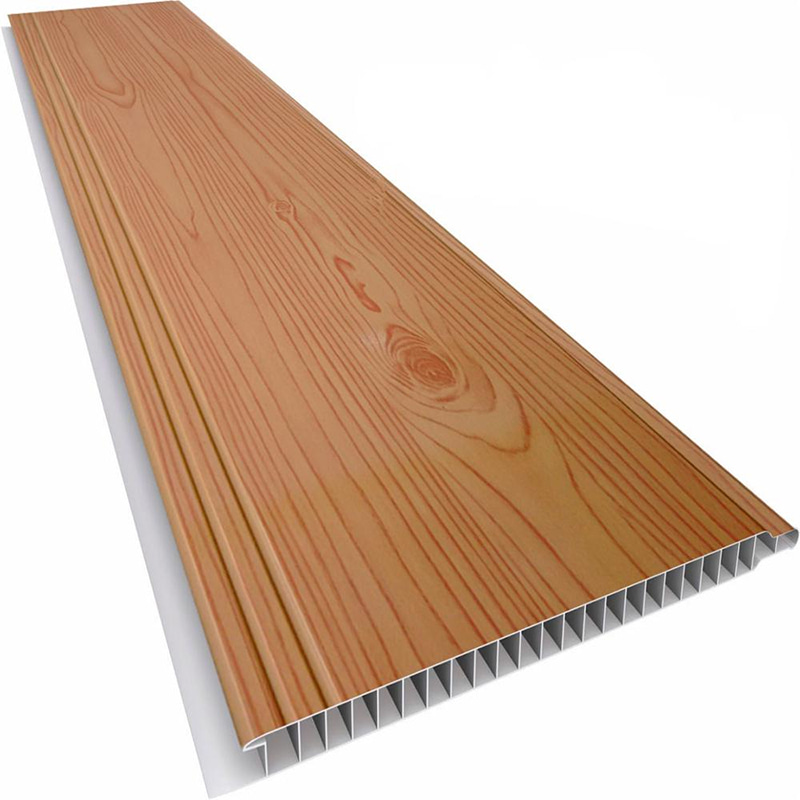 Bamboo Wood Fiber Integrated Wall Panel with Interlocking JointsThis integrated wall panel combines bamboo and wood fibers with polymer resin, offering a seamless surface without visible trim. Its tongue-and-groove design ensures quick, consistent installation for walls and ceilings, while its moisture-resistant and fire-retardant properties add durability.View Product →
What Exactly Are Slat Wood Panels?
Slat wood panels are built from evenly spaced vertical wood strips mounted on a backing layer. The gaps between the slats create rhythm and depth, and in many designs the backing layer is made from acoustic felt that absorbs sound. The result is a wall that appears sculptural while also improving room acoustics.
In wood-tone or PVC/WPC versions, the slats are usually 20mm to 60mm wide, with spacing gaps of 10mm to 30mm. The WPC acoustic slat wall panels from Longtime feature an interlocking design with polyester felt backing, which reduces echo in commercial lobbies, home cinemas, and hotel corridors.
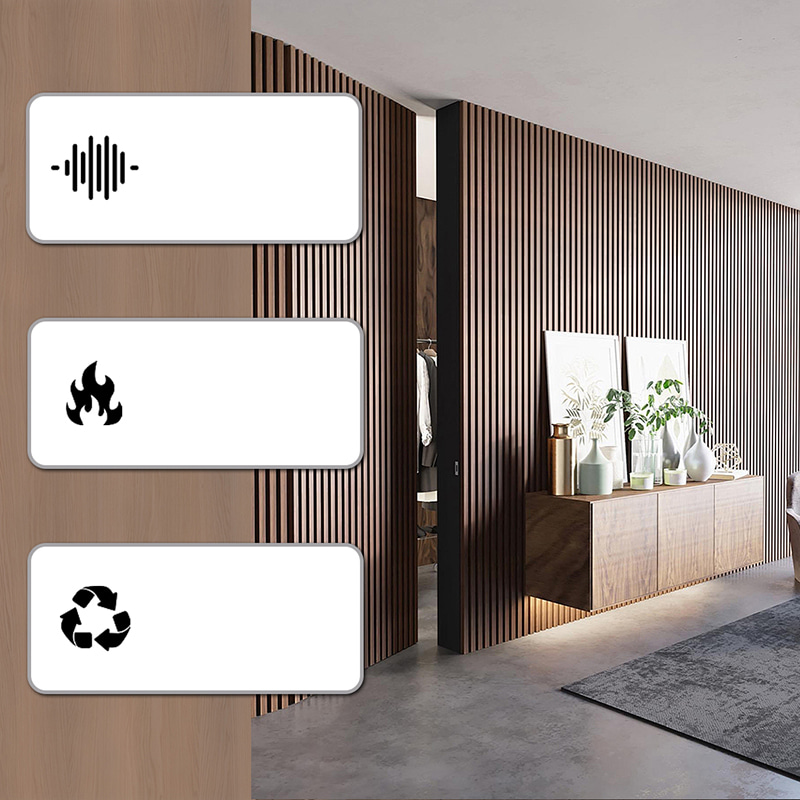 WPC Acoustic Slat Wall Panel with Polyester Felt BackingThese WPC slat panels feature an interlocking design with polyester felt backing, effectively reducing echo in lobbies, home theaters, and hotel corridors. Available in various wood tones, they combine acoustic performance with waterproof and termite-resistant properties.View Product →
Tongue-and-Groove vs Slat: Key Differences at a Glance
| Feature | Tongue-and-Groove | Slat Wood Panels |
|---|---|---|
| Surface profile | Flat, seamless, continuous | Vertical strips with visible gaps |
| Installation method | Interlocking edge joints | Screws or adhesive on backing |
| Repaintable | Yes, if raw wood or MDF | Usually pre-finished, not repaintable |
| Acoustic effect | Minimal sound absorption | Moderate to high absorption with felt |
| Moisture resistance | Depends on core material | Depends on backing and core |
| Primary use | Living rooms, bedrooms, ceilings | Media walls, offices, restaurants |
Installation: What to Expect on Site
Tongue-and-groove panels are faster to install for large seamless surfaces because the boards interlock one after another. However, they require a consistent substrate level. If the wall has more than 2mm of deviation over a 2m straightedge, gaps appear at the joints. This is a genuine risk in older buildings with uneven plaster or concrete.
Slat wood panels are more forgiving on uneven walls because the felt backing hides most surface imperfections. But each panel must be aligned and fastened individually, which makes installation slower. For a 50 square metre feature wall, expect a slat panel installation to take roughly 30% to 50% more labour time than a tongue-and-groove board system of the same area.
For more on practical installation steps, refer to our guide on how to install PVC wall panels.
Durability and Maintenance in Real Conditions
Moisture and Humidity
Tongue-and-groove panels made from MDF or raw wood are vulnerable to edge swelling in humid environments. PVC and WPC versions resist moisture well and are the appropriate choice for bathrooms, kitchens, and coastal projects. Slat wood panels with paper-faced felt backing can absorb moisture and degrade over time, especially in outdoor or semi-outdoor installations.
Cleaning and Upkeep
Tongue-and-groove panels have a flat surface that can be wiped with a damp cloth. Slat wood panels need vacuuming for the grooves and a soft brush for the felt backing. In spaces with high dust or airborne grease, this difference becomes a measurable maintenance cost over a five-year period.
Acoustic Performance and Functional Roles
Slat walls with acoustic felt achieve Noise Reduction Coefficient values from 0.35 to 0.60, depending on the slat-to-gap ratio and backing depth. This makes them suitable for conference rooms, reception areas, and home entertainment spaces where echo control matters.
Tongue-and-groove panels offer no significant acoustic benefit on their own. If sound absorption is a requirement, you must add insulation behind the boards or choose a slat system instead. For projects that combine visual warmth and acoustic function, the indoor WPC fluted wall panels offer a middle path: a fluted profile that absorbs some sound while maintaining a wood-like appearance.
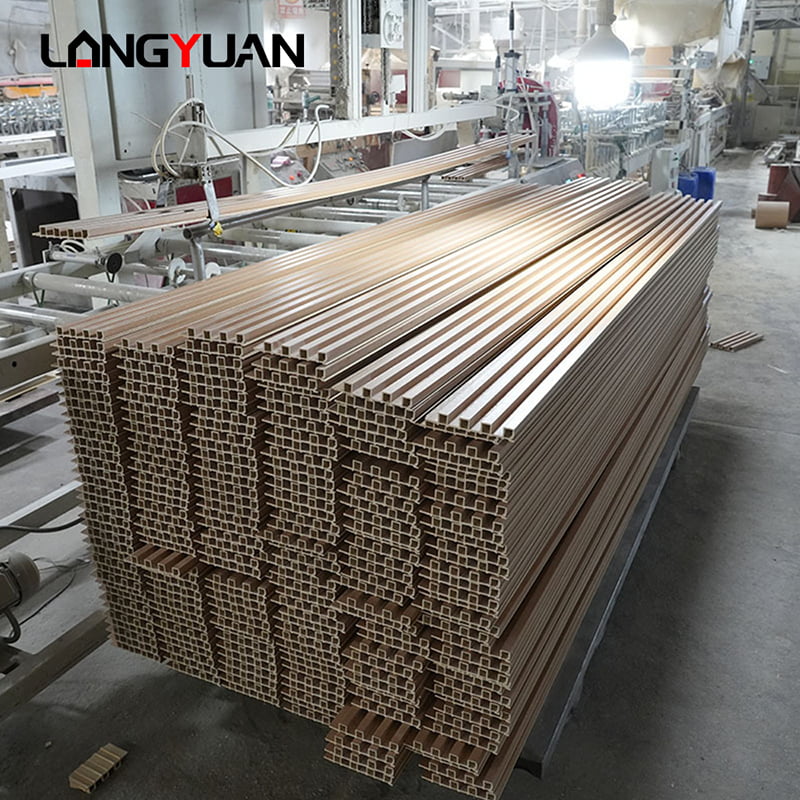 Indoor WPC Fluted Wall Panel for Decorative CladdingThese WPC fluted wall panels offer a fluted profile that absorbs some sound while maintaining a wood-like appearance. They are waterproof and fire-retardant, making them a durable choice for interior walls, with a variety of surface textures to suit modern designs.View Product →
Design Flexibility and Aesthetic Impact
Tongue-and-groove panels deliver a clean, classic look. Because the surface is flat and continuous, they work well in farmhouse-style living rooms, hotel guest rooms, and any space where a calm, understated background is required. If the product is paint-ready, it can be repainted multiple times to match changing interior themes.
Slat wood panels bring vertical lines and shadow play. They look striking on feature walls, behind televisions, and in lobbies. LED lighting placed in the gaps adds visual drama. The trade-off is that pre-finished slat panels cannot usually be repainted, so the color decision must be confirmed before installation.
For a deeper look at how different materials perform, read our analysis of wood veneer, WPC, and bamboo charcoal for TV media wall design.
Cost Variables for Project Budgeting
Material cost can differ significantly by region and manufacturer. Tongue-and-groove MDF boards in the UK range from 15 to 40 GBP per square metre, while slat acoustic panels typically fall between 40 and 120 GBP per square metre. These figures are indicative and depend on the core material, surface finish, and acoustic backing.
Installation labour adds another layer. Tongue-and-groove panels require substrate preparation and careful leveling, which can add 5 to 10 GBP per square metre. Slat panels need more precision in layout and alignment, often adding 10 to 18 GBP per square metre.
If a project requires acoustic treatment, the slat panel price may be offset by eliminating the cost of separate acoustic boards. This makes slat panels a cost-efficient choice in commercial spaces where sound management is already part of the budget.
How to Decide: A Buyer's Checklist
- Choose tongue-and-groove if the goal is a seamless, paintable surface and the wall substrate is level.
- Choose tongue-and-groove if the project involves wet areas and you can select a waterproof PVC or WPC core.
- Choose slat panels if the project needs acoustic control in a lobby, office, or home cinema.
- Choose slat panels if the design brief calls for a modern feature wall with vertical texture.
- Verify the slat-to-gap ratio for acoustic panels: a 40% gap to 60% slat ratio gives balanced absorption and visual density.
- Inspect the edge seal on tongue-and-groove boards, especially for humid environments.
FAQ
Q1: Can I paint slat wood panels?
Most pre-finished slat panels cannot be repainted because the wood veneer or PVC surface is coated with a UV finish. If repainting is a requirement, choose paint-ready tongue-and-groove boards or fluted panels with a paintable surface.
Q2: Which panel type is better for a living room?
Tongue-and-groove suits a relaxed, classic atmosphere and keeps the room feeling open. Slat panels create a focal wall with modern character and better sound control. The decision should follow the interior design direction rather than product availability alone.
Q3: Are slat panels worth the extra cost?
In commercial settings where acoustics matter, yes. For purely decorative applications, tongue-and-groove can achieve a comparable visual effect at lower material and labour cost.
Q4: Can tongue-and-groove panels be used in a bathroom?
Yes, when the core material is waterproof PVC or WPC rather than MDF. Check the product's water absorption rate and edge sealing before specifying.
Q5: What is the ideal slat gap for sound diffusion?
For acoustic panels, a gap of 10mm to 30mm between 30mm to 60mm slats tends to provide the best balance. The optimal ratio depends on panel thickness and background conditions.
Final Recommendation
For a classic, seamless look in dry or wet areas, tongue-and-groove PVC or WPC panels are a safe and economical choice. For a modern feature wall that also improves acoustics, slat wood panels justify the premium. Longtime produces both systems in PVC and WPC at its factories in China, Indonesia, and Vietnam, with consistent profiles and factory wholesale pricing for volume projects.