

 English
 Español

If you are pricing a feature wall, a hotel corridor, or a bathroom upgrade, the first quote you see is rarely the number that matters. A standard indoor WPC wall panel usually costs USD 12 to 28 per square meter for the board itself. Traditional wood paneling ranges from USD 15 to 35 per square meter for softwood, plywood, or veneered MDF, and USD 30 to 90 per square meter for solid hardwood. The installed cost tells a clearer story: with typical waste, fixing, finishing, and five-year maintenance included, WPC often lands 15 to 40% lower than wood paneling, especially in wet, outdoor, or high-traffic areas.
The exception is real wood installed by a confident DIYer in a dry, low-impact room. There, cheap pine or reclaimed boards can beat WPC on day-one cash. For most commercial and residential projects, however, the per-square-meter comparison favors WPC once you count labor, waste, and upkeep.
What the Per-Square-Meter Price Actually Includes
Conclusion: compare installed cost, not just material cost. The sticker price per square meter ignores three cost drivers: waste, labor, and finishing. Wood paneling usually needs more of all three.
| Cost item | WPC wall panel | Traditional wood paneling |
|---|---|---|
| Material per m² | USD 12 to 28 indoor; 18 to 40 outdoor | USD 15 to 35 softwood/veneer; 30 to 90 solid |
| Waste factor | 5 to 8% | 10 to 15% |
| Installation labor | USD 8 to 20/m² | USD 20 to 50/m² |
| Finishing | Usually factory-finished | Sanding, staining, sealing on site |
| Maintenance over 10 years | USD 0 to 2/m²/year | USD 2 to 6/m²/year |
| 10-year total, installed | USD 40 to 90/m² | USD 65 to 160/m² |
These figures are planning ranges, not quotes. Thickness, fire rating, surface finish, order volume, and freight can move the final number by 20% or more. A 5 mm WPC panel with a standard PVC film is not the same product as an 8 mm fire-rated board with UV coating.
Material Cost per Square Meter: Why WPC Is Usually Lower
WPC wall panels are extruded from a mix of PVC resin, calcium carbonate, wood flour, and additives, then finished with a decorative film. The raw materials are widely available and the extrusion process is highly automated, which keeps unit cost stable. Solid wood paneling depends on species, grade, drying, and transport. A clear oak board can cost three to five times more per square meter than a comparable WPC panel before it leaves the sawmill.
Thickness is the main lever. Indoor WPC panels are commonly 5 mm to 9 mm thick and sold in 1220 x 2440 mm or 1220 x 2800 mm sheets. Thicker boards, aluminum honeycomb cores, and acoustic felt backings add cost. For a straightforward wall covering, a 5 mm to 8 mm WPC panel gives the best cost-to-performance ratio.
 Indoor WPC Wall Panel for Cost-Effective Wall CoveringIndoor WPC wall panel in 1220×2440 mm sheets and 6–25 mm thickness, offering a cost-effective, snap-on wall covering that reduces labor versus traditional wood.View Product →
Installation and Labor: The Bigger Cost Swing
Labor is where the per-square-meter gap widens. WPC panels can be glued, clipped, or fixed with hidden fasteners over a flat substrate. A two-person crew can cover 30 to 50 m² per day on a simple wall. Traditional wood paneling often needs battens, shims, nails, and careful alignment. Solid wood then needs sanding, staining, and sealing on site, which adds drying time and callbacks.
In high-labor markets, installation can represent 40 to 60% of the installed cost. That is why a WPC panel priced slightly higher than pine boards may still produce a lower total quote. For rental units, hotel refurbishments, and retail fit-outs, faster installation also reduces downtime and lost revenue.
Maintenance and Lifespan: Where Wood Catches Up
Over ten years, maintenance changes the math. WPC panels are wiped clean with a damp cloth. Scratches are rare on quality UV-coated surfaces, and there is no repainting, staining, or sealing. Traditional wood paneling needs periodic refinishing, especially in kitchens, bathrooms, and commercial corridors where humidity and traffic fluctuate.
- WPC: wash with mild soap; no annual coating; occasional replacement of damaged panels.
- Wood: sand and seal every 2 to 3 years; repair water stains, dents, and insect damage.
- Wet areas: wood needs waterproof backing and edge sealing; WPC is naturally water-resistant.
A realistic 10-year maintenance budget is USD 0 to 2 per square meter per year for WPC and USD 2 to 6 per square meter per year for wood. In a 200 m² project, that difference alone can reach USD 4,000 to 8,000.
Outdoor and Wet Areas: The Cost Comparison Changes Fast
Outdoors, the comparison is not close. Untreated wood paneling can fail within three to five years in humid or coastal climates. Treated wood lasts longer but still needs annual inspection, staining, and repairs. Outdoor WPC wall panels use UV-stabilized formulas and co-extruded surfaces to resist moisture, termites, and fading. The upfront material cost is usually USD 18 to 40 per square meter, but the 10-year installed cost is often 30 to 50% lower than wood because there is no rot repair or repainting.
For bathroom feature walls, pool areas, and exterior facades, specify a panel with a UV coating and a fire rating that matches local code. A cheap indoor panel installed outdoors will yellow, warp, or chalk, which erases any initial saving.
 UV-Resistant Exterior WPC Slat Wall CladdingOutdoor WPC slat cladding with UV coating, B1 fire rating, and waterproof construction for facades, pool areas, and humid exteriors.View Product →
Acoustic and Feature Walls: WPC Slats vs Wood Slats
Acoustic slat walls are a common upgrade in offices, restaurants, and media rooms. A WPC acoustic panel with a felt backing typically costs USD 25 to 55 per square meter. A wood slat system with acoustic felt often costs USD 35 to 80 per square meter, and solid wood slats can exceed USD 100. WPC slats hold their shape in humid rooms, need no oiling, and can be cut with standard woodworking tools.
If the design calls for a stained oak look, a wood slat wall may justify the premium in a dry, high-end residential setting. For repeatable commercial installations, WPC acoustic panels usually deliver the lower total cost and faster installation.
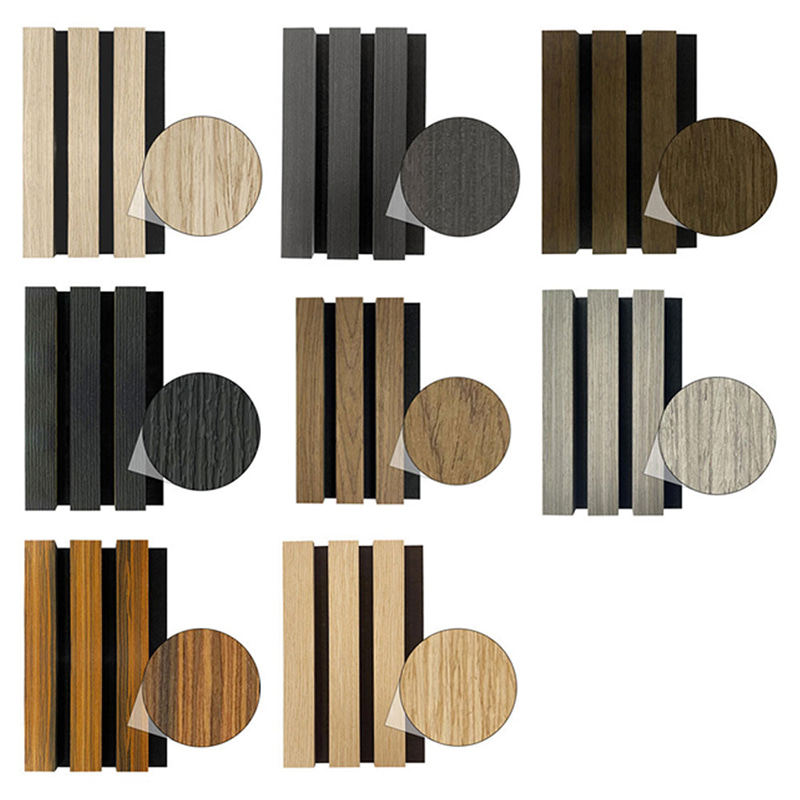 Interior WPC Acoustic Wall Panels for Commercial Fit-OutsInterior WPC acoustic panels with NRC ≥0.8, B1 fire rating, and clip-on installation, suited to offices, studios, and repeatable commercial fit-outs.View Product →
When Traditional Wood Paneling Can Be Cheaper
Traditional wood wins in a few specific cases:
- Low-cost softwood or reclaimed boards: if you already own the wood or buy from a local salvage yard, material cost can drop below USD 10 per square meter.
- DIY installation: if you have the tools and skills, you can remove labor from the equation and accept a longer project timeline.
- Short-term or temporary spaces: pop-up shops, staging, and exhibition walls may not need 10-year durability.
- Authentic solid-wood design: when the project requires the grain, weight, and repair history of real timber, wood is the correct specification, not a cost compromise.
For everything else, compare the installed cost over the expected service life. That is the number that affects the budget.
How to Compare Quotes Without Getting Misled
Ask for a per-square-meter installed cost that includes panels, trim, adhesive, fasteners, waste, and labor. Then confirm the specification in writing. The cheapest quote often uses a thinner panel, a lower-grade film, or no UV coating.
- Thickness and density: 5 mm, 8 mm, and 12 mm panels behave differently. A dense core resists impact and warping.
- Surface finish: standard PVC film, UV coating, and high-gloss finishes change both price and cleaning requirements.
- Fire rating: B1-grade panels cost more but may be mandatory for hotels, offices, and public corridors.
- Waste and accessories: matching trims, corners, and adhesives can add 10 to 20% to the material line.
For a deeper material comparison, see our guide to bamboo wood fiber WPC wall cladding. You can also review the full WPC wall panel range to match thickness and finish to your project.
FAQ: WPC vs Traditional Wood Paneling Costs
Q1: Is WPC cheaper than real wood paneling per square meter?
On material alone, WPC is usually cheaper or equal for indoor panels: USD 12 to 28 per square meter versus USD 15 to 35 for softwood or veneer and USD 30 to 90 for solid hardwood. The gap grows when you include installation labor, waste, finishing, and maintenance. A low-cost softwood installed by a DIYer can be cheaper upfront, but the 10-year installed cost is often higher.
Q2: How much does WPC wall panel installation cost?
Professional installation typically runs USD 8 to 20 per square meter, depending on wall condition, height, and access. Adhesive and trim add USD 2 to 5 per square meter. Simple click-lock or glue-up systems are at the lower end; complex curves, acoustic backing, and fire-rated assemblies are at the upper end.
Q3: Does WPC last as long as wood paneling?
Indoor WPC panels commonly last 10 to 15 years, and outdoor UV-grade panels can last 15 years or more with normal cleaning. Solid wood can last 30 years or longer if it is kept dry and refinished regularly. In humid or wet areas, WPC usually outlasts wood because it does not rot, swell, or attract termites.
Q4: What hidden costs should I compare?
Look for waste factor, substrate preparation, trim, adhesive, fire-rated backing, UV coating, and maintenance. Wood paneling often needs sanding, staining, and sealing on site. WPC usually arrives factory-finished. Add those differences to the per-square-meter price before you decide.
For a typical indoor wall, budget USD 40 to 90 per square meter installed for WPC over ten years, compared with USD 65 to 160 per square meter for traditional wood paneling. The exact number depends on thickness, finish, fire rating, and local labor. If you are comparing suppliers, ask for a written specification and a sample. The panel you can clean with a damp cloth and leave unpainted is often the one that protects the project budget.