

 English
 Español
WPC Wall Panels vs. Solid Wood, PVC, and SPC – Which One Should You Buy?
There are many materials for wall cladding, far more than just WPC wall panels. Solid wood wainscoting, PVC foam boards, and SPC (stone plastic composite) panels are also common options. Each has its own pros and cons and suits different scenarios. Many people struggle to tell the differences between these materials and are easily led by sales talk.
This article compares these four materials from six aspects: material composition, water resistance, durability, environmental friendliness, installation and maintenance, and price. After reading, you can make a decision based on your actual needs.
1. What are the four materials?
Solid wood wainscoting: Made directly from natural wood, usually coated with varnish or wood wax oil. Common species include oak, walnut, and pine. The advantage is the best texture. The disadvantages are vulnerability to moisture, insects, and the need for regular maintenance.
PVC foam board: Made from polyvinyl chloride through a foaming process, with a microporous internal structure. Very lightweight, completely waterproof, and cheap. However, the surface usually has printed wood grain with poor texture, deforms easily under heat, and becomes brittle with age.
SPC (stone plastic composite) panel: Made mainly from limestone powder and PVC, with high density. Completely waterproof, excellent dimensional stability. A printed decorative layer is laminated on the surface. Commonly used for flooring, also available for walls. Disadvantages are a cold touch and less realistic wood grain compared to WPC.
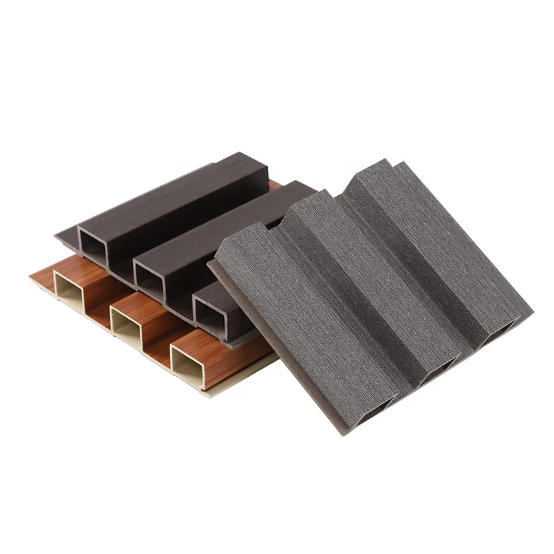
WPC wall panel: Wood powder plus polymer material, as detailed in previous articles. Positioned between solid wood and PVC, taking advantages of both.
2. Water and moisture resistance
Solid wood: Poor. Absorbs water, leading to swelling, deformation, and blackening. Even with a waterproof coating, moisture can still enter from the back and cut edges.
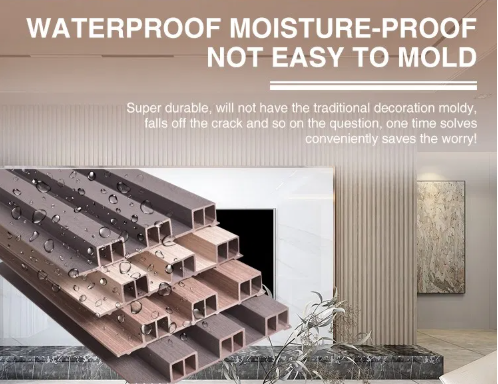
PVC foam board: Good. Does not absorb water and can be used long-term in humid environments.
SPC panel: Excellent. Almost no water absorption, dimensional stability better than PVC foam board. Suitable for basements and bathrooms.
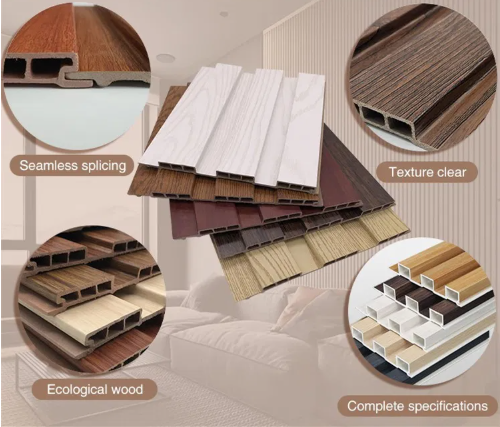
WPC panel: Excellent. Similar to SPC, completely non-absorbent. Thanks to the wood fiber content, the surface texture is closer to real wood.
- Conclusion: Except for solid wood, the other three can be used in wet areas like bathrooms. SPC and WPC are superior.
3. Durability and impact resistance
Solid wood: Hardness varies by species – oak and walnut are hard, pine is soft. The surface coating is easily scratched. Impacts leave dents.
PVC foam board: Soft surface, easily scratched by sharp objects. Ages and becomes brittle over time – after a few years outdoors, it may snap when bent.
SPC panel: High hardness, good impact resistance. But brittle – a heavy impact may cause cracking.
WPC panel: Hardness between solid wood and SPC, better toughness than SPC, less likely to crack. The wear layer provides good scratch resistance.
- Conclusion: For daily use, WPC panels offer the best overall durability – less prone to cracking or deep scratches.
4. Environmental friendliness and safety
Solid wood: Natural wood itself is environmentally friendly, but surface coatings may contain VOCs. Also, solid wood requires logging – some sources are not sustainable.
PVC foam board: Plasticizers and stabilizers may be used in production. Low-end products have an odor. Produces hydrogen chloride gas when burned. However, reputable manufacturers can produce odorless and non-toxic products.
SPC panel: Made mainly from stone powder and PVC, no formaldehyde. But the same PVC environmental concerns exist. Good quality products have no odor; poor quality ones smell.
WPC panel: No formaldehyde. Uses recycled wood powder and recycled plastic, making it more environmentally friendly. When burned, produces less smoke than pure PVC.
- Conclusion: All four materials have both qualified and unqualified products. From a sustainability perspective, WPC panels have the highest percentage of recycled content.
5. Appearance and texture
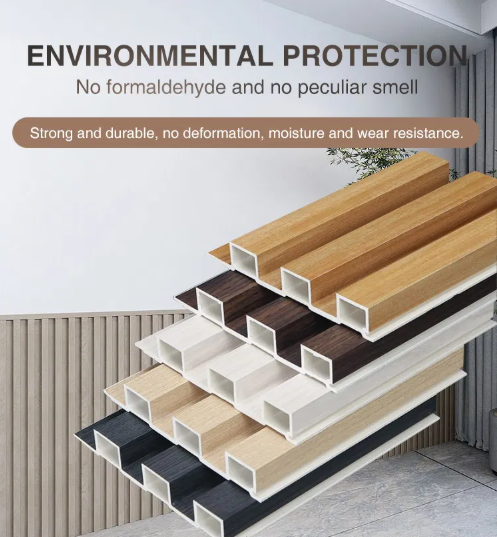
Solid wood: Best. Unique natural wood grain, warm to the touch, you can feel the wood texture.
PVC foam board: Poor. Surface usually has printed wood grain with repeating patterns. Feels smooth and plasticky.
SPC panel: Average. Also a printed layer, can mimic wood or stone, but cold to the touch – no warmth of wood.
WPC panel: Good. 3D embossing creates a realistic textured surface that you can feel under your fingers. Looks and feels close to solid wood, though careful inspection still reveals differences from natural wood.
- Conclusion: Choose solid wood if you pursue the best texture and have sufficient budget. Among budget-friendly options that still want a wood-grain look, WPC is the closest to solid wood.
6. Installation and maintenance
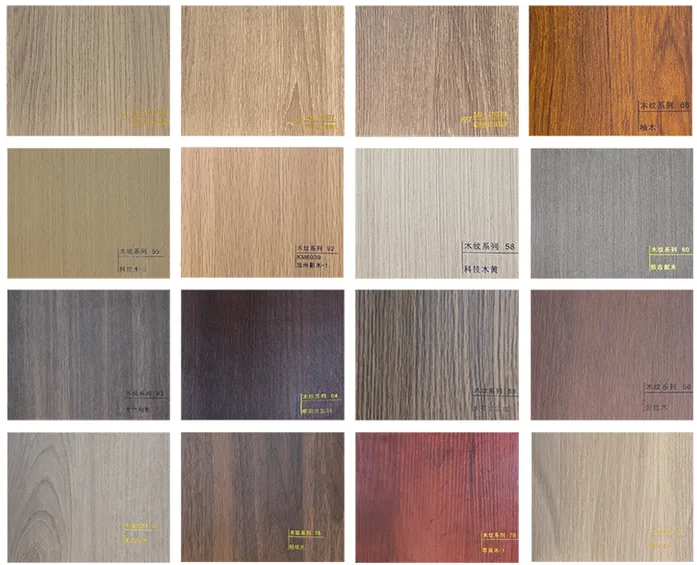
Solid wood: Complex installation, usually requires furring strips and expansion gaps. High maintenance cost – regular sanding and refinishing.
PVC foam board: Simple installation, can be glued or screwed. Low maintenance – wipe with a damp cloth, but needs replacement when aged.
SPC panel: Simple installation, generally glued or click-lock. Low maintenance – waterproof and stain-resistant.
WPC panel: Simple installation – furring strips or adhesive. Extremely low maintenance – wipe with a damp cloth; outdoors only needs occasional rinsing.
- Conclusion: Except for solid wood, the other three are low-maintenance materials. WPC has better outdoor weather resistance than PVC foam board.
7. Price reference
Rough market price ranges for reference:
Solid wood wainscoting: 150 to 500+ RMB per square meter, depending on wood species.
PVC foam board: 30 to 80 RMB per square meter.
SPC panel: 50 to 120 RMB per square meter.
WPC panel: 60 to 150 RMB per square meter.
- Solid wood is the most expensive. PVC is the cheapest. WPC and SPC are in the middle. However, solid wood has high long-term maintenance costs. Including repainting over ten years, the total cost of solid wood is far higher than WPC.
8. Summary: Who is each material suitable for?
Solid wood wainscoting: Suitable for those with ample budget, who love natural texture, and are willing to invest time in maintenance. Not suitable for humid environments or rental properties.
PVC foam board: Suitable for very limited budgets, temporary renovations, or rentals where texture is not a priority. Not suitable for long-term outdoor use.
SPC panel: Suitable for scenarios requiring complete waterproofing where wood-grain realism is not critical – for example, entire basement walls. But the cold touch makes it not recommended for bedrooms over large areas.
WPC panel: Suitable for those who want a wood-grain effect but also need waterproofing, durability, and maintenance-free performance. Can be used indoors, outdoors, in wet areas, and commercial spaces. It is currently the most balanced choice.
For samples, quotes or technical consultation, please contact:
Official Website: http://www.ltpvcfactory.com
WhatsApp: +86 17757302351
Email: [email protected]
Sample Policy: Free samples and brochures are provided, with freight collect.