

 English
 Español
Outdoor spaces are increasingly seen as an extension of the home. Whether it is a private courtyard, a rooftop terrace, or a small ground-floor garden, the choice of wall material directly affects the overall look and user experience. Solid wood used outdoors will rot and crack within a few years. Ceramic tiles are durable but cold and monotonous. WPC wall panels offer a middle ground: the texture and warmth of wood, combined with the waterproofness and durability of plastic.
This article introduces common applications, material selection tips, and design suggestions for using WPC wall panels in outdoor landscapes.
1. Outdoor Scenarios Suitable for WPC Wall Panels
Outdoor walls must withstand sun exposure, rain, and temperature changes – not all wall materials can handle this. WPC panels perform particularly well in the following scenarios.
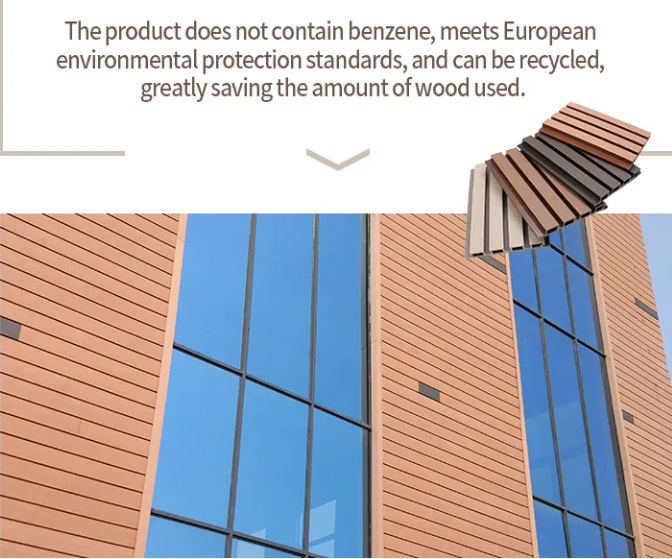
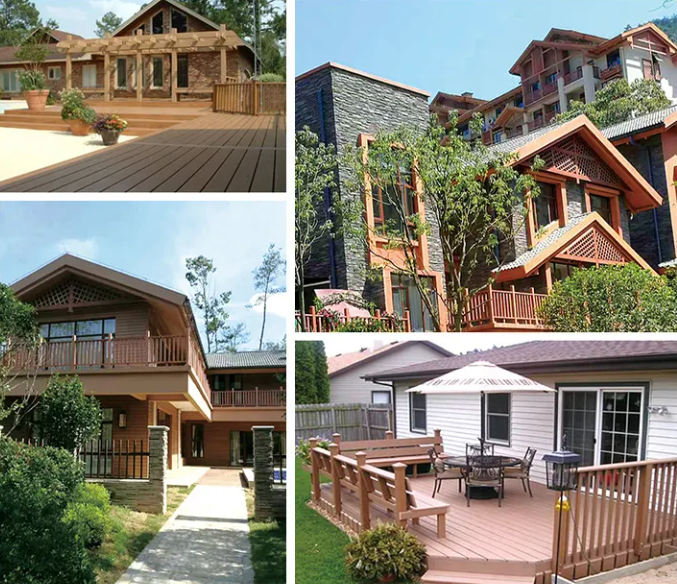
Courtyard walls: Traditional cement or brick walls look harsh. Covering them with WPC panels turns them into decorative wood-grain or stone-grain walls, enhancing the overall style of the courtyard.
Inside face of balcony railings: The inner side of many balcony railings is made of cement or metal, which is not very attractive. Using WPC panels as cladding hides the original material and creates a warm background.
Side walls of planters or vegetable beds: The sides of planting beds are constantly in contact with soil and moisture, which causes wood to rot quickly. WPC panels do not absorb water at all, making them ideal for planter surrounds, with a service life far exceeding that of solid wood.
Outdoor kitchen backsplash: Walls near barbecue areas and outdoor bars are prone to grease and food residue. WPC panels have a smooth, easy-to-clean surface, much easier to maintain than cultured stone or red brick.
Pool surrounds: Walls around swimming pools experience constant high humidity and exposure to pool chemicals. WPC panels are waterproof, chemical-resistant, and warmer to the touch than ceramic tiles – more comfortable to lean against with bare feet.
Exterior walls of tool sheds or storage buildings: A tool shed with a log cabin look is very popular, but solid wood requires high maintenance. Using WPC panels to decorate the exterior walls looks good and eliminates the need for annual painting.
2. Key Selection Points for Outdoor WPC Panels
Outdoor environments are far more complex than indoors. Choosing the wrong type will lead to rapid aging. Pay attention to the following four points.
Point 1: Must choose UV-resistant grade. WPC panels without UV treatment will noticeably fade within six months under sunlight. UV-resistant panels contain UV absorbers and light stabilizers, maintaining color for 5-10 years. When purchasing, confirm that the product is clearly marked as UV-resistant or weather-resistant. Do not trust a seller saying indoor-outdoor universal.
Point 2: Thickness recommended at 12mm or above. Indoor panels of 5-9mm are sufficient, but outdoors they may be subject to wind and impact forces – thicker panels are stronger. Outdoor ceilings or non-load-bearing walls can use 9mm, but near the ground or on exterior walls, 12-20mm is recommended.
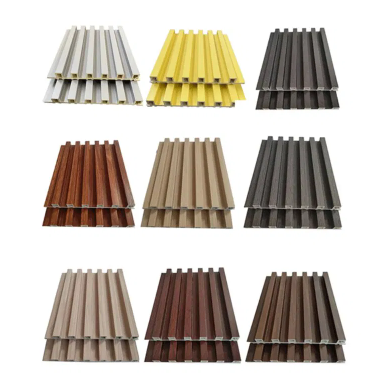
Point 3: Color preference for light or grey tones. Dark colors absorb more heat, leading to higher surface temperatures and faster aging. Light and grey colors are not only more sun-resistant but also easier to match with outdoor plants and stone materials.
Point 4: Accessories must be rust-proof. Outdoor installation requires 304 stainless steel screws and hot-dip galvanized furring strips. Ordinary screws will rust within months, and rust stains running down the wall are difficult to clean.
3. Design and Matching Suggestions
Outdoor design with WPC panels can be flexible and diverse. Here are a few directions to consider.
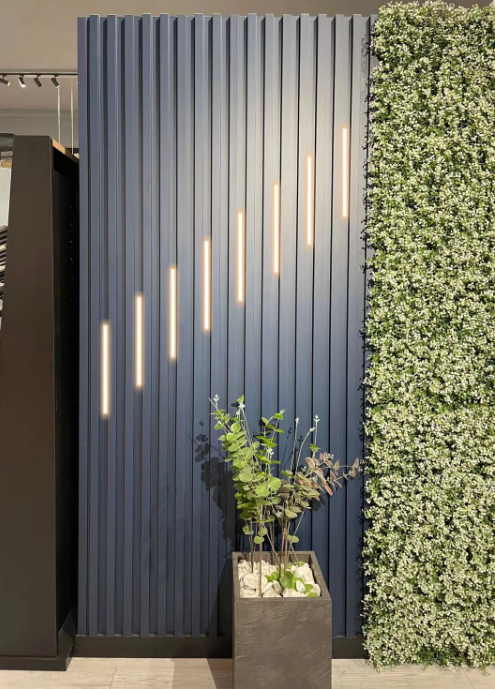
Vertical garden background: Use light-colored wood-grain WPC panels as a backdrop, with potted plants or hanging planters in front. The wood grain complements the greenery very naturally.
Mixed with natural stone: WPC panels can be combined with natural stone slabs or cultured stone. For example, use stone on the lower section and wood-grain WPC on the upper section – a combination of warm.
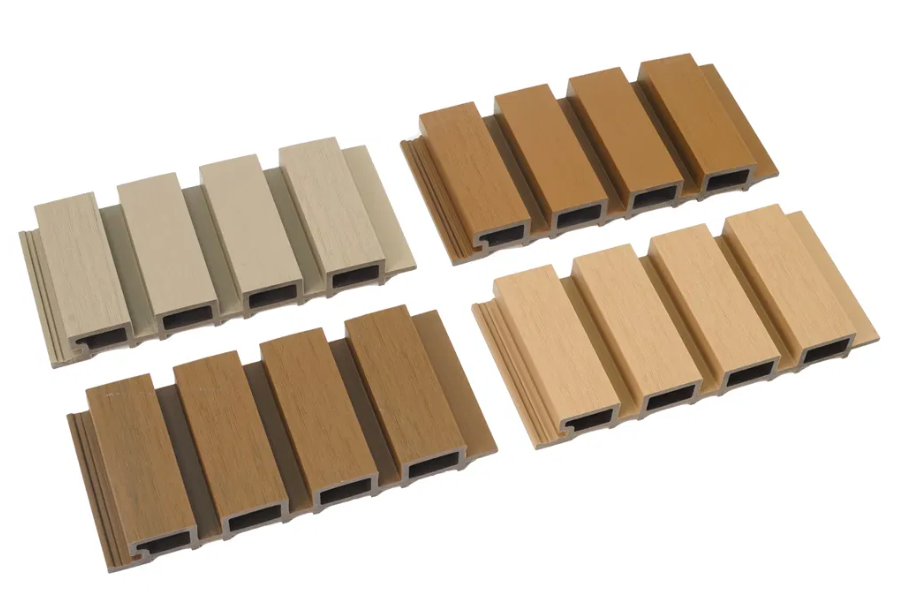
Slatted screens: WPC slatted panels can be used as partitions or screens, providing semi-privacy while allowing airflow. Slat spacing can be customized.
Post cladding: Concrete or steel columns in courtyards or on balconies can be wrapped with WPC panels to create wooden columns, giving a more cohesive look.
Color coordination between floor and wall: If the outdoor decking is also made of WPC, choose wall panels in a similar but slightly lighter color family to create a unified yet not monotonous effect.
Use trim pieces: Edges, corners, and tops of outdoor walls must be finished with trim. This improves appearance and prevents moisture from entering through cut edges.
4. Installation Considerations for Outdoors
Outdoor installation differs from indoor in several ways that require special attention.
Corrosion-resistant furring strips: Outdoor furring strips must be galvanized steel or pressure-treated wood. Ordinary wood furring strips will rot within three years in humid conditions.
Ground clearance: For the lowest row of wall panels, leave a 2-3 cm gap above the ground, or provide a drainage gap. This prevents standing water from soaking the bottom of the panels.
Expansion gaps: Outdoor temperature variations are large. Leave 1-2 mm gaps between panels during installation. In very cold regions, if installing in winter, allow slightly larger gaps.
Top waterproofing: If the outdoor wall is not protected by an eave, install a drip cap or flashing at the top to prevent rainwater from seeping behind the panels.
Avoid direct soil contact: Although WPC panels are waterproof, if buried or in direct contact with soil for a long time, dirt and moisture will accumulate on the back, affecting appearance. For areas in contact with soil, build a concrete foundation or retaining wall first.
5. Maintenance
Maintaining outdoor WPC panels is very simple:
Rinse with water once or twice a year to remove dust, leaves, and bird droppings. If moss or mold spots appear, scrub with a soft brush dipped in diluted bleach, then rinse. Check screws for looseness – stainless steel screws generally need no treatment, but if furring strips show rust, they should be replaced.
No painting, no waxing, no insect treatment.
6. Frequently Asked Questions
Q: How long can WPC wall panels last outdoors?
A: UV-resistant outdoor panels have a service life of 10-15 years. After that, slow fading may occur, but structural strength remains.
Q: Will they crack in freezing winter temperatures?
A: HDPE-based WPC has a brittle temperature below -40°C. Most regions in China will not cause cracking in winter.
Q: Do the walls get dirty after rain?
A: Rain actually washes away dust, providing a self-cleaning effect. However, corners where dust accumulates may need manual rinsing.
Q: Can WPC panels be installed vertically outdoors?
A: Yes. Vertical installation creates a taller appearance; horizontal installation creates a wider appearance. For outdoors, horizontal installation is recommended because fewer joints provide better waterproofing.
Summary
WPC wall panels offer a durable, attractive, and low-maintenance wall solution for outdoor landscapes. Choose the UV-resistant grade, use the correct accessories, and pay attention to installation details. You can then enjoy a wood-grain wall in your courtyard, balcony, or garden for many years without hassle.
If you are planning an outdoor space, contact us to request samples and UV resistance test reports. We can also provide quantity estimates and installation tips based on your project dimensions.
For samples, quotes or technical consultation, please contact:
Official Website: http://www.ltpvcfactory.com
WhatsApp: +86 17757302351
Email: [email protected]
Sample Policy: Free samples and brochures are provided, with freight collect.