

 English
 Español
When choosing wall materials for renovation, you always come across the usual options: solid wood, ceramic tiles, latex paint, and wallpaper. Each has its advantages, but each also has its downsides. Solid wood looks great but is delicate. Tiles are durable but cold. Latex paint is cheap but gets dirty easily. Wallpaper is beautiful but does not last.
WPC wall panels are not here to replace all other materials. But they do perform better than traditional materials in several key areas. If you are struggling with your wall material decision, these five reasons may change your mind.
1. Truly Waterproof, Suitable for Any Wet Area
Solid wood is vulnerable to moisture and is rarely used in bathrooms or kitchens. Tiles and PVC panels are waterproof, but tile grout turns black over time, and PVC panels have poor texture.
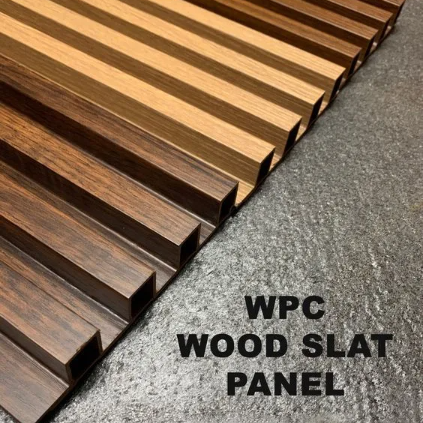
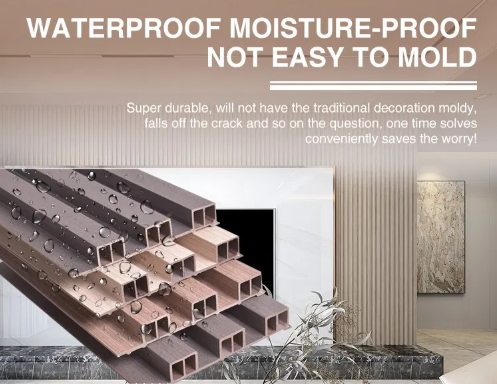
WPC wall panels have a water absorption rate close to zero. Water droplets can sit on the surface indefinitely without penetrating. There is no swelling, no deformation, and no blackening. Shower walls, kitchen backsplashes, and basement moisture barriers can all be covered with confidence.
Compared to ceramic tiles, WPC panels feel warmer to the touch. On a winter morning, accidentally leaning against the wall after a shower does not feel cold. Compared to PVC panels, WPC has a much more realistic surface texture, not that smooth plastic feel.
2. Maintenance-Free, Install and Forget
Solid wood wainscoting needs sanding and repainting every year or two. Wallpaper needs replacement every three to five years. Latex paint, once dirty, requires a full repaint. These maintenance tasks cost money, take time, require moving furniture, and need waiting for odors to dissipate.
Once WPC panels are installed, daily maintenance is as simple as wiping with a damp cloth. No painting, no waxing, no caulking, no insect treatment. The time and money saved on maintenance over the years add up significantly.
For rental properties, commercial spaces, or homeowners who do not want the hassle, this is a very practical advantage.
3. Realistic Wood Grain, Wide Selection
Early composite materials did have a fake wood look, but WPC panels today are completely different. With 3D embossing and synchronized register technology, the wood grain's annual rings, vessels, and surface texture are faithfully reproduced. Run your finger across the panel and you can feel the texture.
Color options are also extensive: light oak for Scandinavian style, teak for modern minimalism, walnut for neo-Chinese style, and silver grey or charcoal black for industrial style. Beyond wood grain, there are also marble, concrete, and fabric textures. A single wall can achieve a variety of styles without being restricted by the fixed appearances of traditional materials.
4. Fast Installation, No Project Delays
Nothing prolongs renovation like waiting. Tiles require waiting for cement to dry. Solid wood requires waiting for paint to cure. Wallpaper requires waiting for adhesive to set. Each waiting period pushes back your move-in date.
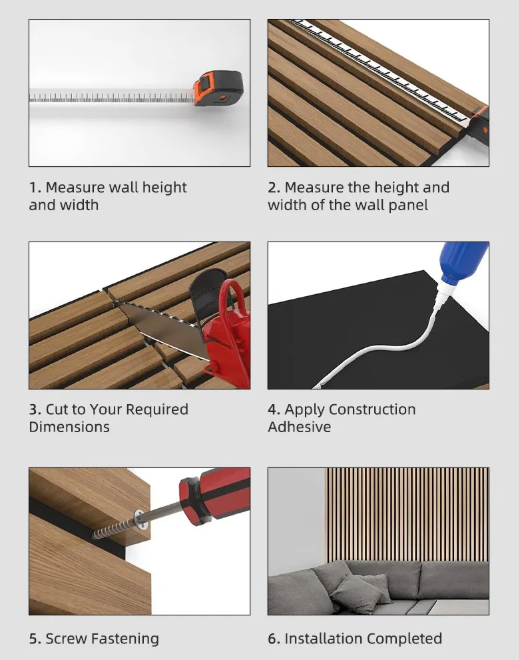
WPC panels use dry installation. After wall leveling, panels are installed directly without cement, paint, or drying time. A standard bedroom wall can be completed by two workers in half a day to a full day. For families eager to move in, or commercial spaces needing to resume business quickly, this time saving is critical.
For old house renovations, WPC panels can be installed directly over existing tiles, old wood panels, or even wallpaper without removing the old finishes. This eliminates demolition, debris removal, and the associated costs.
5. Safe and Eco-Friendly, Ready for Immediate Occupancy
Indoor air quality is a major concern for many people. Solid wood itself is natural, but the surface paint may contain VOCs. Wallpaper itself is formaldehyde-free, but the adhesive used for installation is a major source of indoor formaldehyde. Latex paint requires ventilation after application.
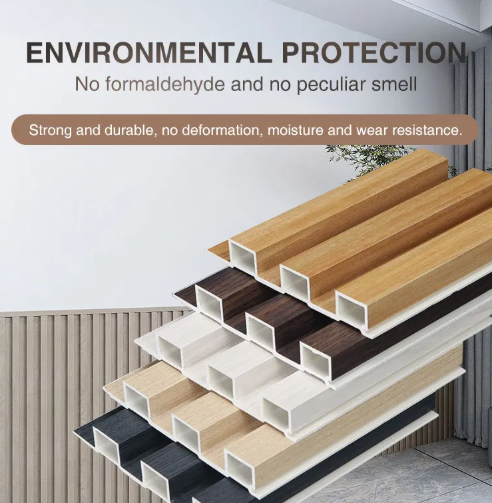
WPC panels are manufactured without glue, using heat to fuse wood powder and plastic together. Finished products have undetectable formaldehyde levels and no odor after installation. You can use the space immediately after renovation, with no waiting period for off-gassing. This is especially important for families with pregnant women, infants, or elderly members.
Additionally, WPC panels use recycled wood powder and recycled plastic as raw materials, reducing deforestation and plastic waste going to landfills. For environmentally conscious consumers, this is an added benefit.
Suitable Application Scenarios
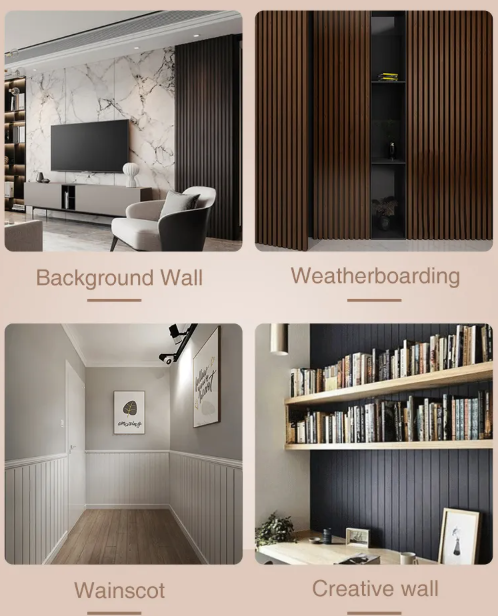
Residential: Living room feature walls, bedroom headboard walls, bathroom walls, kitchen backsplashes, basement moisture barriers, balcony walls.
Commercial: Hotel guest rooms, restaurant booth backgrounds, office walls, café interiors, bed-and-breakfast indoor and outdoor spaces.
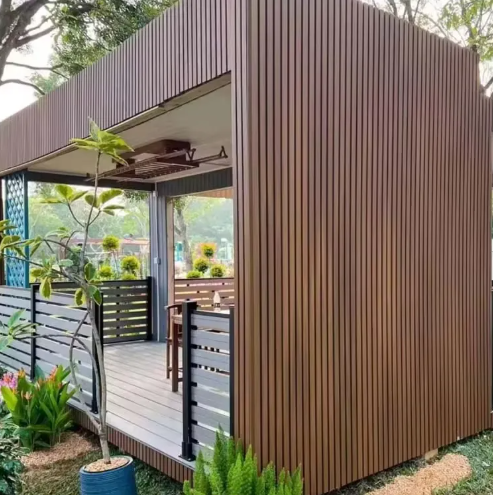
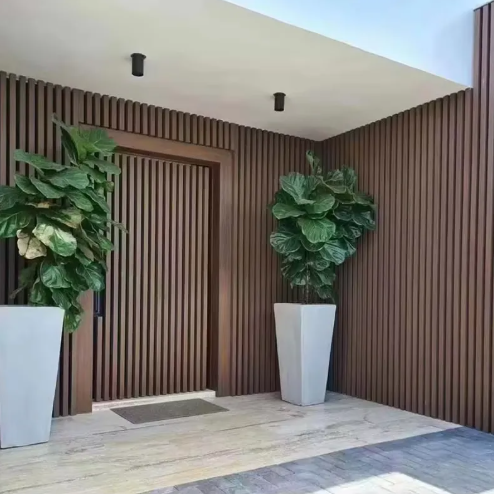
Outdoor: Villa exterior walls, garden fences, pool surrounds, terrace walls (UV-resistant grade required).
When WPC Is Not Suitable
WPC panels are not a universal solution. Consider other materials in the following cases:
- You want the unique natural grain and texture of solid wood, and you have sufficient budget.
- Your project requires Class A fire rating (evacuation routes, stairwells, etc.).
- You need a minimal budget for temporary renovation – latex paint may be cheaper.
- You need flooring material – WPC panels are not designed for floor installation.
Common Concerns Answered
Q: Will WPC panels look like plastic?
A: Low-end laminated products can look plastic-like. But with 3D embossing or synchronized register technology, WPC panels have surface texture and feel very close to solid wood, almost indistinguishable to the naked eye.
Q: How long do outdoor panels last?
A: UV-resistant WPC panels last 10-15 years outdoors with normal use. Slow fading may occur after that, but structural strength remains unaffected.
Q: How much more expensive are they than latex paint?
A: Initial cost is indeed higher than latex paint. But latex paint needs repainting every five to eight years. Including repainting costs over ten years, the total cost of WPC panels is lower.
Q: Do I need a professional for installation?
A: An ordinary carpenter can install them. DIY-savvy homeowners can also do it themselves. Tools are simple and instructions are clear.
Summary
WPC wall panels offer five core advantages: waterproof for wet areas, maintenance-free for convenience, realistic wood grain for beauty, fast installation for time savings, and eco-safety for health. They address the pain points of traditional materials in moisture resistance, long-term maintenance, construction timelines, and environmental safety. For the majority of residential and commercial projects, WPC panels are an option worth serious consideration.
For more product details, sample requests, or installation guidance, please contact us.