

 English
 Español
For architects and interior designers, choosing a material is not just about its appearance. It also involves constructability, long-term performance, maintenance costs, and how well it realizes the design intent. WPC wall panels have been increasingly adopted in commercial and residential projects in recent years, supported by solid technical and aesthetic reasons.
This article summarizes, from a professional perspective, the five core reasons why WPC wall panels deserve a place on your material list.
1. Strong Design Expression, Comparable to Natural Wood
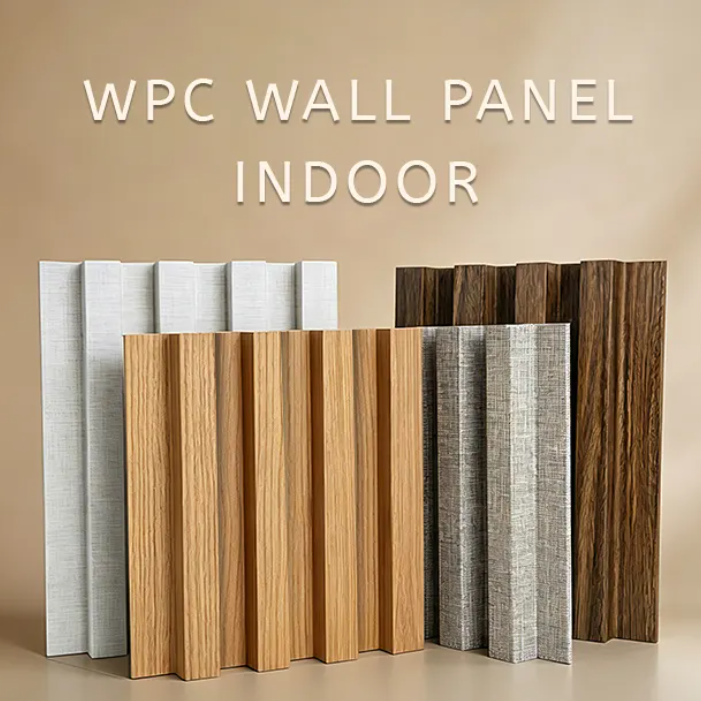
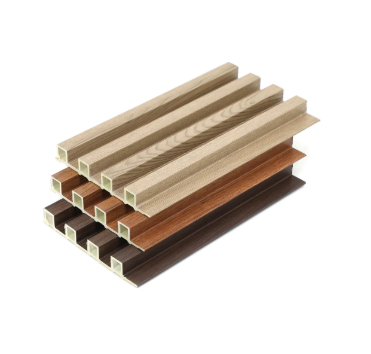
WPC wall panels achieve a visual effect very close to natural wood while avoiding the color variation and natural defects of solid wood. Through 3D embossing and synchronized register technology, the wood grain's annual rings, vessels, and even fine surface textures are faithfully reproduced.
For designers, this means confidently using wood-grain elements without worrying about batch color differences, wood knots, or the hassle of on-site material selection. WPC panels also offer stone-grain, concrete-texture, fabric-texture, and other options, allowing a single material to cover multiple design languages.
Compared to solid wood, WPC does not require large expansion gaps in the design (only very small gaps are needed), making large-area continuous installation possible with a stronger overall visual effect.
2. Easy Installation, Shortening Construction Schedules
In construction projects, time is money. WPC wall panels use dry installation, requiring no cement mortar, no drying time, and no paint odors to dissipate. Two workers can complete the walls of a standard hotel room in one day.
For renovation projects, WPC panels can be installed directly over existing tiles, old wood panels, or even wallpaper without removing the old finishes. This greatly reduces construction waste and noise, and minimizes disruption to existing tenants or residents.
Designers can worry less about the condition of existing walls, as WPC panels are highly tolerant of substrate irregularities.
3. Stable Performance, Reducing Post-Completion Complaints
Solid wood panels undergo shrinkage, expansion, cracking, and color changes over time. These are not construction defects but natural properties of wood. However, for designers, clients do not distinguish between inherent material defects and design errors – both will be blamed on the design.
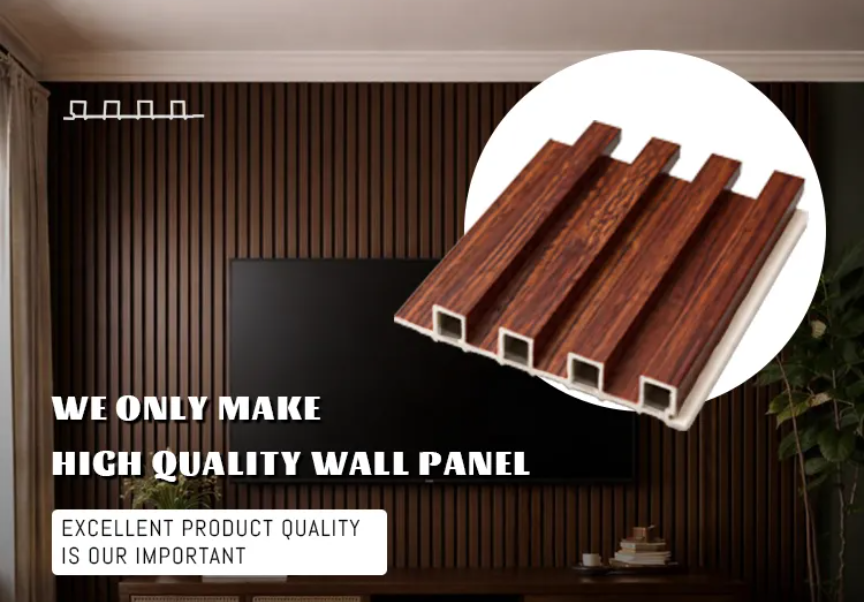
WPC panels have far better dimensional stability than solid wood and do not deform or crack due to humidity changes. They do not absorb water, do not mold, and do not attract termites, making them worry-free for bathrooms, basements, and coastal projects. Designers can confidently apply wood-grain elements to damp environments without fear of future client complaints.
4. Clear Environmental Credentials, Meeting Green Building Requirements
More and more projects require the use of environmentally friendly building materials. WPC panels are made primarily from recycled wood powder and recycled plastic, using no virgin timber and relying on no deforestation. The production process uses no adhesives, and the finished product contains no detectable formaldehyde.
For projects requiring LEED, BREEAM, or Chinese Green Building Label certifications, WPC panels can help earn points in Material Resources, Low-Emitting Materials, Recycled Content, and other categories. GREENGUARD Gold certified products can also be used in schools, hospitals, and spaces with extremely high air quality requirements.
Designers can clearly specify the environmental indicators of WPC panels in their material documentation, adding value to the project.
5. Extremely Low Maintenance Costs, Enhancing Client Satisfaction
The success of a design project is measured not only by the finished look at handover but also by whether the client remains satisfied years later. Solid wood panels require regular maintenance. Wallpaper and latex paint get dirty and damaged easily. These post-completion issues constantly erode client patience and may also result in repeated calls to the designer.
After installation, WPC panels require almost no maintenance. Daily cleaning with a damp cloth is sufficient; no repainting, waxing, or repairs are needed. For commercial projects such as hotels, office buildings, and rental apartments, this directly reduces operating costs. For residential projects, clients are more satisfied with the design because it is easy to maintain.
Technical Data Quick Reference
| Parameter | Typical Value |
| Thickness | 5-9mm (indoor), 12-30mm (outdoor) |
| Width | 150mm, 180mm, 200mm (customizable) |
| Length | 2.2m-4m (customizable) |
| Density | 1.2-1.4 g/cm³ |
| Water absorption rate | <0.5% |
| Bending strength | >20 MPa (indoor), >25 MPa (outdoor) |
| Fire rating | B1 grade (EN 13501-1) |
| Formaldehyde | Not detected |
| UV resistance (outdoor grade) | QUV 500 hours, ΔE<3 |
Points to Note in Design Applications
Although WPC panels have many advantages, several details require attention in design:
For outdoor use, UV-resistant grade must be clearly specified. Indoor panels cannot be used on facades.
When using dark colors over large areas, consider heat absorption, especially on west-facing walls.
Trim colors should coordinate with the panels. Request color swatches in advance.
The acoustic effect of slatted panels requires a cavity and backing material to be fully realized.
For curved walls, WPC can bend slightly, but custom panels are recommended for large-radius curves.
Project Case Studies
A five-star hotel renovation project required designers to complete wall upgrades for 300 guest rooms in a short time. The original walls had wallpaper, with mold in some areas. The designer chose light oak WPC panels and installed them directly over the existing surface. Each guest room took only half a day for wall installation. The project was delivered on time. The owner reported a decrease in guest complaints (walls are more dirt-resistant) and a 15% increase in room rates after renovation.
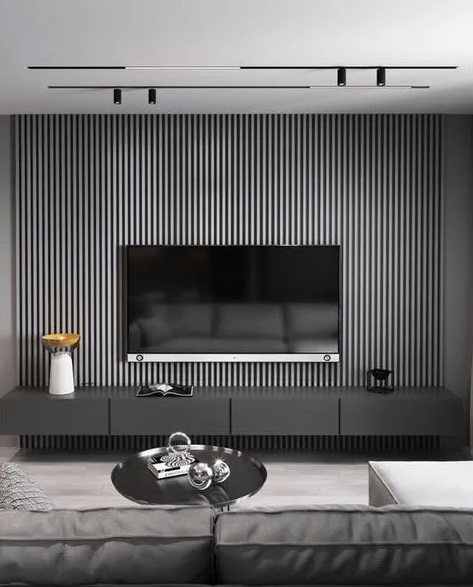
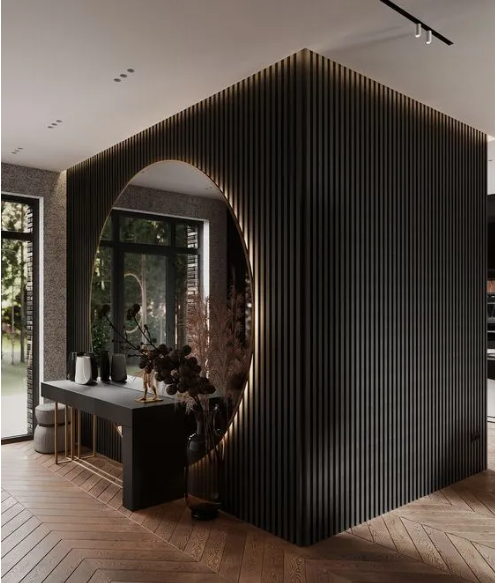
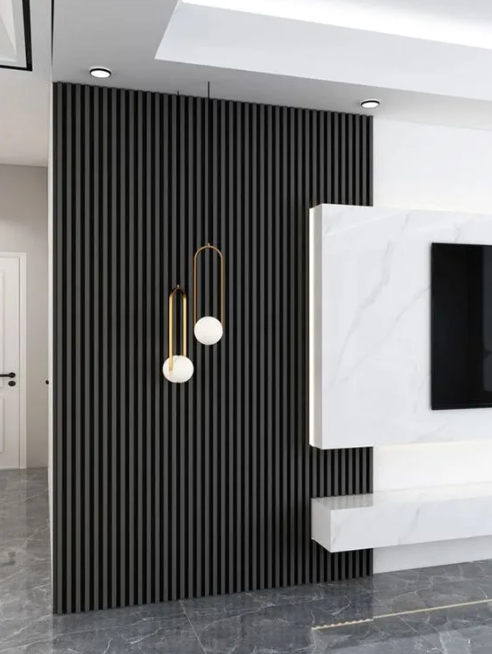
A co-working space wanted a warm, natural background wall at the reception area but had a limited budget. The designer used dark grey WPC slatted panels with linear lighting. The cost was 40% lower than solid wood slats, and installation time was cut in half. After one year of use, the wall showed no impact marks, and the operator was very satisfied.
Summary
WPC wall panels are a material that balances aesthetics, performance, cost, and environmental responsibility. They allow designers to confidently use wood-grain elements in damp environments, deliver quickly on time-constrained projects, and maintain quality even on tight budgets. For projects that seek a balance between practicality and beauty, WPC wall panels are a priority option.
Designers in need of sample books, color swatches, or technical data sheets, please contact us. We also offer custom color and size services for specific projects.