

 English
 Español
WPC Wall Panels: Combining Solid Wood Texture with Waterproof Durability
When choosing wall cladding materials for renovation, you often face a difficult decision:
- Solid wood? Beautiful, but vulnerable to moisture, insects, cracking, and requires annual sanding and painting.
- PVC or other ordinary panels? Cheap, but poor texture and look dated after a few years.
- Ceramic tiles? Durable, but cold, monotonous, and not warm enough.
WPC (Wood Plastic Composite) wall panels eliminate this dilemma. They look like solid wood but perform completely differently: waterproof, mold-proof, termite-proof, and virtually maintenance-free. They can be installed anywhere indoors, including bathrooms, as well as on outdoor balconies.
In about 5 minutes, this guide will give you a comprehensive understanding of what WPC wall panels are, why they are beneficial, how to use them, and whether they are worth buying.
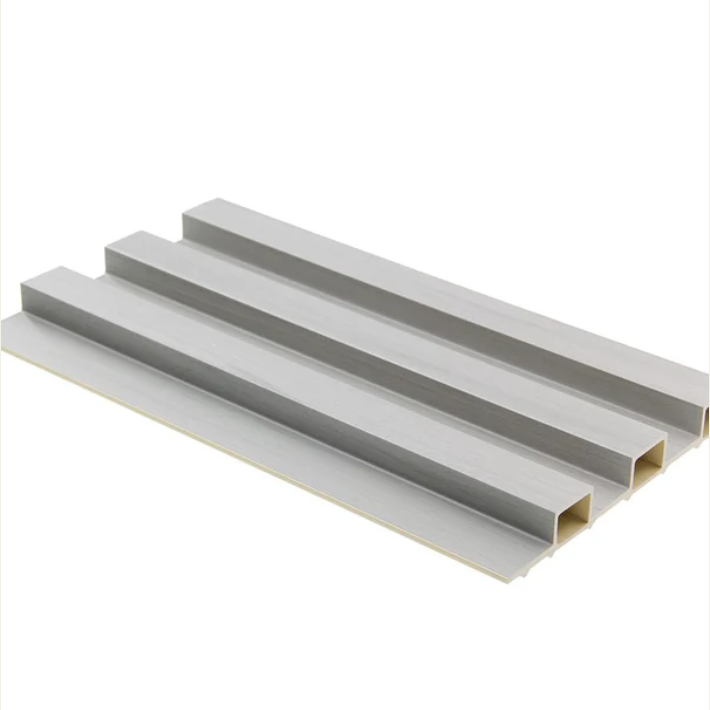
1. What are WPC Wall Panels? Simply put: Wood Powder + Polymer Material
WPC stands for Wood Plastic Composite. Its raw materials consist of three main components:
- Natural wood fiber (about 60%-80%) – derived from wood processing waste, providing a wood-like feel.
- Polymer material (about 20%-30%) – commonly HDPE or PVC, responsible for waterproofing and strength.
- Functional additives – UV resistance, flame retardancy, anti-mold, etc.
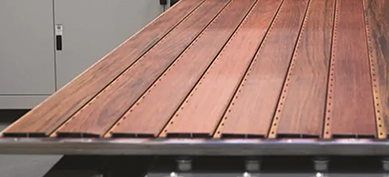
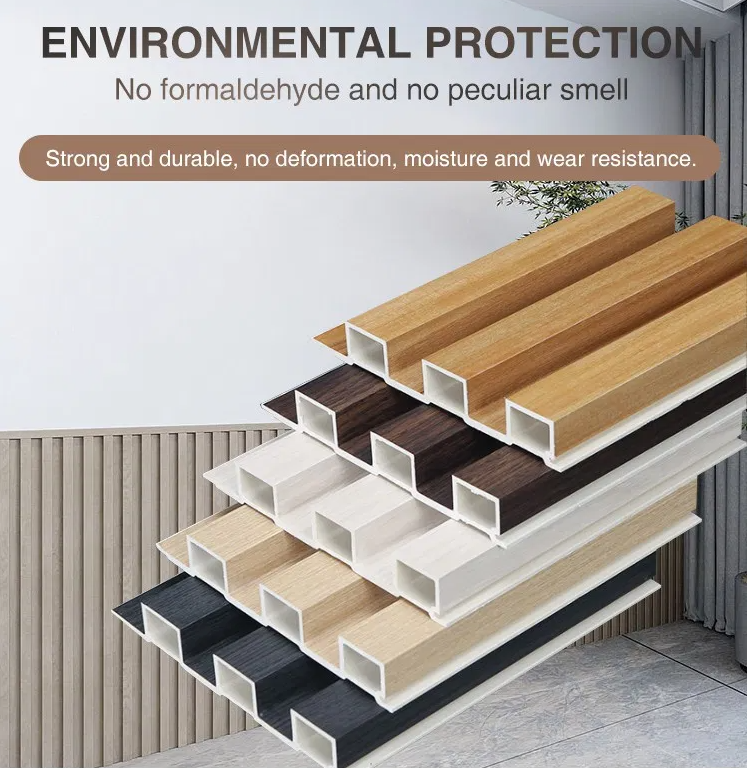
These materials are mixed and extruded at high temperatures, with 3D wood grain or stone grain embossed on the surface. The final product looks and feels almost identical to solid wood, but its internal structure is completely different – it does not absorb water, is not affected by humidity, and does not attract insects.
2. Why are more and more people choosing WPC wall panels? 5 key reasons
2.1 100% waterproof, eliminating moisture deformation
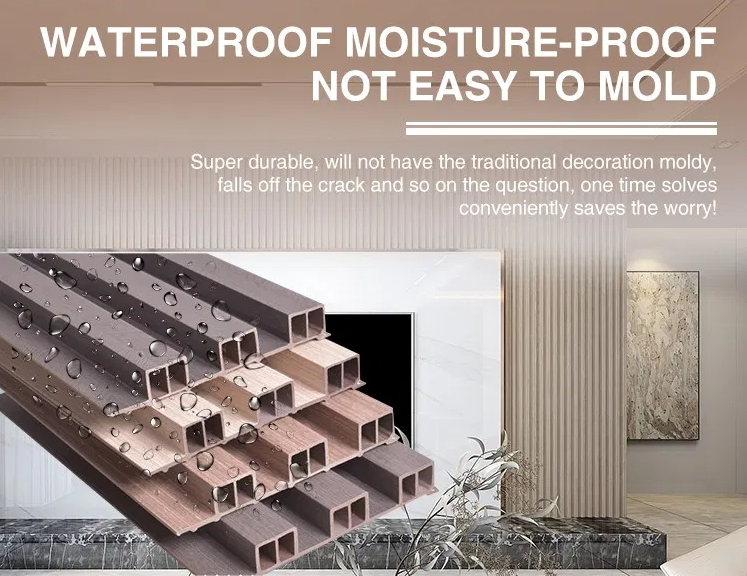
This is the strongest advantage of WPC. Ordinary wood installed in bathrooms or on exterior walls will swell, warp, and blacken within a year or two. WPC panels do not absorb water at all, and will not deform even after long-term immersion.
Applications: bathrooms, kitchens, basements, laundry rooms, outdoor balconies, pool areas.
2.2 Termite-proof, insect-proof, and mold-resistant
Natural wood contains cellulose, which is food for termites and wood-boring insects. In WPC, the wood fibers are encapsulated in polymer material, making them indigestible and unattractive to termites. In addition, the material itself does not absorb moisture, so mold lacks a suitable environment to grow.
Ideal for: humid southern regions, ground-floor residences, old house renovations.
2.3 Virtually maintenance-free, a long-term solution
Solid wood requires annual or biennial application of wood wax oil, varnish, or exterior paint – costly and labor-intensive. Once WPC panels are installed, all you need is:
- Daily: Wipe off dust with a damp cloth.
- Outdoors: Rinse with water once or twice a year.
No sanding, painting, or sealing. Over 10 years, this alone can save thousands of yuan in maintenance costs.
2.4 Rich appearance options – wood grain, stone grain, solid colors
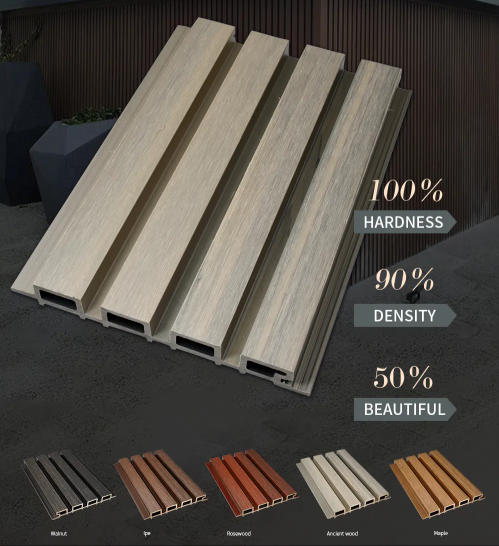
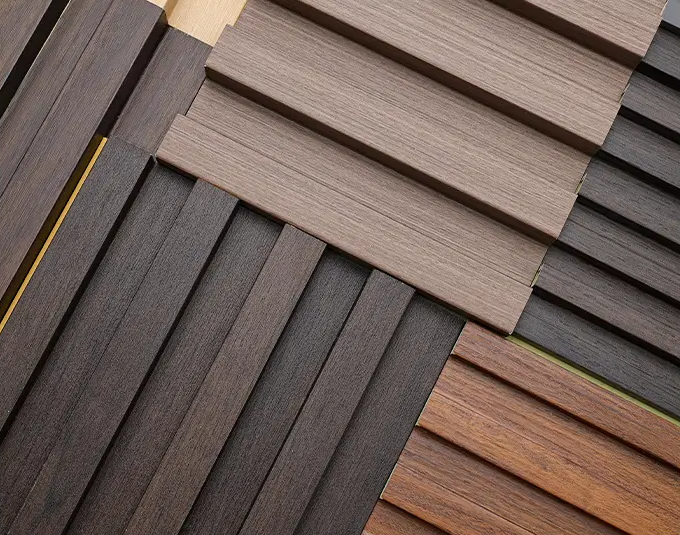
Do not assume that “composite material” means a plastic look. High-quality WPC panels use 3D embossing and synchronized register technology, with wood grain that shows annual rings and pores – you can feel the texture when you run your finger over it. Color options are also extensive:
- Warm tones: teak, walnut, cherry wood.
- Cool tones: silver gray, charcoal black, rock gray.
- Special effects: imitation marble, concrete texture, slatted acoustic panels.
You can find a suitable style for indoor accent walls, hotel lobbies, offices, restaurant exterior walls, and more.
2.5 Environmentally friendly and formaldehyde-free
WPC panels are formed by heat fusion without using glue. Reputable products have a formaldehyde content of "not detected", meeting E0 grade and CARB Phase 2 standards. Some models also carry GREENGUARD Gold certification (very low VOC, suitable for schools and hospitals).
Moreover, over 60% of the raw materials are recycled wood powder and recycled plastic, making WPC a recyclable green building material.
3. Comparison with traditional materials – clear differences
| Property | WPC Panels | Solid Wood | PVC Panels | Ceramic Tiles |
| Water & moisture resistance | Excellent | Poor | Excellent | Excellent |
| Insect & mold resistance | Excellent | Poor | Moderate | Excellent |
| Texture realism | Good | Excellent | Moderate | Moderate |
| Maintenance cost | Very low | High | Moderate | Low |
| Ease of installation | Easy (DIY possible) | Moderate | Easy | Complex (needs tiler) |
| Touch temperature | Warm (not cold) | Warm | Moderate | Cold |
| Outdoor lifespan | 15-30 years | 5-10 years | 5-8 years | 30+ years |
Conclusion: WPC is not the best in every single aspect, but it achieves a balance of “good looks + durability + low maintenance”. In scenarios where a wood-grain effect is desired but the environment is humid (coastal areas, basements, bathrooms), WPC has almost no competitor.
4. Where can WPC wall panels be used?
Indoors
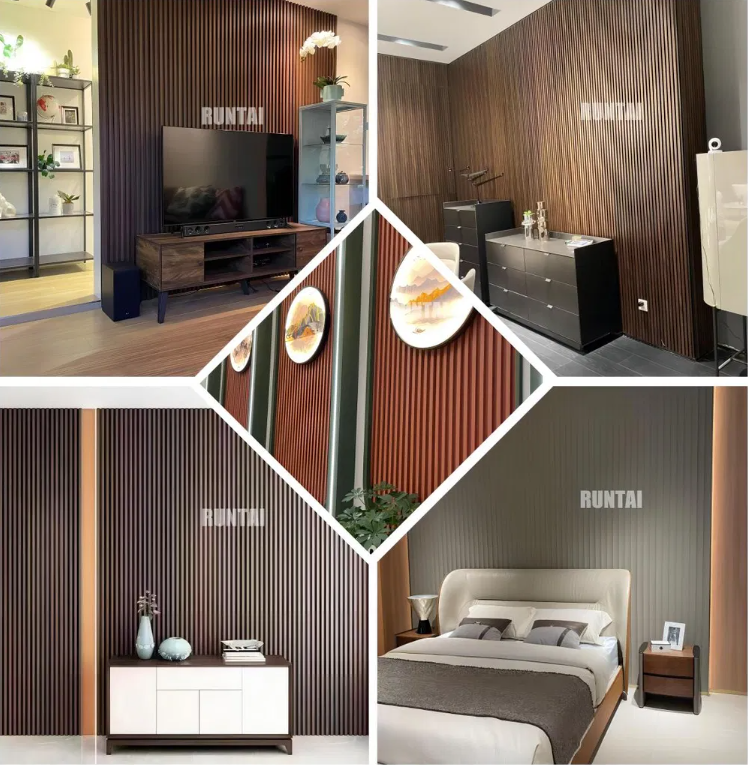
Living room / bedroom accent walls: Replaces wainscoting or wallpaper, significantly improving the sense of quality.
- Kitchen backsplash: Waterproof and grease-resistant, easier to clean than ceramic tiles.
- Bathroom walls: 100% waterproof, not cold to the touch in winter, more comfortable than tiles.
- Basements / ground floors: Moisture-proof and mold-proof, solving a long-standing problem.
Commercial spaces
Hotel guest rooms, restaurant booth backgrounds, office reception areas column cladding.
Special recommendation: Places that need fast renovation and immediate occupancy – WPC has no formaldehyde odor, ready to use after installation.
Outdoors
Building exterior walls, balcony railings, courtyard fences, pool surrounds, coastal vacation homes.
Note: Must use UV-resistant models, otherwise long-term sun exposure will cause fading. High-quality UV-resistant panels can maintain color for 5-10 years without significant discoloration.
5. Is installation difficult? An ordinary handyman can do it
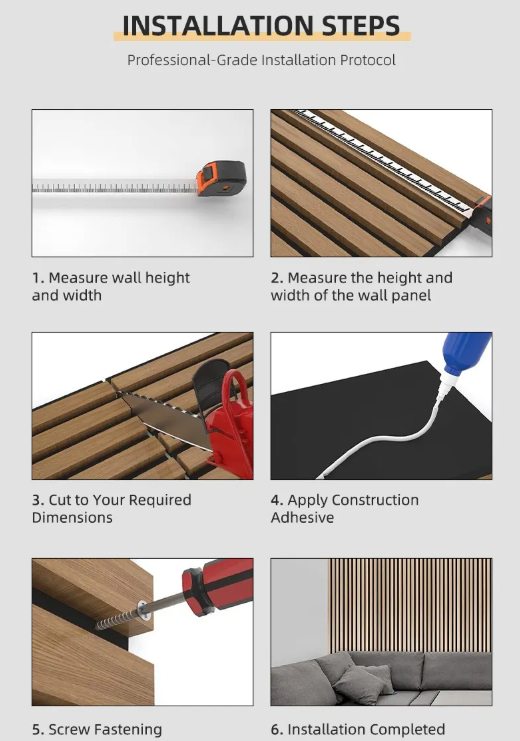
Installing WPC wall panels is much simpler than installing tiles or solid wood wainscoting. Two common methods:
Method 1: Furring strip installation (recommended)
Level the wall, then attach wooden or light-gauge steel furring strips (spacing 40-60 cm).
Fix the WPC panels to the furring strips using screws or clips.
Panels are joined by tongue-and-groove edges; finish with matching trim pieces.
Advantages: The wall does not need to be perfectly flat; easy to disassemble and access later; good ventilation.
Method 2: Adhesive installation (indoor small areas only)
The wall must be flat and clean.
Use an environmentally friendly construction adhesive or structural adhesive, applied in dots or lines on the back of the panel.
Press the panel into place, level it with a spirit level, and allow 24 hours to cure.
Advantages: Fast, no drilling required, suitable for accent walls and partial decoration.
An ordinary carpenter can learn it quickly. For DIY enthusiasts, you can also do it yourself – tools needed: tape measure, spirit level, drill, hand saw.
6. Daily maintenance: virtually no effort
Daily cleaning: Dust with a feather duster or wipe with a damp cloth.
Stubborn stains: Neutral cleaner + soft cloth. Do not use steel wool or strong acids/alkalis.
Outdoor care: Rinse with water once or twice a year to prevent dust and leaf buildup.
What you do NOT need to do: waxing, painting, caulking, or insect treatment.
7. Frequently Asked Questions
Q: Are WPC wall panels afraid of sunlight?
A: Standard types are not suitable for prolonged sun exposure. For outdoor use, you must choose a UV-resistant model. Reputable products will specify a weather-resistance grade, generally ensuring no significant fading for 5-15 years. Darker colors are more UV-resistant than lighter ones.
Q: Can they be used in shower areas?
A: Yes, absolutely. They are 100% waterproof and are not as slippery or cold as ceramic tiles. It is recommended to waterproof the substrate before installation and use waterproof trim at joints.
Q: How is the fire performance?
A: WPC is classified as a B1 grade difficult-to-ignite material (similar to wood-based boards with flame retardant). It self-extinguishes when the flame source is removed. For strict fire safety requirements (such as shopping malls or hospitals), request the test report from the manufacturer.
Q: Are they expensive?
A: Typically, WPC wall panels cost between 60 and 150 RMB per square meter (depending on thickness, texture, and surface finish).
Cheaper than mid-to-low-end solid wood.
30%-50% more expensive than PVC.
Considering the maintenance-free lifespan, the long-term cost performance is better than both solid wood and PVC.
Q: Do they contain formaldehyde?
A: Reputable products have test results showing “formaldehyde not detected”. When purchasing, ask the seller for an SGS or national building materials testing center report confirming E0 grade or CARB P2 standard.