

 English
 Español
1.Starting with the Name: What Exactly is PU Stone?
PU stone, full name is Polyurethane Stone Veneer Panel. Breaking it down:
- PU = Polyurethane, a polymer compound.
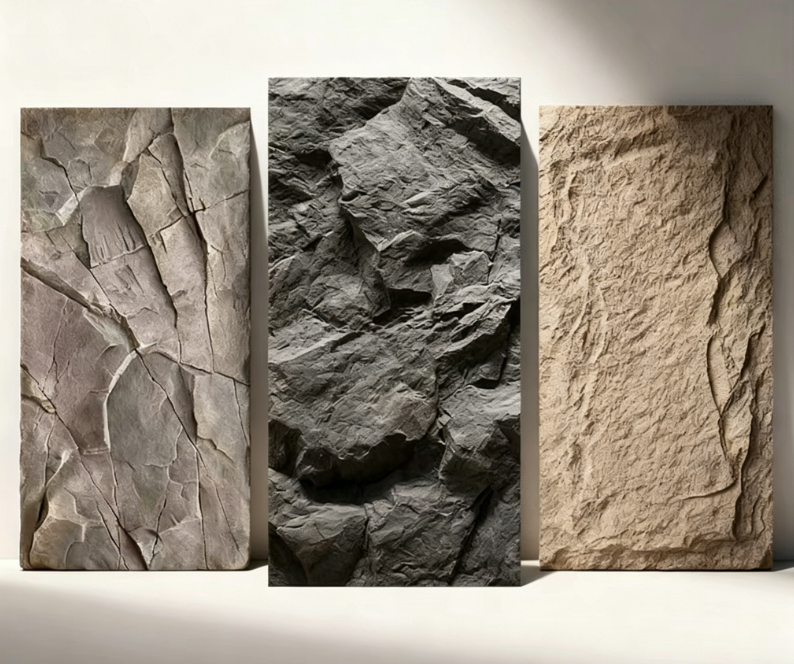
- Stone = Imitating the texture and feel of natural stone (slate, mushroom stone, shale, cultured stone, etc.).
So PU stone is not real stone, but a stone-imitating product made of polyurethane material. It has the appearance of stone, but without the bulkiness and fragility of stone.
What is Polyurethane? An Explanation Anyone Can Understand
You can think of polyurethane as a kind of "super plastic": it is originally liquid, can be made into any shape through molds and chemical reactions, and becomes hard, wear-resistant, sun-resistant and waterproof after curing.
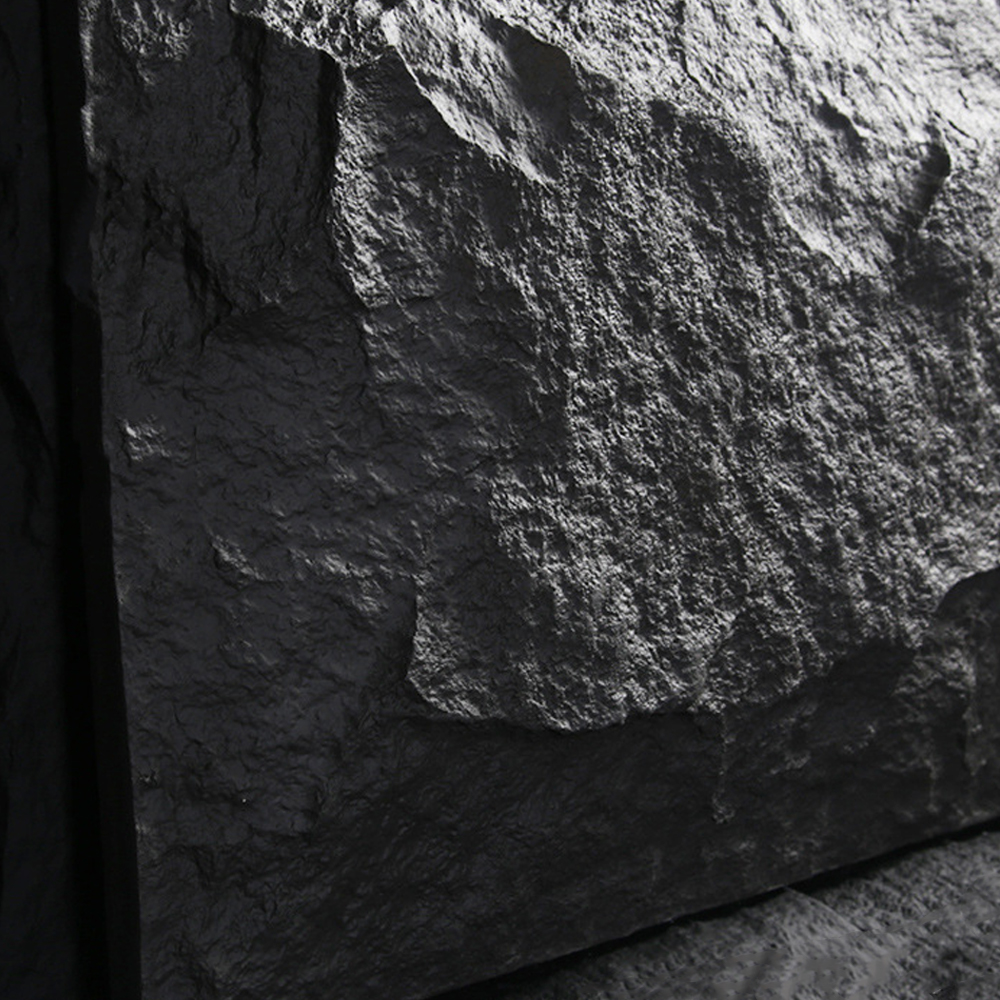
Common polyurethane products in daily life include: high-end car seat sponges, running shoe midsoles, building insulation spray materials, and even mobile phone cases. PU stone is an "advanced application" of polyurethane in the field of architectural decoration—through precision molds, every crack and depression of the rock is reproduced 1:1.
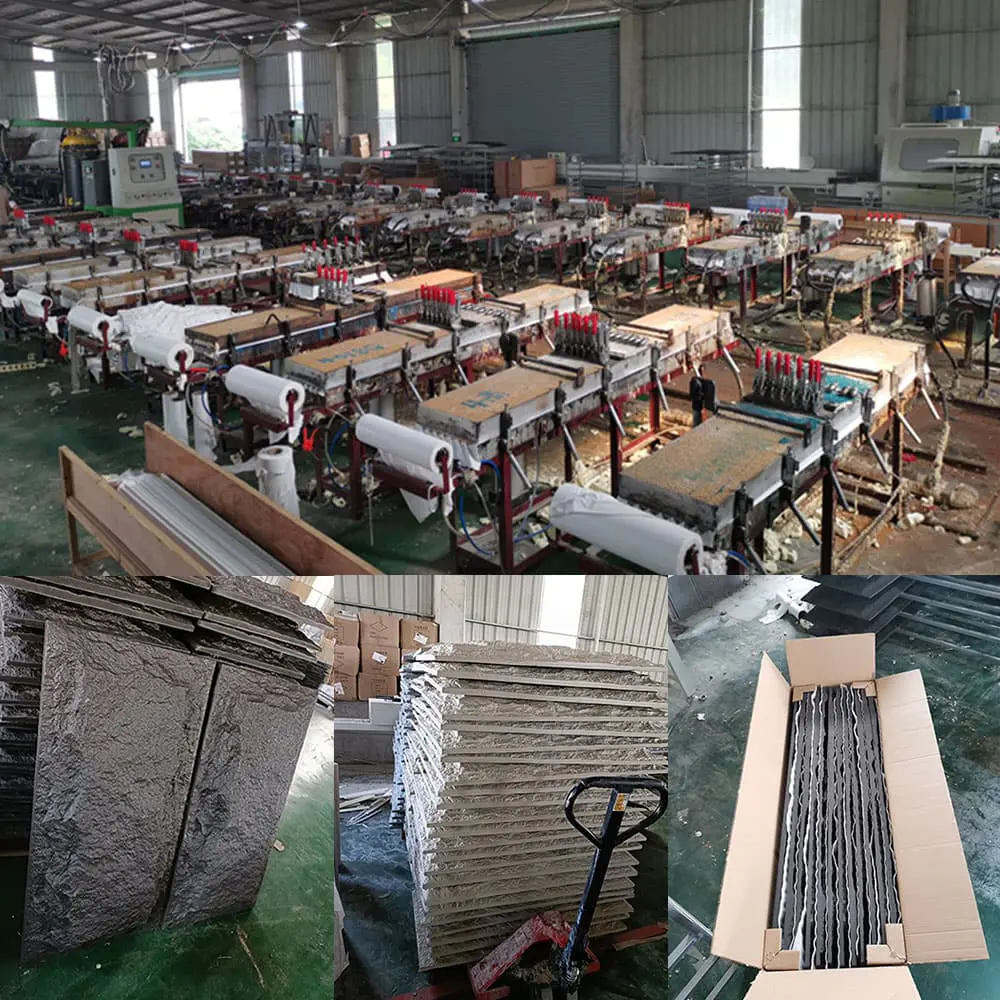
2.How is PU Stone Made? An Easy-to-Understand Production Process
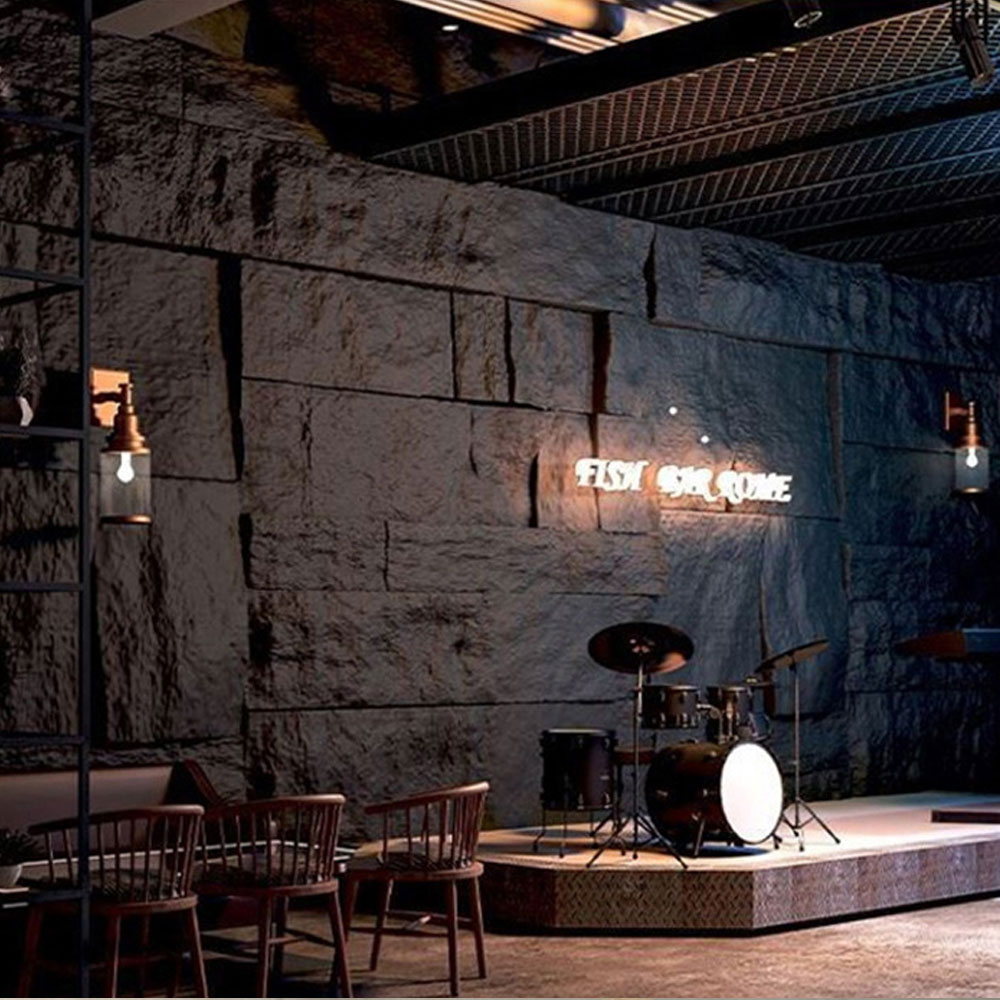
Many people think that stone imitation is just "plastic embossing", but the production of PU stone is much more complex. Taking the LONGT® PU stone series of Haining Longtime Industry Co., Ltd. as an example, the typical production process is as follows:
1.Mold Development
Make a mold from natural rock, or hand-carve original textures by designers. A set of high-precision molds can cost tens of thousands of yuan, but it can ensure that the texture of each panel is clear and no details are lost.
2.Raw Material Ratio
Mix isocyanate and polyol in precise proportions, and add foaming agents, catalysts, anti-ultraviolet agents, flame retardants and other additives at the same time. Different formulas determine the density, hardness, fire rating and weather resistance of PU stone.
3.Casting and Foaming
After the mixed liquid is injected into the mold, an addition polymerization reaction will occur and slight foaming will form a closed-cell structure. This closed-cell structure is the key to the waterproof and moisture-proof performance of PU stone—each bubble is independently closed, and water molecules cannot penetrate.
4.Curing and Demolding
Let it stand for several hours to one day under constant temperature and humidity, and demold after the material is completely cured. At this time, the panel has the final shape and texture.
5.Surface Treatment
Spray water-based protective paint or antiquing coating to enhance UV resistance and stain resistance. Some models are also hand-painted to imitate the natural color difference of weathered stone.
6.Cutting and Packaging
Cut according to standard sizes (such as 1200×600mm, 2400×600mm, etc.), polish the edges and package for delivery.
In a word: PU stone is a high-simulation decorative panel "copied" through chemical foaming process using molds of real rock.
3.What is the Difference Between PU Stone, Natural Stone and Artificial Cultured Stone?
This is the most common question from consumers. We use a table for intuitive comparison:
|
Characteristics |
Natural Stone |
Traditional Artificial Cultured Stone (Cement-based) |
PU Stone (Polyurethane-based) |
|
Main Raw Materials |
Natural rock (granite, slate, etc.) |
Cement, lightweight aggregate, pigments |
Polyurethane resin + additives |
|
Weight (per ㎡) |
40~80 kg |
30~50 kg |
8~15 kg |
|
Thickness |
Usually 15~30 mm (panels), natural blocks are thicker |
15~30 mm |
16~80 mm (can be made into thick mushroom stone) |
|
Water Absorption |
0.2~5% (some stones will effloresce) |
5~15% (easy to absorb water and mold) |
<0.5% (closed-cell structure, almost non-absorbent) |
|
Installation Method |
Dry hanging or wet pasting, requiring structural reinforcement |
Cement mortar wet pasting |
Gluing + screws, cuttable with woodworking tools |
|
Weather Resistance |
Good, but some stones are afraid of acid rain and easy to weather |
General, easy to crack and fade outdoors for a long time |
Excellent, UV resistant and freeze-thaw resistant |
|
Texture Authenticity |
Real and natural, but each piece is different |
Mold-reproduced, texture is relatively vague |
High-precision mold reproduction, clear texture |
|
Construction Period |
Slow (needs maintenance and waterproof treatment) |
Medium (needs mixing cement and pointing) |
Fast (one person can paste 20~30 ㎡ a day) |
|
Environmental Protection |
Mining damages the ecology, some have radiation |
High carbon emissions from cement production |
Factory prefabricated, no radiation, recyclable |
|
Comprehensive Cost |
High (material + transportation + labor) |
Medium-low |
Medium (material is slightly more expensive than cement stone, but comprehensive cost is lower) |
Core Conclusion: PU stone is not meant to "perfectly replace" natural stone, but to greatly reduce weight, cost and construction difficulty while pursuing the visual effect of stone. It is especially suitable for projects sensitive to load-bearing and construction period.
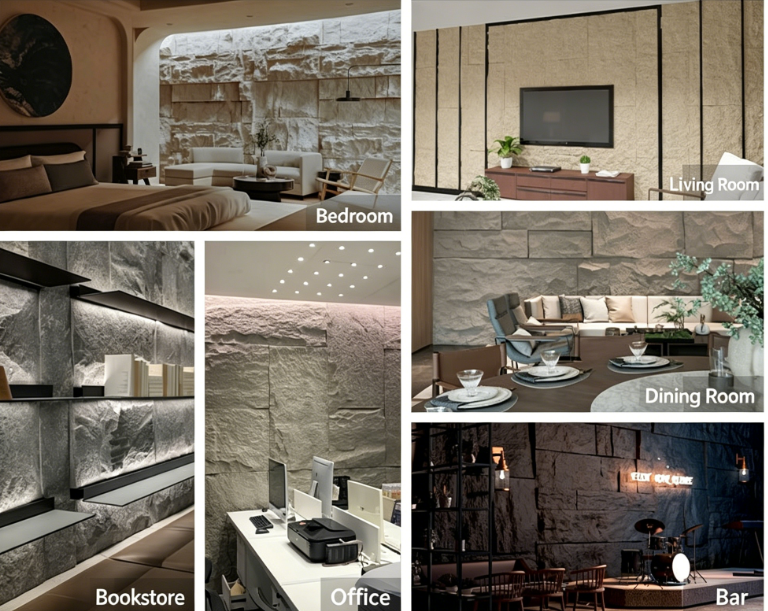
4.Where Can PU Stone Be Used? A Guide to Indoor and Outdoor Scenarios
PU stone can replace almost all places where "stone effect is desired but it is too heavy and expensive". Classified by application scenarios as follows:
|
Application Scenario |
Typical Location |
Recommended Product Series |
Why Choose PU Stone |
|
Building Facade |
Villa exterior walls, clubhouse doorways, homestay exterior walls, commercial curtain walls |
Mushroom stone, rock panels, hollow stone (K-240/290) |
Lightweight and not demanding on structure; freeze-thaw and UV resistant; maintenance-free |
|
Indoor Background Wall |
TV wall, sofa wall, bedside, entrance hall, elevator hall |
Thin stone texture panels (16mm), geometric series, water pattern stone |
Small thickness, no space occupation; dust-free and quick installation; can be cut arbitrarily |
|
Landscape Architecture |
Water feature rockery, flower bed cladding, landscape wall, barbecue table, swimming pool side |
Streamline series, mushroom stone, moon rock stone |
Waterproof and mold-proof; can be pasted on curved surfaces; easy to clean |
|
Commercial Space |
Hotel lobby, restaurant, coffee shop, exhibition hall, office reception desk |
Extra-large rock panels (3000×1200mm), geometric series |
Few joints, can be spliced into large formats; free shape; construction does not affect business |
|
Old House Renovation |
Old tile walls, latex paint walls, fair-faced concrete walls |
All thin series |
Direct gluing and covering without demolition; no garbage generated; no additional burden on old walls |
Summary
- Outdoor: Choose thick panels and freeze-thaw resistant series (mushroom stone, rock panels, hollow stone)
- Indoor: Choose thin panels and high-value series (stone texture panels, geometric, water pattern stone, moon rock stone)
- Special-shaped or curved surfaces: Choose streamline series or custom-made
5.Is PU Stone Installation Difficult? No, Even Ordinary People Can Understand
Many people worry that "stone imitation will be difficult to paste?" In fact, PU stone installation is simpler than ceramic tiles. The standard process is as follows:
1.Prepare the Base Course
The wall requires flatness, dryness and no floating dust. Cement walls, gypsum boards, OSB boards and old tile surfaces can be constructed directly.
2.Cut the Panels
PU stone can be easily cut with ordinary woodworking saw blades or jigsaws. Remember to wear a dust mask (even though PU stone cutting produces very little dust).
3.Typesetting and Setting Out
Pre-splice the panels on the ground according to the design pattern, and adjust the gaps and texture direction.
4.Pasting and Fixing
Use special polyurethane structural adhesive or nail-free adhesive, apply "dot-shaped" or "snake-shaped" adhesive strips on the back of the panel, press it to the wall, and level it with a level. For large-size or outdoor use, additional stainless steel screws can be driven into the four corners to enhance fixation.
5.Grouting (Optional)
If you need to imitate the stone pointing effect, you can fill the panel gaps with flexible grout or weather-resistant adhesive, then smooth it with a scraper.
During the whole process, the following are not needed: cement mortar, waterproof coating, keel welding, large cutting machine.
6.How to Choose High-Quality PU Stone? Remember These Four Points
PU stone brands on the market are mixed. When purchasing, you can pay attention to:
1.Check Texture Clarity
High-quality PU stone has sharp texture edges and distinct layers, while inferior products are vague, with bubbles or burrs.
2.Smell the Odor
Qualified PU stone just unpacked should have only a very light resin smell, which disappears after ventilation. A pungent odor indicates inferior raw materials or solvent residues.
3.Test Weight and Hardness
For PU stone of the same thickness, being too light may be due to excessive foaming leading to insufficient strength; being too heavy loses the lightweight advantage. Pressing the surface with nails should not leave obvious indentations.
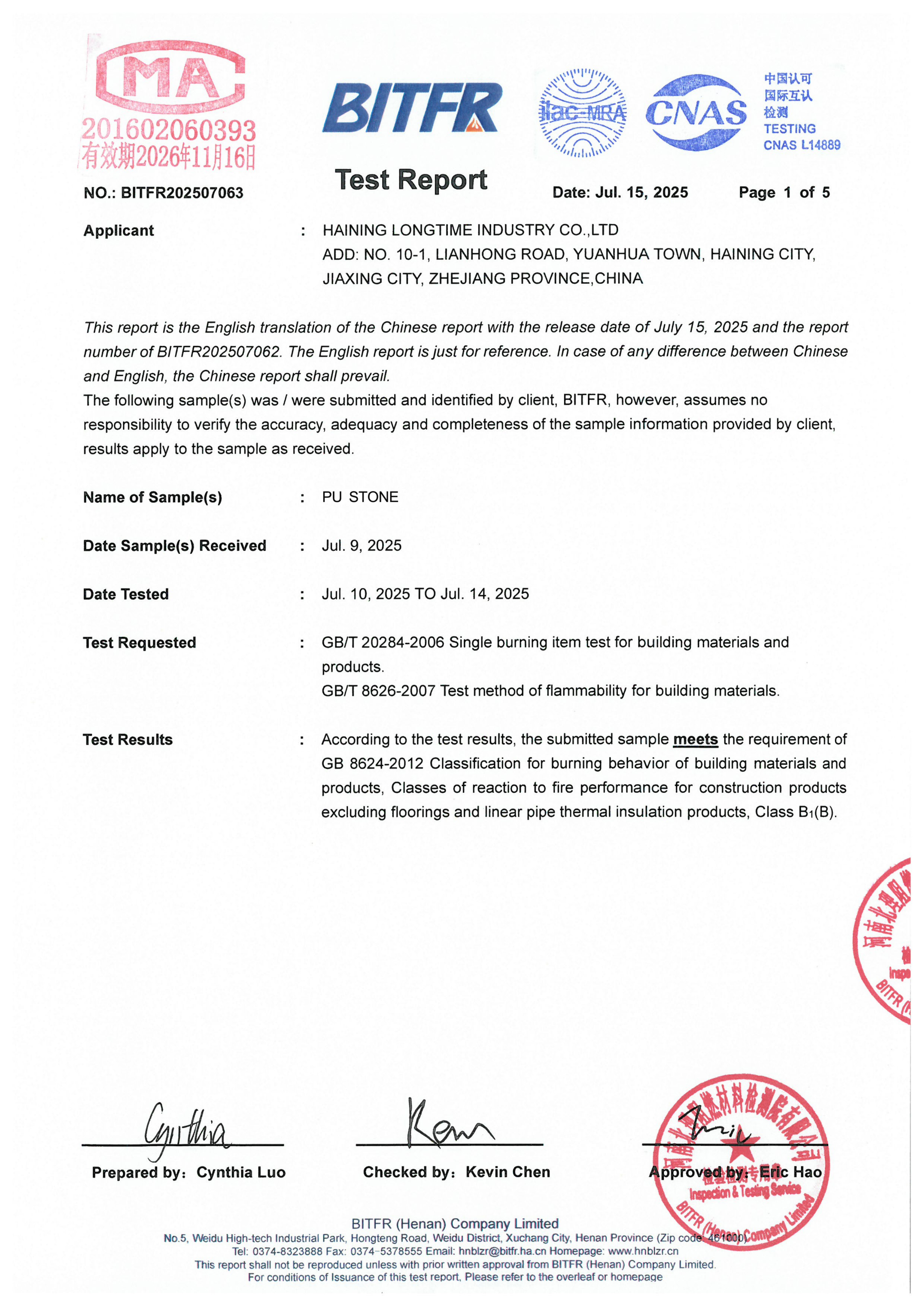
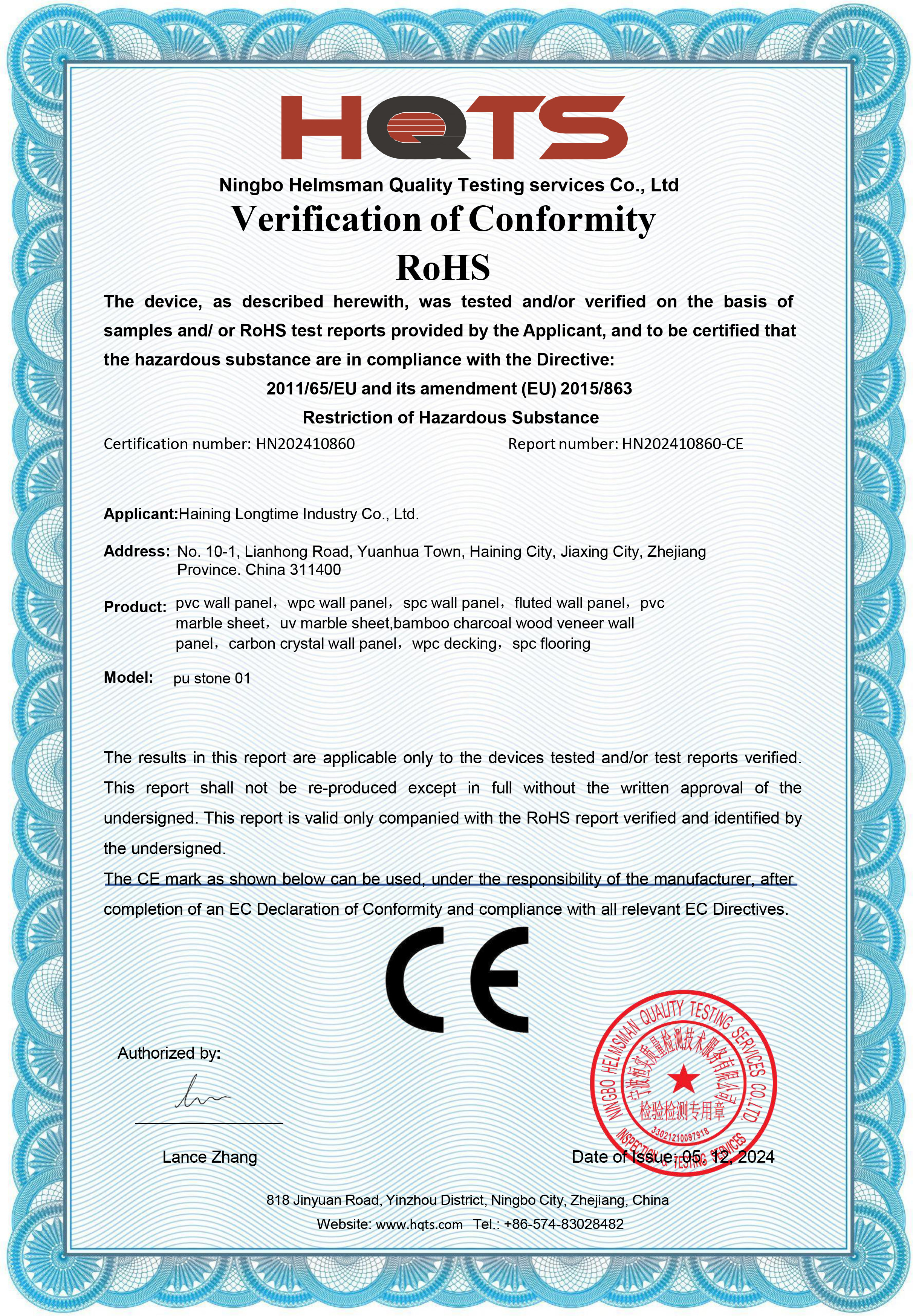
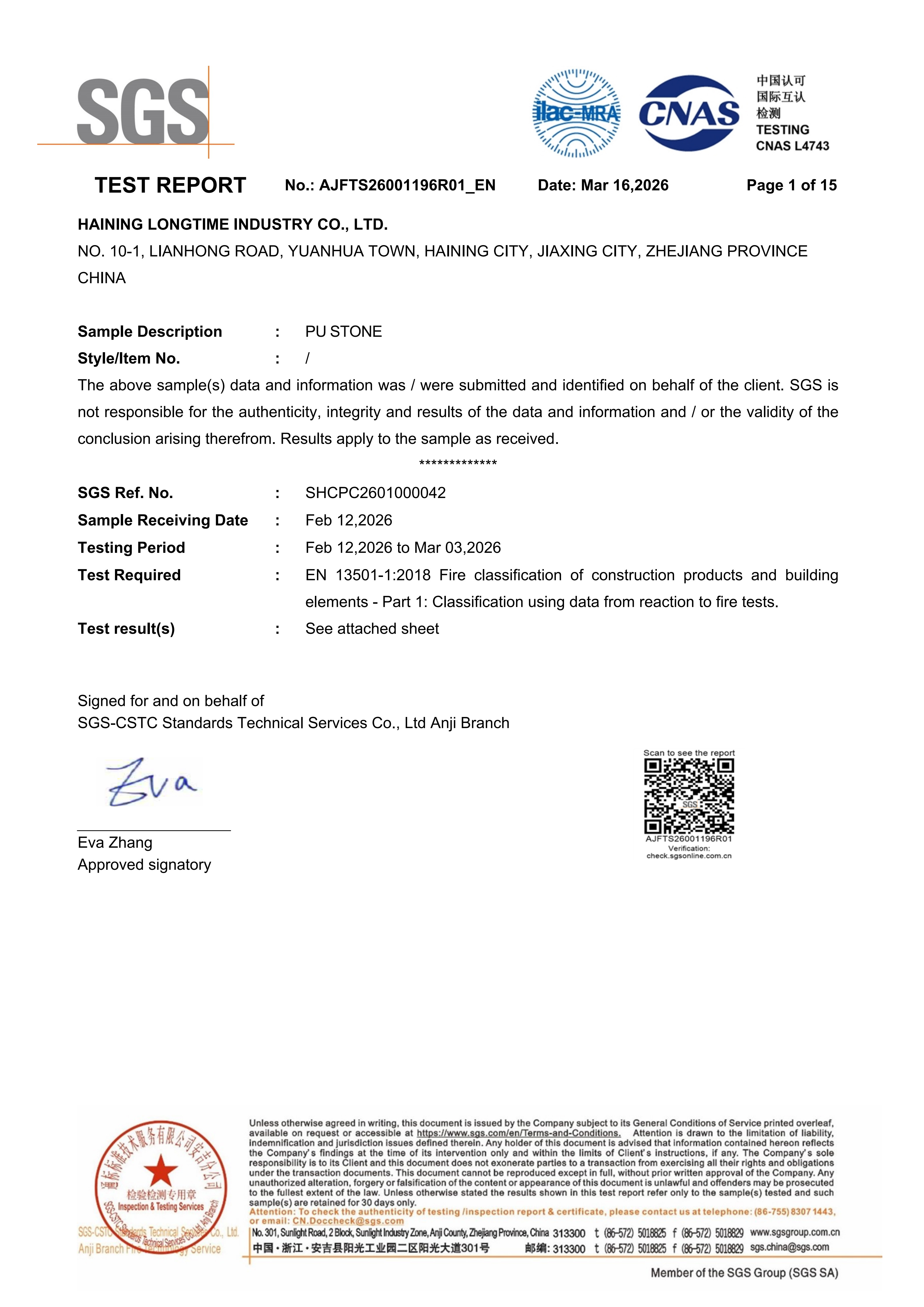
4.Ask for Test Reports
Request UV resistance test, fire rating, and environmental protection test (such as formaldehyde emission) reports. Reliable manufacturers such as Haining Longtime Industry Co., Ltd. will provide complete qualifications.
7.Conclusion: PU Stone is "Stone Imitation", but Not Equal to "Cheapness"
From the perspective of materials science, PU stone is a "smart imitation" of natural stone by humans—it retains the most charming texture and temperament of stone, but gets rid of the physical limitations of being heavy, brittle, cold and expensive.
In today's era of increasing environmental awareness and rising construction labor costs, PU stone is gradually becoming the "first choice" from a "substitute". Whether you are an architect, interior designer, or ordinary homeowner, it is worth understanding this new type of material.
As a mature manufacturer in China's PU stone field, Haining Longtime Industry Co., Ltd. has provided a complete product line from classic mushroom stone to modern geometric series for the global market over the years. If you still have questions about PU stone, or want to obtain samples and quotes, please feel free to contact us for further information.
For samples, quotes, or technical specifications, please contact:
- Haining Longtime Industry Co., Ltd
- Official website: http://www.ltpvcfactory.com
- WhatsApp:17757302351
- Email: [email protected]
- Sample Policy: Free samples, brochures, and buckle demonstration kits are provided; shipping costs are payable upon delivery.