

 English
 Español
In interior design and architectural facade design, stone has always been a highly favored element. Its rough natural texture, solid feel, and unique patterns can instantly give a space a sense of sophistication and storytelling. But natural stone has one unavoidable problem: expensive, heavy, and difficult to install.
In the past two years, a stone-like material called PU stone has become popular among designers. Its realistic appearance, extremely light weight, and convenient installation are changing how designers think about using stone in their projects. This article analyzes, from a designer's perspective, why PU stone has become the choice for an increasing number of projects.
1. The Design Dilemma of Natural Stone
Designers love stone, but natural stone often creates challenges in actual projects.
First is the difficulty of material selection. Renowned designer Tang Zhonghan once mentioned that the natural peeled stone effect he wanted was extremely hard to find, requiring him to "gamble" on scrap stone from stone processing plants, with very few being selected. This scarcity prevents many design ideas from being realized.
Second is high cost. Precious stone varieties can cost over 10,000 RMB per square meter, which ordinary projects simply cannot afford. Even if suitable stone is found, the costs of transportation, installation, and wall reinforcement are substantial.
Third is weight. Natural stone weighs 20 to 40 kilograms per square meter, requiring reinforced wall structures and preventing its use on drywall partitions or lightweight construction. This greatly limits the designer's creative freedom.
These issues make many designers have mixed feelings about stone.
2. How PU Stone Solves These Problems
PU stone solves the above problems.
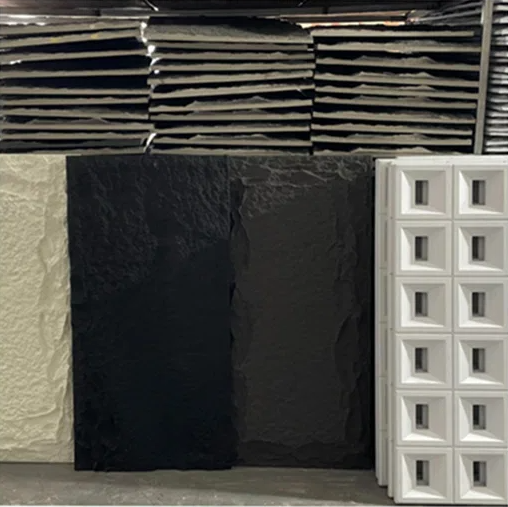
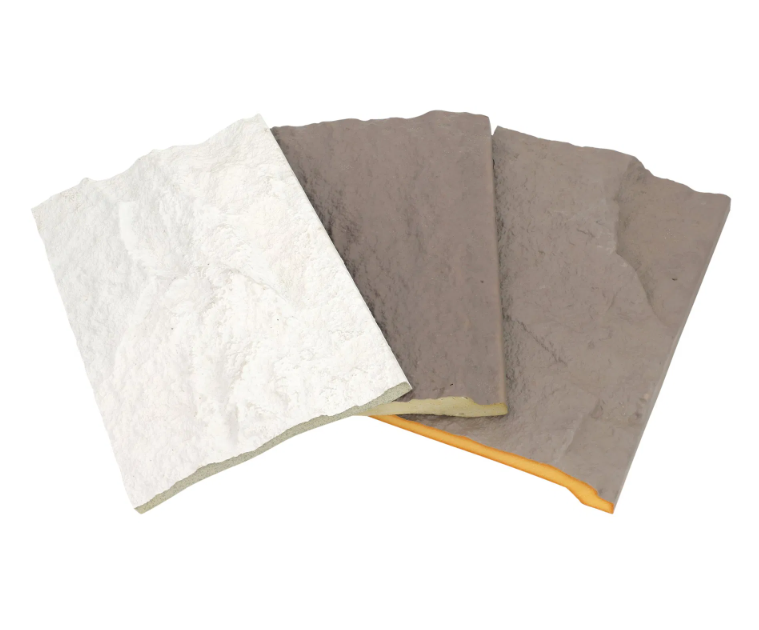
PU stone, short for polyurethane imitation stone panel, is a new decorative material made from high-density polyurethane formed in molds and coated with a stone-like finish. Its core advantages are reflected in three aspects:
Extremely lightweight. Natural stone weighs 20 to 40 kg per square meter, while PU stone weighs only 2 to 4 kg. Some products weigh less than 2 kg per square meter. This weight difference means PU stone can be installed on drywall partitions, wood panels, or even glass without any structural reinforcement.
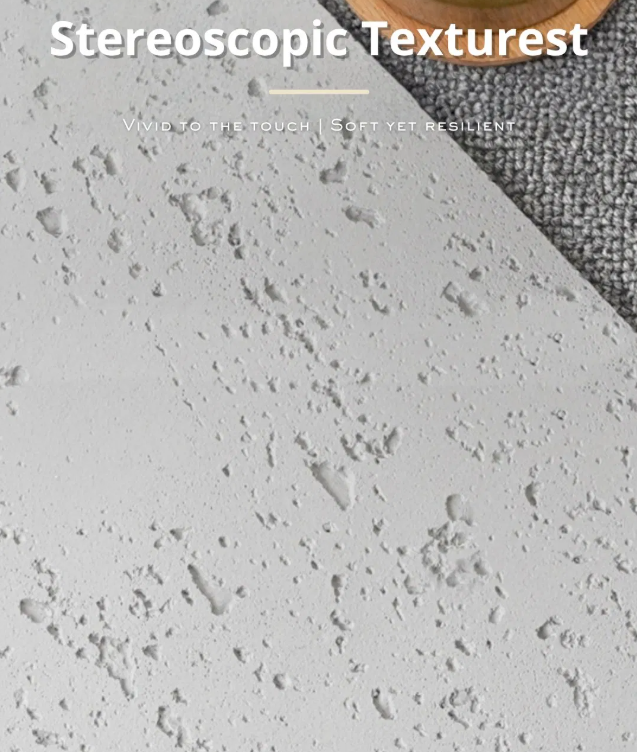
Realistic texture. The molds for PU stone are taken directly from real stone, accurately replicating the natural stone's texture fractures and undulating grain. With a multi-layer coating process, the appearance can be practically indistinguishable from the real thing. Some say that high-quality PU stone is realistic enough to fool even professional designers.
Easy installation. PU stone can be installed with structural adhesive or construction adhesive directly, or with nails, without the need for a cladding system. Ordinary workers can do the job, with installation speed 50% faster than natural stone. A feature wall can be completed in half a day, significantly shortening the project timeline.
3. Design Advantages of PU Stone
Beyond solving the problems of natural stone, PU stone also offers some design advantages that natural stone does not have.
Greater design freedom. PU stone is so lightweight that it can be used on walls and structures that could not previously bear the weight of stone. Designers can now freely use stone elements in lightweight partitions, high-rise building exteriors, and old house renovations. This level of freedom did not exist before.
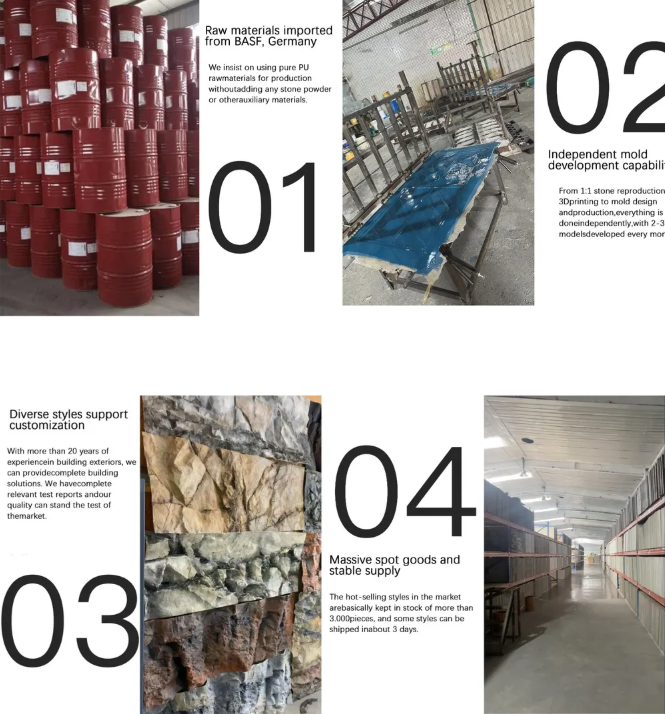
Wider variety of styles. PU stone is produced with molds and can replicate almost all types of cultured stone, including Great Wall stone, slate, river stone, and mushroom stone. For the same appearance, more than four molds are typically used to create a more natural installed effect. Designers can mix and match according to the project style.
Customizable colors. The surface coating of PU stone can be color-adjusted to achieve effects that are difficult to achieve with natural stone. Designers can customize colors according to the project's color scheme without being limited by the inherent colors of natural stone.
Diverse surface finishes. PU stone can achieve the rough fractured surfaces of natural stone, fine slate textures, and even antique finishes. Whether it is modern minimalism, industrial style, wabi-sabi, or neo-Chinese style, there is a matching style available.
4. Design Applications of PU Stone in Spaces
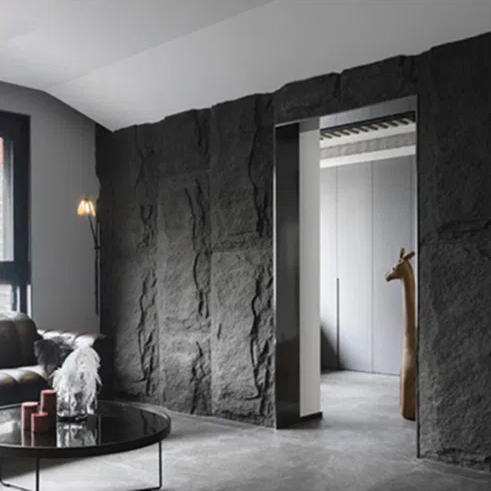
Interior feature walls are the most common application for PU stone. TV feature walls, sofa backgrounds, headboard walls, and entryway accent walls – the cultured stone effect of PU stone quickly creates atmosphere. Light-colored PU stone suits modern minimalism and Scandinavian style, while dark-colored PU stone works well for grand and composed spaces.
Commercial spaces are another important stage for PU stone. Restaurants, cafes, bars, bed-and-breakfasts, and hotel lobbies – PU stone installs quickly without disrupting business and carries a built-in sense of sophistication. One bed-and-breakfast owner reported that the PU stone bar wall attracted so many customer photos that foot traffic noticeably increased.
Building facades are a traditional strength of PU stone. Villa exterior walls, commercial building podiums, and landscape walls – outdoor UV-resistant PU stone combines aesthetics with durability. One designer used PU stone to renovate an old courtyard wall, completing the entire wall in three days, impressing the entire neighborhood.
Old house renovation is a unique strength of PU stone. PU stone can be installed directly over old walls without removing existing finishes – no wall damage, no added building load. For old house renovations, this is an extremely practical feature.
Other applications include cabinet facings, wainscoting, column cladding, bar surfaces, and fireplace surrounds.
5. Installation Points for PU Stone
For designers, understanding the installation points of PU stone helps with planning during the design phase.
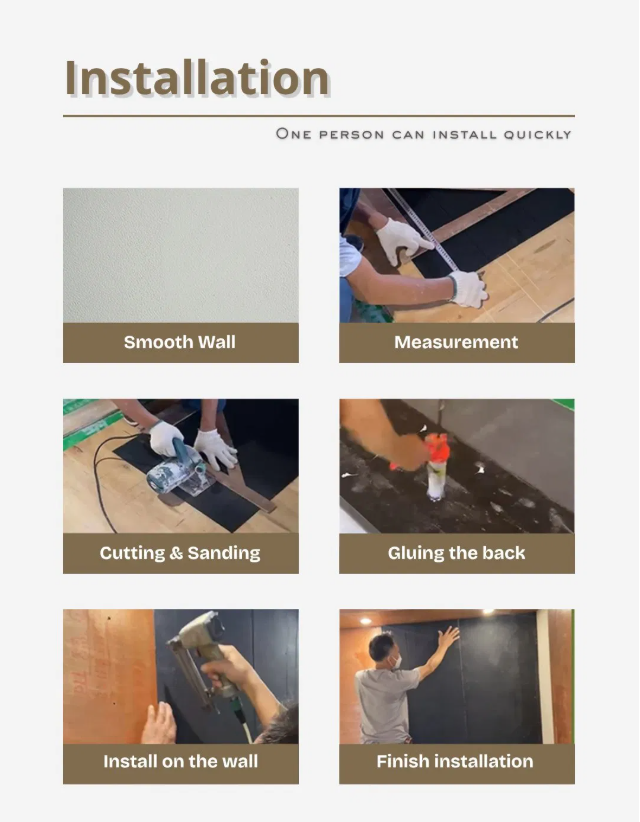
Substrate preparation: The wall needs to be basically flat; no putty is needed. For indoor applications, fiber cement board or wood plywood can be used as a base.
Layout design: Plan the layout according to wall dimensions. Staggered, irregular placement is recommended to enhance realism, avoiding single-direction arrangements.
Cutting and installation: PU stone can be cut on site with a table saw or hand saw. Cut edges should be painted with repair paste. Apply structural adhesive in dots on the back, mount on the wall, and temporarily fix with nails.
Nail hole repair: After fixing, use the manufacturer's repair paint or paste to treat nail holes.
Grouting and cleaning: The joint width is typically 8 mm. Fill with grout and wipe away excess with a damp sponge.
6. Technical Parameters for Designers
Material: High-density polyurethane (PU)
- Standard sizes: 1200×600mm, 600×600mm, 300×300mm; stone-skin type up to 2400×800mm
- Thickness: 20-100mm
- Weight: 2-4 kg per square meter
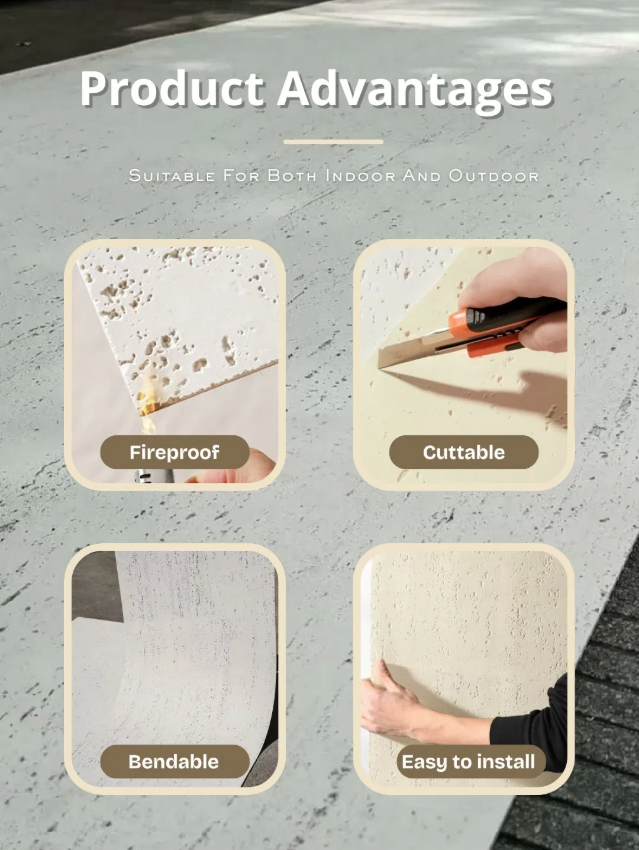
- Fire rating: B1 grade (some products can reach A1 grade)
- Temperature range: -20°C to 120°C
- Surface treatment: Anti-corrosion, wear-resistant, flame-retardant, UV-resistant coating
7. Common Design Concerns Addressed
Q: Will PU stone look fake?
A: High-quality PU stone uses direct molding from real stone and multi-layer coating, making the texture and feel very close to natural stone. It is difficult to distinguish even at close range. The key is to choose products made with soft molds and in-mold coating technology.
Q: Can PU stone be used on exterior walls?
A: Yes. Outdoor-grade PU stone is UV-resistant, acid-resistant, and weather-resistant. Be sure to select outdoor-specific models; indoor types cannot be used on facades.
Q: Is PU stone fire-resistant enough?
A: PU stone is flame-retardant treated and can reach B1 grade, with some products reaching A1 grade. This meets fire safety requirements for most interior applications.
Q: Can PU stone achieve the irregular edges of natural stone?
A: Yes. PU stone is produced with soft molds that can fully replicate the sharp and blunt edges of real stone. Staggered layouts and irregular cutting during installation also enhance the natural feel.
Q: Will PU stone fade under direct sunlight?
A: Outdoor UV-resistant grade with special coating can maintain color for many years without significant fading. However, all outdoor materials undergo slow changes under prolonged exposure – this is normal.
8. Summary
PU stone is not meant to replace natural stone, but to provide designers with a more flexible, more economical, and more convenient option. In projects that require a stone effect but are constrained by budget, structure, or schedule, PU stone performs perfectly. It no longer requires designers to gamble on scraps – they can achieve their design ideas reliably and consistently.
For projects that value both texture and efficiency, PU stone deserves a place on the material list. For samples, color swatches, or project quantity estimates, please contact us.