

 English
 Español
Having trouble passing fire inspections? Try PU Stone.
Many commercial space owners and hotel management teams have encountered this nightmare: the renovation is nearly complete, but the fire inspection just won’t pass. The bottleneck is often not the main structure, but the combustion performance rating of the wall decoration materials. To address this pain point, a new type of composite material called "PU Stone" is being increasingly adopted by engineering teams—it uses high-density polyurethane as the base material, modified for flame retardancy and reinforced with glass fiber, requiring no keels or adhesives, and its combustion performance can reach Class B1 or even Class A2. From the perspective of fire compliance, let’s clarify why PU Stone can save you the trouble of rework.
1.Natural Stone Looks "Non-Flammable", but Installation Holds Hidden Risks
Many owners think: stone won’t burn, so it must be fine. Yet they get rejected during fire inspections every time. Where is the problem?
First, the keels and adhesives used for installation are flammable. Natural stone is heavy, weighing tens or even hundreds of kilograms per square meter, so it must be hung on the wall with steel keels and a large amount of structural adhesive. Both keels and adhesives are organic materials that burn and emit thick smoke when exposed to fire. Even if the stone itself is non-flammable, the entire wall system may fail the inspection due to substandard adhesives.
Second, the test report for the adhesive is a trap. Many adhesives used for dry-hanging stone on the market do not have formal combustion performance test reports. During fire inspections, experts will require proof for all adhesives used. Can’t provide it? At best, you’ll need to rectify; at worst, you’ll have to demolish and rebuild everything. In 2025, a chain hotel in a second-tier city was ordered to rework because of problematic test reports for the stone adhesive, resulting in a direct loss of over 400,000 RMB.
Third, want to make changes after installation? It’s basically equivalent to starting over. Dry-hanging stone takes a long construction period, with high noise and dust. If your store needs to operate while renovating, it’s almost impossible. If you need to change displays or adjust the layout in the future, removing a stone wall is no different from tearing down a load-bearing wall.
2.Why Can PU Stone Pass Inspection in One Go?
With Formal Class B1 Test Reports
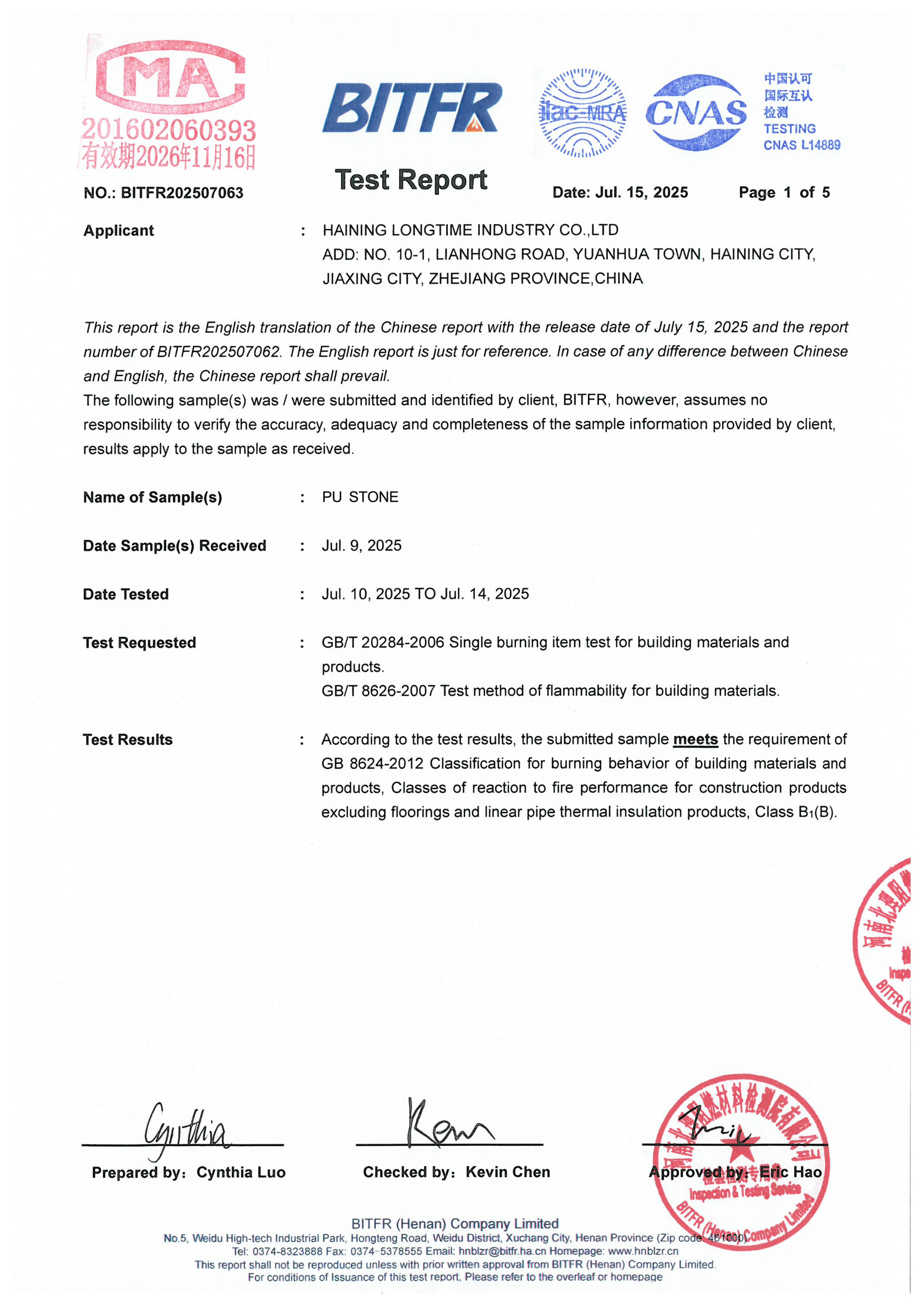
PU Stone undergoes flame-retardant treatment during production, with stable combustion performance at Class B1 (difficult to burn), and some models can reach Class A2 (non-flammable). According to national standards, wall materials in hotels, restaurants, KTVs, shopping malls and other places must be at least Class B1. PU Stone meets this requirement inherently.
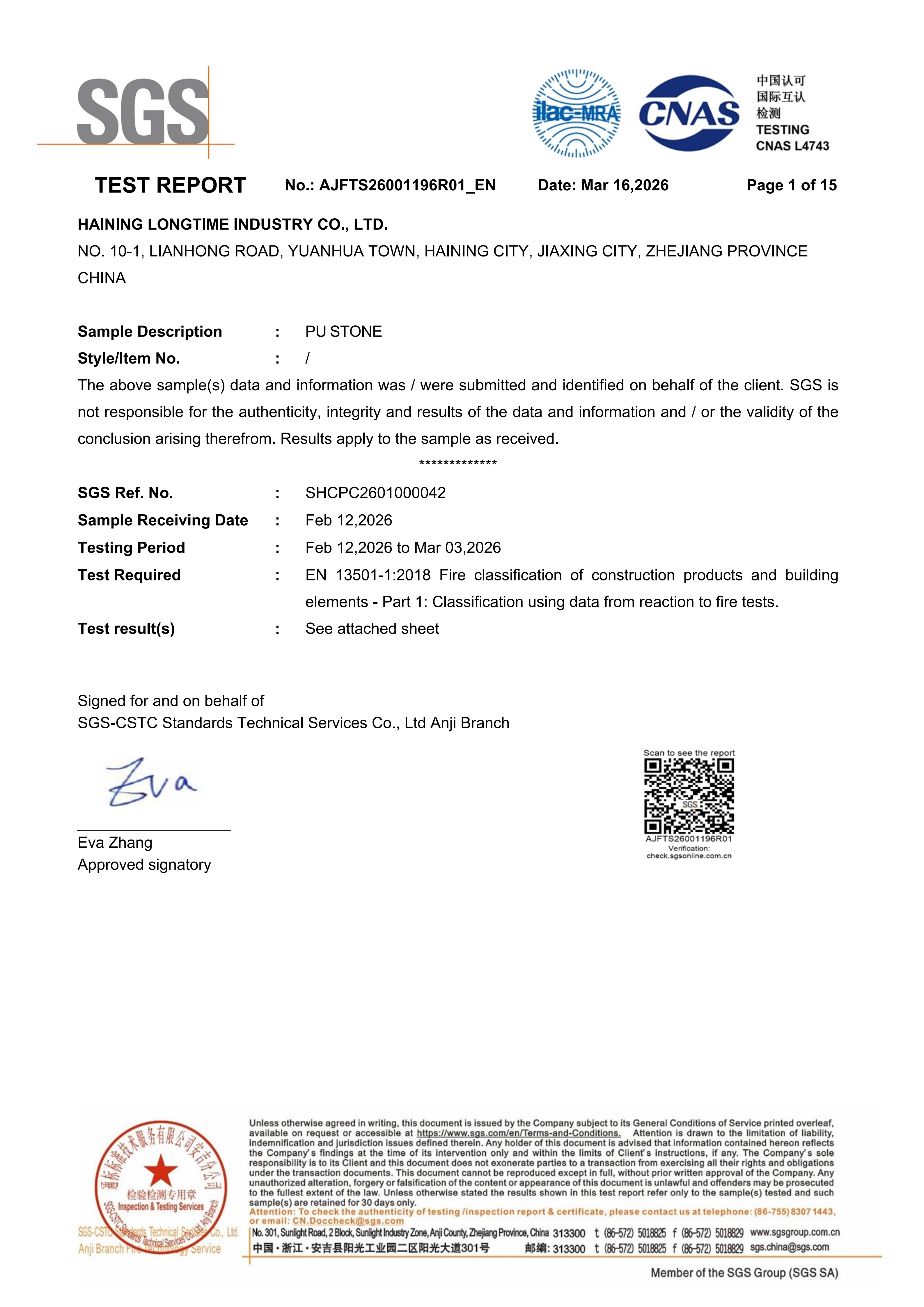
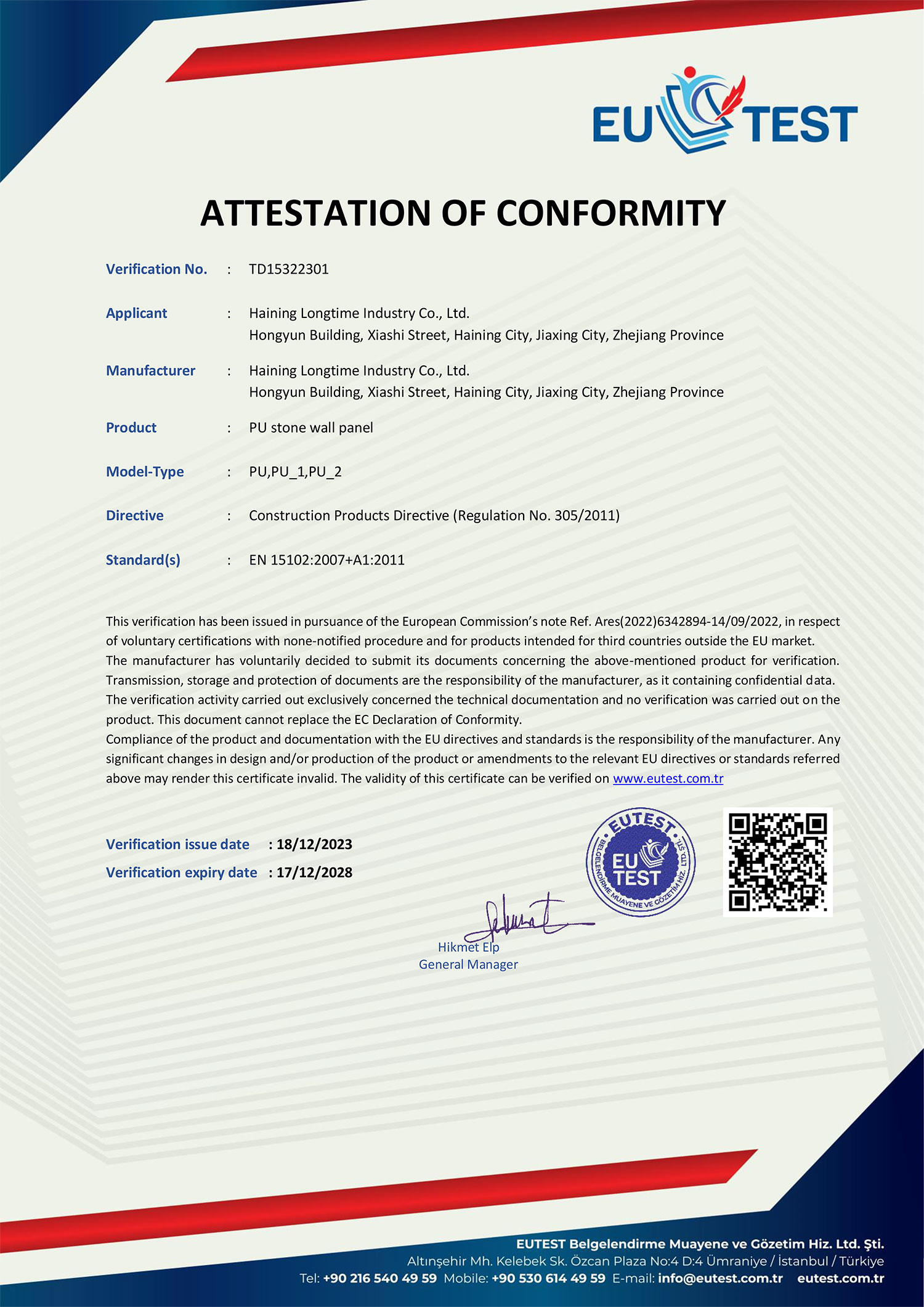
More importantly, each batch of PU Stone is accompanied by an annual test report issued by a CMA/CNAS certified organization, with a verifiable report number and true data. Simply submit it during the inspection, and verify it on-site by burning it with a lighter—passing is almost guaranteed. Many projects get stuck because the supplier cannot provide a valid report for the current year, or the report does not match the actual delivered goods.
No Adhesives or Keels Needed for Installation, Eliminating Hidden Risks
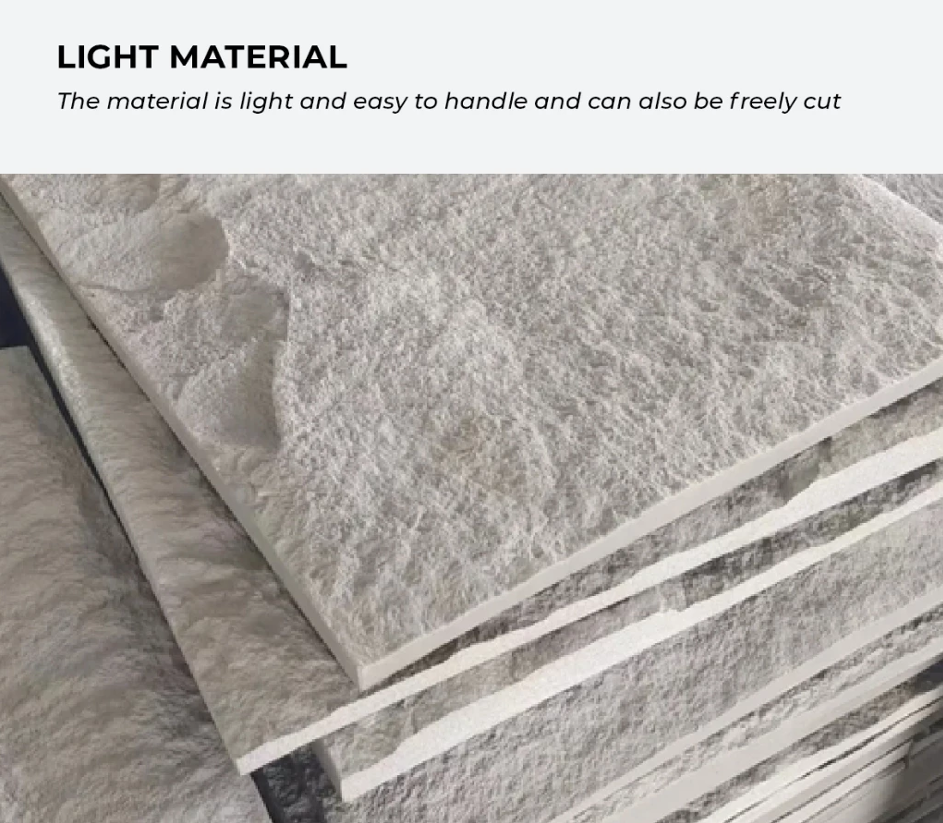
PU Stone weighs only about 2.5 kilograms per square meter (12mm thick), 1/20 the weight of natural stone, so no keels or adhesives are needed at all. How to install it? Use a magnetic system: first lay a 3mm thick magnetic metal base frame on the wall, then directly attach the PU panels to it. No glue, no welding. There are no flammable materials in the entire wall, so the inspection will not get stuck on "substandard adhesives."
Short Construction Period, Allowing Operation During Construction
For the same 100 square meters of wall, natural stone takes 15-20 days, while PU Stone only takes 3-5 days. Moreover, there is no noise, dust, or welding sparks. You can operate normally during the day, and workers can come in to install the panels at night—no mutual interference. For hotels, restaurants and other places where closing for one day means losing money, this advantage is extremely practical.
Solves Many Other Troubles Incidentally
PU Stone has a closed-cell rate of ≥90% and a water absorption expansion rate of ≤0.3%, so it won’t mold during the rainy season in southern China; it can achieve sound insulation of over 35 decibels, making guest rooms and private rooms quieter; it can withstand temperatures from -40℃ to 120℃, suitable for cold storage or near heating; its surface can also be treated for antibacterial properties (over 99%), making it suitable for hospitals and kindergartens. One panel solves multiple problems, and it is much more cost-effective than real stone overall.
3.Real Case: A Hotel in Hangzhou Passed Inspection This Way
Project Background
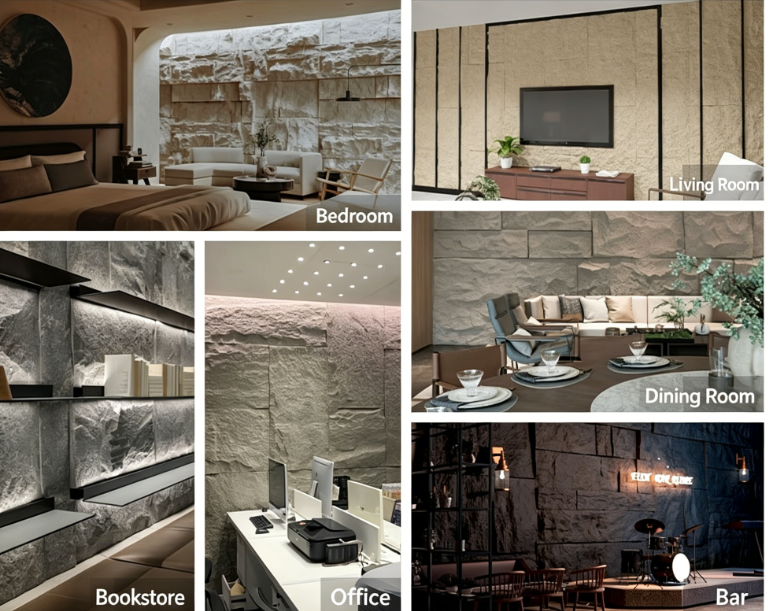
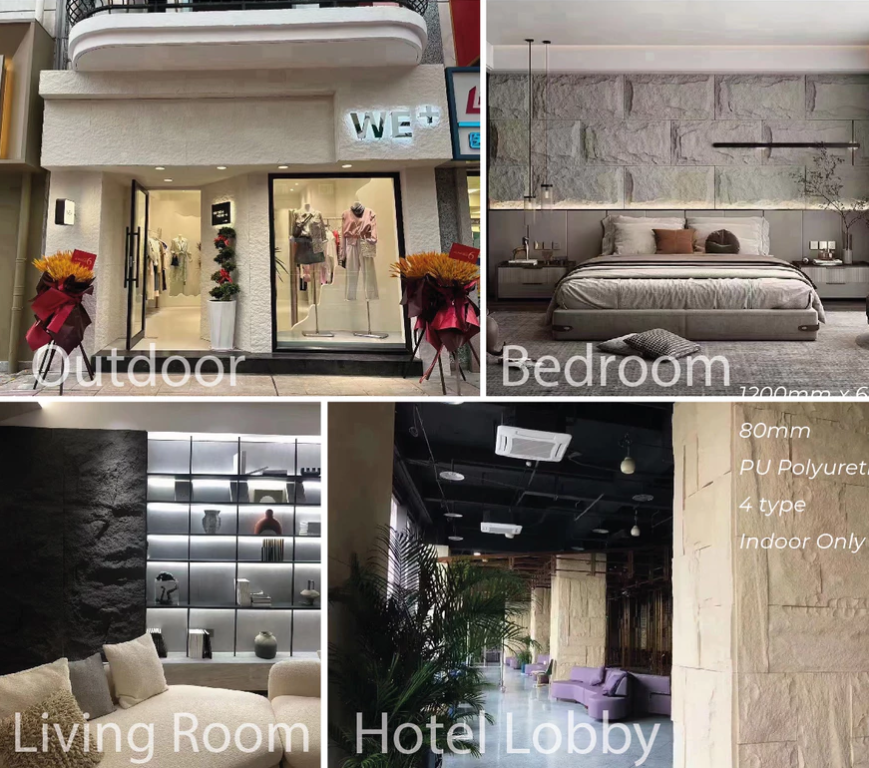
In early 2025, a boutique hotel with 48 guest rooms by West Lake in Hangzhou was to be renovated. The owner wanted to create a stone-textured style in the lobby, corridors, and top-floor restaurant. The designer initially recommended natural cultural stone, but the fire consultant directly poured cold water on the idea: cultural stone is too heavy, requiring a steel structure and a large amount of structural adhesive, with a construction period of at least 45 days. Even if the adhesive has a Class B1 report, if the workers mix the ratio incorrectly or apply it too thickly on-site, the inspection may still fail.
The Decision-Making Process
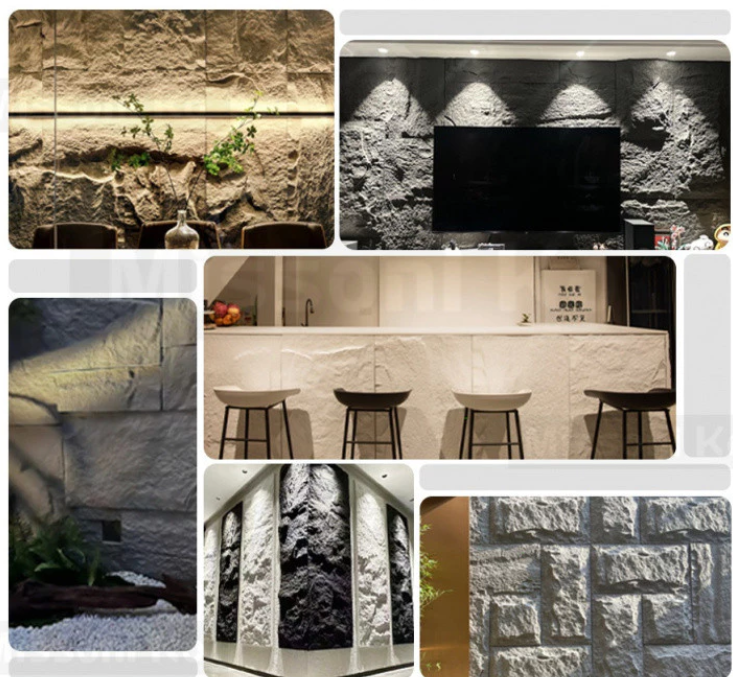
Recommended by the fire consultant, the owner came into contact with PU Stone. During the on-site sample comparison, the designer and the owner could hardly distinguish PU Stone from real stone when standing one meter away—its surface concave-convex texture, color transition, and natural peeling edges were very realistic. And when they lifted it by hand, it was surprisingly light.
Construction Process
The hotel adopted "construction while operating"—guest rooms were renovated floor by floor in closed areas, and the lobby and restaurant were only worked on at night. PU Stone was installed using the magnetic system: the original latex paint wall was simply cleaned, a 3mm thick magnetic metal base frame was laid, and then the panels were attached. The gap between panels was ≤1mm.
The total area of the lobby and corridors was 320 square meters, which 4 workers finished in 5 nights. The private rooms on the top-floor restaurant were 110 square meters, completed by 2 workers in 3 nights. No welding, no glue, no keels were used throughout. The hotel received guests normally during the day, and only early guests occasionally saw a few samples placed in the corner of the corridor, which did not affect business at all.
Inspection Process
After completion, the fire department came for inspection. The expert team focused on three things: evacuation routes, fire facilities, and wall materials. For PU Stone, the experts took one sample each from the lobby, corridor, and private room on-site and burned them with a lighter—they did not catch fire, the flame went out within 2 seconds after being removed, with no melting or dripping, and little smoke. The experts then checked the full set of original test reports, confirmed they were in order, and directly wrote "qualified" in the inspection opinion.
Post-Opening Situation
The hotel has been open for more than half a year, and the walls have no peeling, fading, scratches, or mold. The cleaning staff said it is very easy to clean—just wipe it with a damp cloth. Several times, guests’ luggage scratched the corridor walls; they thought there would be marks, but they disappeared completely after wiping.
4.Choose the Right Material, No Worry About Inspection
Doing business is not easy, and fire inspection should not be the final anxious hurdle. Instead of struggling with the hidden risks of dry-hanging natural stone and adhesive hazards, it is better to use PU Stone from the start—it has the appearance of real stone, formal Class B1 test reports, and incidentally solves a series of problems such as fast construction, good sound insulation, and moisture resistance.
The PU Stone we often refer to is R&D and produced by Haining Longtime Industry Co., Ltd. With more than 20 years of experience in polyurethane composite materials, the company has three production bases in China and its products are exported to more than 50 countries. It controls the entire chain from formula and molds to surface coating, so key links such as test reports and batch consistency are reliable. Compliant operation starts with choosing the right wall materials. It gives peace of mind to the fire department, guests, and the owner.
For samples, quotes or technical consultation, please contact:
- Official Website: http://www.ltpvcfactory.com
- WhatsApp: +86 17757302351
- Email: [email protected]
- Sample Policy: Free samples and brochures are provided, freight collect