

 English
 Español
Natural stone has long held an important place in architectural decoration. Its substantial texture and natural patterns create a high-end spatial atmosphere. However, natural stone also has notable drawbacks: heavy weight, high transportation costs, difficult installation, and high prices. These limitations restrict its use in many scenarios.
PU stone (polyurethane imitation stone panel) solves these problems. It is a lightweight decorative material made of polyurethane foam with a stone-like coating on the surface. It looks almost identical to natural stone but weighs only a fraction of it. This article introduces the material properties, core advantages, applicable scenarios, and installation methods of PU stone.
1. What is PU Stone?
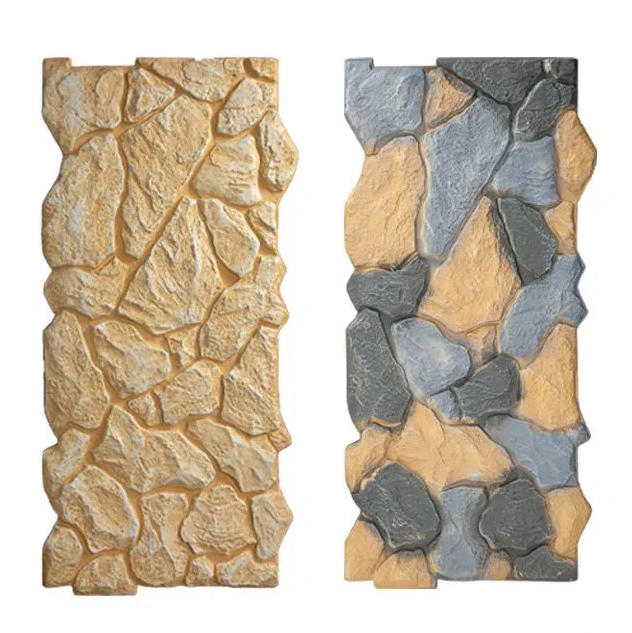
PU stone, short for polyurethane imitation stone panel, is a high-performance foam material. Its main component is polyurethane resin, which is cast in molds and then coated with a stone-like finish to present the texture, color, and feel of natural stone.
The key technologies behind PU stone are mold precision and the realism of the surface coating. High-quality PU stone uses silicone molds taken directly from natural stone, allowing each panel to accurately replicate the details of the original stone. The surface coating is applied in multiple layers, including primer, base color, effect color, and protective layer, giving the finished product a three-dimensional appearance and color variation similar to natural stone under different lighting conditions.
PU stone contains no harmful substances and is recyclable, making it an environmentally friendly material.
2. Key Comparisons Between PU Stone and Natural Stone
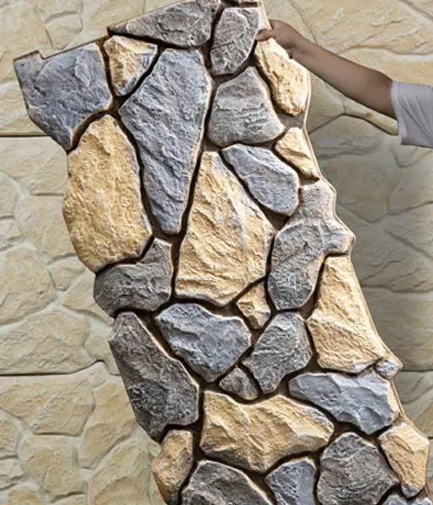
Weight: Natural stone weighs about 20 to 40 kilograms per square meter. PU stone weighs about 2 to 4 kilograms per square meter, roughly one-tenth that of natural stone.
Installation: Natural stone requires professional stone cladding or wet-setting methods, often needing reinforced wall structures, with high labor costs. PU stone can be fixed with adhesive or screws, and an ordinary carpenter can install it.
Transportation: Natural stone has high shipping costs and is easily broken. PU stone is lightweight, stackable, low-cost to ship, and has a low breakage rate.
Fabrication: Natural stone is difficult to cut, requiring water jets or specialized blades, and on-site cutting generates a lot of dust. PU stone can be easily cut with a utility knife or ordinary saw blade, keeping the work area clean.
Price: Natural stone ranges from 200 to over 1000 RMB per square meter (excluding installation). PU stone ranges from 80 to 200 RMB per square meter (including coating).
Fire resistance: Natural stone is non-combustible, Class A fire rating. PU stone with flame-retardant treatment can achieve B1 grade.
Texture: Natural stone feels cold and hard to the touch. PU stone feels warm and has some elasticity.
Weather resistance: Natural stone has excellent weather resistance. Outdoor-grade PU stone with UV-resistant coating lasts 5 to 10 years.
3. Five Core Advantages of PU Stone
Advantage 1: Lightweight, no special substrate required
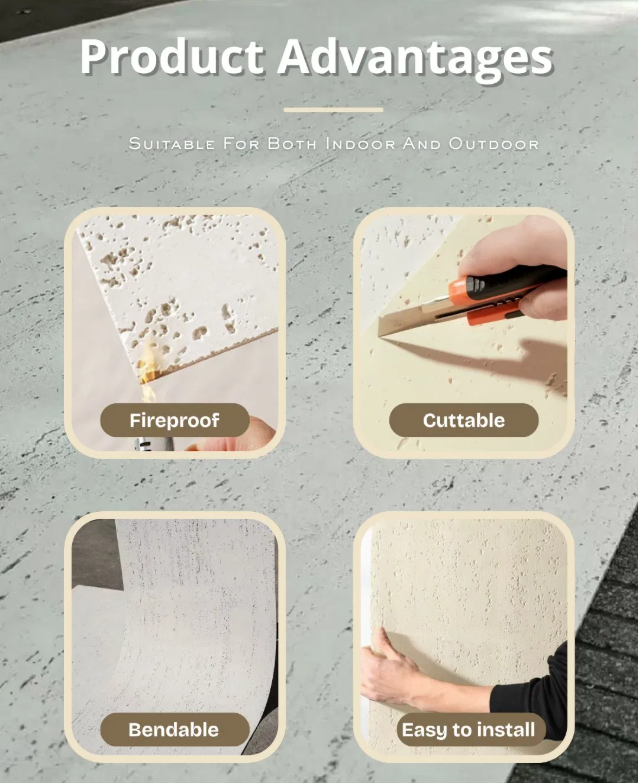
The extremely light weight of PU stone means it can be installed directly on ordinary drywall partitions, wood panels, old tiles, or even glass, without reinforcing the wall. This is very convenient for old house renovations and lightweight construction.
Advantage 2: Fast installation, labor savings
Installing PU stone does not require professional stone masons. Using structural adhesive or construction adhesive along with pneumatic nails, one person can complete 20 to 30 square meters per day. Compared to natural stone, labor costs are reduced by more than 50%, and the construction period is shortened by two-thirds.
Advantage 3: Realistic texture, wide variety of choices
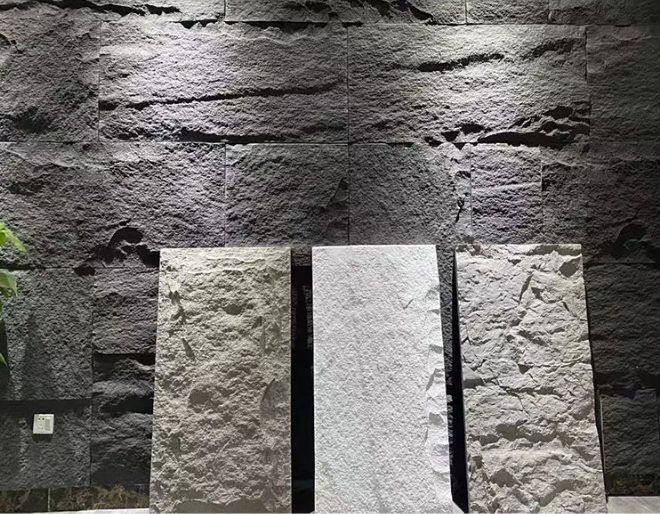
PU stone uses direct molding from real stone, so each panel faithfully replicates the texture of natural stone. Common styles include cultured stone, slate, bluestone, brick patterns, and antique stone. Colors and surface effects can also be customized.
Advantage 4: Environmentally safe, radiation-free
Natural stone may contain radioactive substances (such as radon gas), posing health risks when used in enclosed spaces over long periods. PU stone contains no radioactive materials and no formaldehyde, making it safe for indoor use.
Advantage 5: Clean installation, dust-free
Cutting natural stone on-site generates a large amount of dust, which is unfriendly to installers and indoor environments. PU stone can be cut with a utility knife or hand saw, producing almost no dust, making it suitable for interior finishing and occupied home renovations.
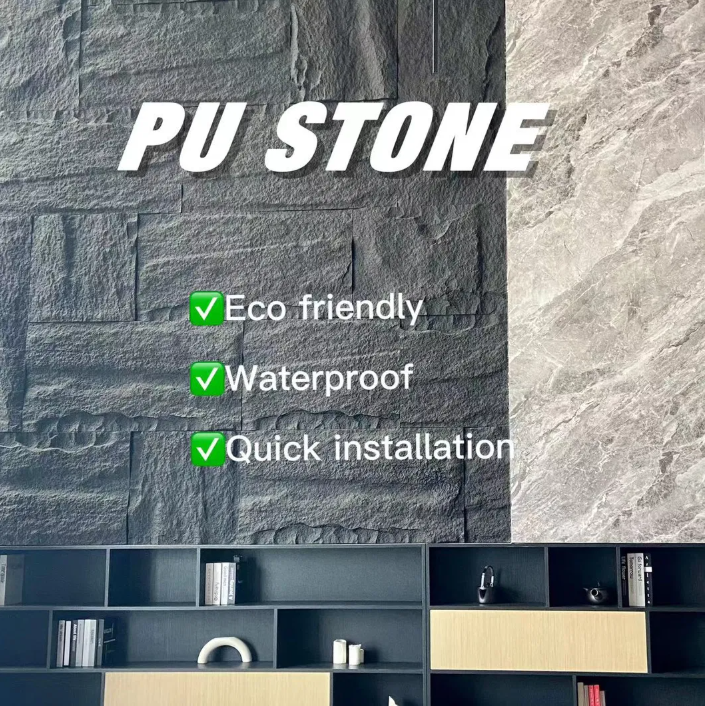
4. Suitable Scenarios for PU Stone
Interior walls: TV feature walls, sofa backgrounds, headboard walls, entryways, corridors. The cultured stone effect of PU stone is ideal for rustic, industrial, and wabi-sabi styles.
Commercial spaces: Restaurants, cafes, bars, bed-and-breakfasts, hotel lobbies. Stone-like walls quickly create atmosphere and can be installed fast without disrupting business.
Building facades: Villa exterior walls, commercial building podiums, landscape walls. Outdoor-grade PU stone with UV resistance and weather resistance is required.
Landscape architecture: Garden walls, planter beds, water feature backgrounds. The lightweight nature reduces foundation load requirements.
Old house renovation: Directly cover old walls without removing existing finishes – fast construction, no debris.
5. Installation Method for PU Stone
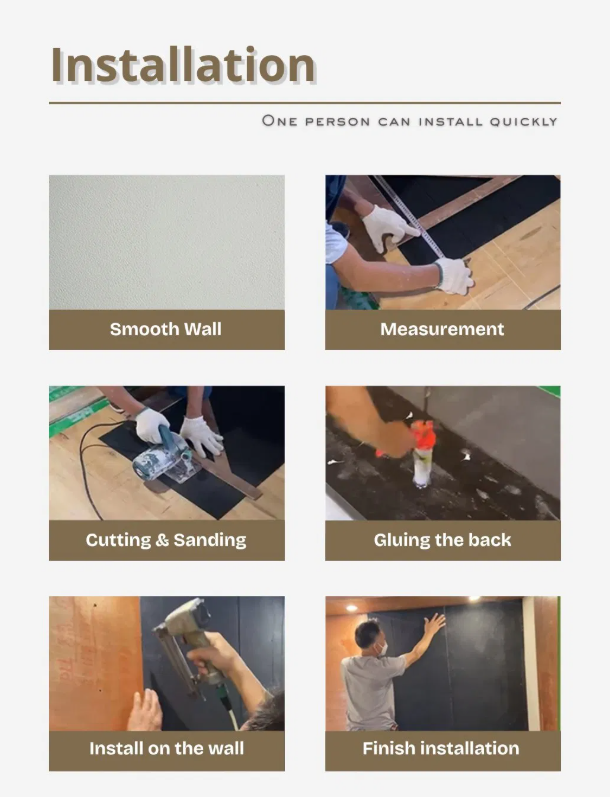
Installing PU stone is much simpler than natural stone. The steps are as follows:
Step 1: Prepare the wall. The wall must be flat, dry, and free of dust. For old walls, check for hollow areas and do simple leveling if necessary.
Step 2: Dry lay the stones. Arrange the PU stones on the floor according to the design pattern, adjust for color variation and texture transitions, and take photos to record the order.
Step 3: Apply adhesive. Apply polyurethane-specific structural adhesive or construction adhesive to the back of the PU stone using dots or strips. Use an appropriate amount of adhesive. Small stones can also be fixed with foam adhesive.
Step 4: Stick the stones. Press the PU stones onto the wall at their designated positions, pressing gently to distribute the adhesive evenly. Adjust the gaps (typically 5 to 15 mm for natural-looking joints).
Step 5: Reinforce temporarily. Before the adhesive cures, use pneumatic nails to temporarily fix the stones in inconspicuous spots to prevent slipping. The nails can be removed or left in place after 24 hours.
Step 6: Grout (optional). For a more realistic stone effect, fill the joints with grout, then wipe away excess grout with a damp sponge, leaving grout only inside the joints.
Note: For outdoor installation, use weather-resistant structural adhesive and ensure the product is outdoor UV-resistant grade.
6. Daily Maintenance of PU Stone
Indoor PU stone walls require almost no maintenance. Remove dust with a feather duster or vacuum cleaner. For stains, wipe with a damp cloth and neutral cleaner. Do not use steel wool or strong acids or alkalis.
Outdoor PU stone walls can be rinsed once a year with a low-pressure water washer to remove dust and moss seeds. Avoid using high-pressure water washers at close range, as they may damage the surface coating.
The coating on PU stone has some scratch resistance, but avoid scratching forcefully with sharp objects.
7. Frequently Asked Questions
Q: Is PU stone waterproof?
A: Indoor grade is water-resistant but not suitable for prolonged immersion. Outdoor grade has a waterproof coating and can withstand rain.
Q: Is PU stone suitable for bathrooms?
A: It can be used in dry areas (such as behind a vanity or above the toilet). It is not recommended for shower areas, as long-term high humidity and direct water spray may affect the coating life. For shower areas, tiles or WPC panels are better options.
Q: Will PU stone fade?
A: Indoor use will not cause fading. Outdoor grade with UV treatment can maintain color for 3 to 5 years without significant fading, after which slow fading may occur.
Q: Can PU stone be painted to change its color?
A: Yes. Latex paint or stone-specific paint can be sprayed on the surface, but this will cover the original stone texture.
Q: Which is better, PU stone or GRC stone?
A: PU stone is lighter, faster to install, and less expensive. GRC is heavier, more brittle, and has a higher breakage rate during shipping. For interior decoration, choose PU stone. For large outdoor landscape features, GRC may be more suitable.
8. Summary
PU stone is a lightweight, eco-friendly, and easy-to-install stone-like decorative material. It solves the problems of heavy weight, difficult installation, and high cost associated with natural stone, while maintaining realistic stone texture. For interior feature walls, commercial space decoration, old house renovation, and lightweight building facades, PU stone is a highly cost-effective choice.
We offer a variety of PU stone samples, including cultured stone, slate, brick patterns, and more. Contact us to request samples and color swatches.
For samples, quotes or technical consultation, please contact:
Official Website: http://www.ltpvcfactory.com
WhatsApp: +86 17757302351
Email: [email protected]
Sample Policy: Free samples and brochures are provided, with freight collect.