

 English
 Español
PS Wall Panels Gain Global Traction: Why Contractors Are Switching from PVC and Paint
For years, the wall panel market has been dominated by PVC and paint. But a quieter shift is underway. PS (polystyrene) wall panels – long established in food packaging and consumer goods – are now emerging as a serious alternative for architectural interiors, especially in commercial, hospitality, and high-humidity residential projects.
Unlike PVC panels that often yellow within 2-3 years or latex paint that peels the moment humidity rises, PS panels offer a combination of B1 fire safety, ≤0.5% water absorption, zero formaldehyde, and 10-15 year service life – without requiring professional installation or wall stripping.
Industry observers point to three reasons why PS panels are being specified more frequently across Southeast Asia, the Middle East, Europe, and South America.
1. Fire Performance That Actually Matters
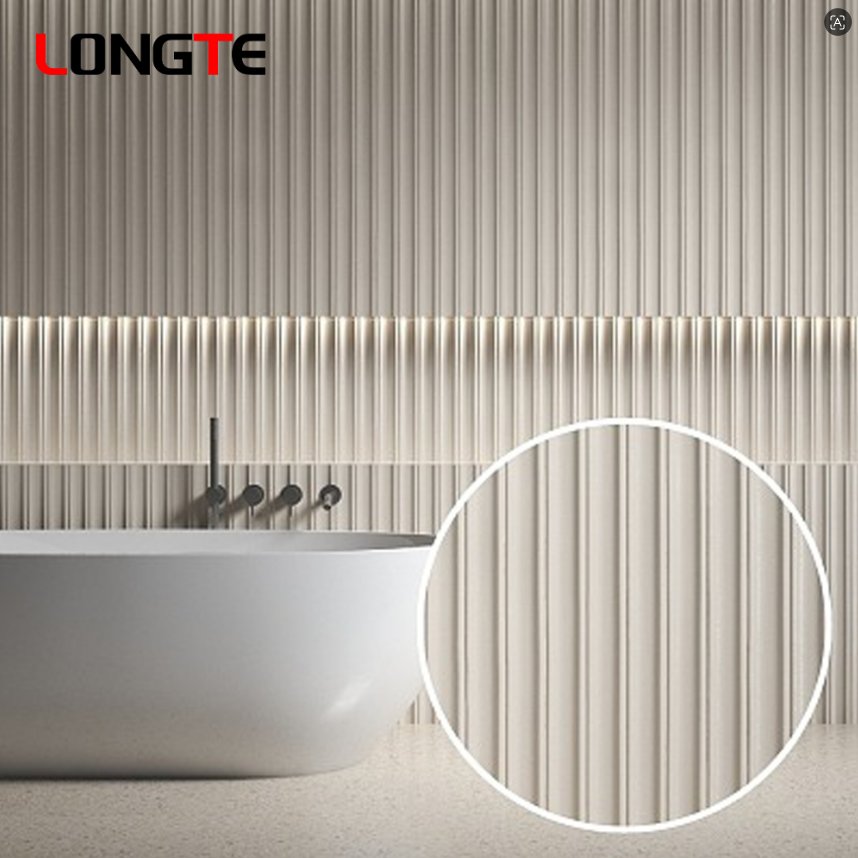
In many regions, fire codes for hotels, schools, and apartment buildings are getting stricter. PVC panels typically carry B2 or B3 ratings – meaning they burn, drip, and release toxic hydrogen chloride gas. PS panels achieve B1 (difficult to ignite) under GB 8624 and Class B-s1,d0 under EN 13501-1.
“In a fire, seconds count. B1 panels self-extinguish within 2-3 seconds after the flame source is removed,” explains a building material compliance consultant in Dubai. “That’s the difference between a localized incident and a spreading disaster.”
For contractors exporting to markets with strict fire safety enforcement – like Saudi Arabia’s Civil Defense requirements or Europe’s CPR regulation – the absence of a B1 certificate can stop a shipment at customs. PS panels come with full third-party fire reports.
2. Waterproofing Without Special Coatings
PVC wall panels are often marketed as “water resistant,” but their actual water absorption typically ranges from 1-2%. Over time, moisture penetrates the back, causing edge swelling, hidden mold, and adhesive failure.
PS panels are fundamentally different. Made from solid polystyrene with a closed-cell structure, they achieve water absorption ≤0.5% – meaning they do not absorb water at all. Even after 24 hours of full immersion, there is no weight gain, no swelling, no delamination.
This makes them suitable for:
- Bathroom dry zones (vanity walls, toilet backsplashes)
- Basements and underground retail
- Coastal apartments with persistent humidity
- Laundry rooms and utility areas
Unlike ceramic tiles, PS panels have no grout lines to collect mold. Unlike paint, they never peel. For tropical markets like Indonesia, the Philippines, and Brazil, this performance difference is a direct operational saving.
3. Zero Formaldehyde – A Growing Global Requirement
Formaldehyde limits have become a non-negotiable tender requirement for many government and institutional projects – from schools in Europe to hospitals in the Middle East. PS panels are tested to GB 18580 and EN 717-1, with results consistently showing “not detected” (below the instrument detection limit of 0.01 mg/m³).
No plastic smell. No off-gassing. Occupants can move in immediately after installation.
This is particularly valued in:
- Kindergarten and nursery renovations
- Healthcare facilities (clinics, dental offices, senior homes)
- Bedrooms and rental apartments where tenants expect immediate occupancy
By contrast, many PVC panels contain plasticizers (phthalates) and lead-based stabilizers. Even “low-VOC” latex paint releases VOCs during drying – requiring 3-7 days of ventilation.
4. Installation: One Day, No Mess, No Moving Out
Traditional renovation – stripping old walls, applying putty, sanding, painting – takes at least a week for a single room. Dust and fumes make the space uninhabitable.
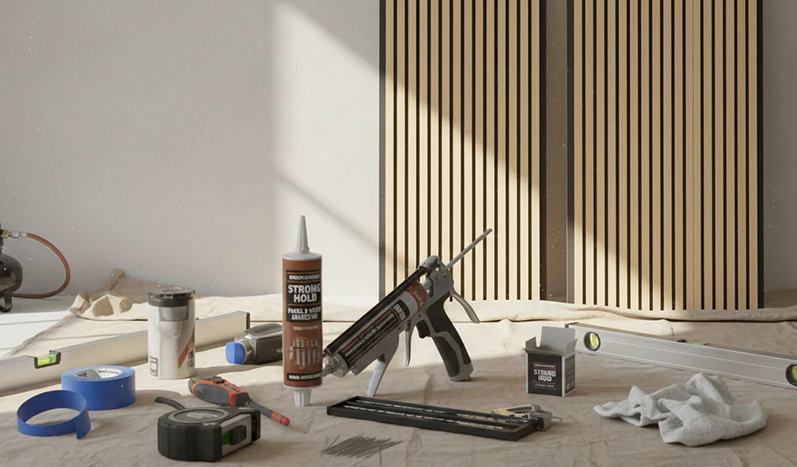
PS panels install directly over old latex paint, old wallpaper, even old tiles. No stripping, no leveling. The tongue-and-groove system locks panels together, and either construction adhesive or a nail gun fixes them to the wall.
Two workers can cover 100m² in one day. Dust-free. No odor. The room is usable the same evening.
A hotel owner in Thailand recently switched from repainting to PS panels for guest room corridors. “Painting meant closing the floor for 5-7 days. With PS panels, we finished 32 rooms over a weekend. No guest complaints, and the walls look better.”
5. Cost Comparison: PS vs. PVC vs. Paint (10-Year View)
| Material (20m²) | Upfront Cost | Redos in 10 Years | Total 10-Year Cost | Maintenance |
| Latex paint (hired) | $350-500 | 2-3 times | $1050-1500 | High – stains, dents, repaint |
| Cheap PVC (DIY) | $400-600 | 1-2 times | $800-1200 | Medium – yellows, scratches, replace |
| PS panels (DIY adhesive) | $250-350 | 0 | $250-350 | None – wipe clean |
While PS panels have a higher upfront material cost than cheap PVC, the 10-year total cost is often lower or equal – and there is no recurring labor, no downtime, no tenant dissatisfaction.
6. What to Look for in a PS Panel Supplier
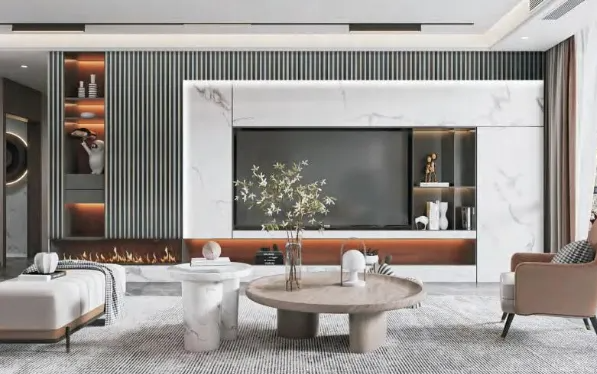
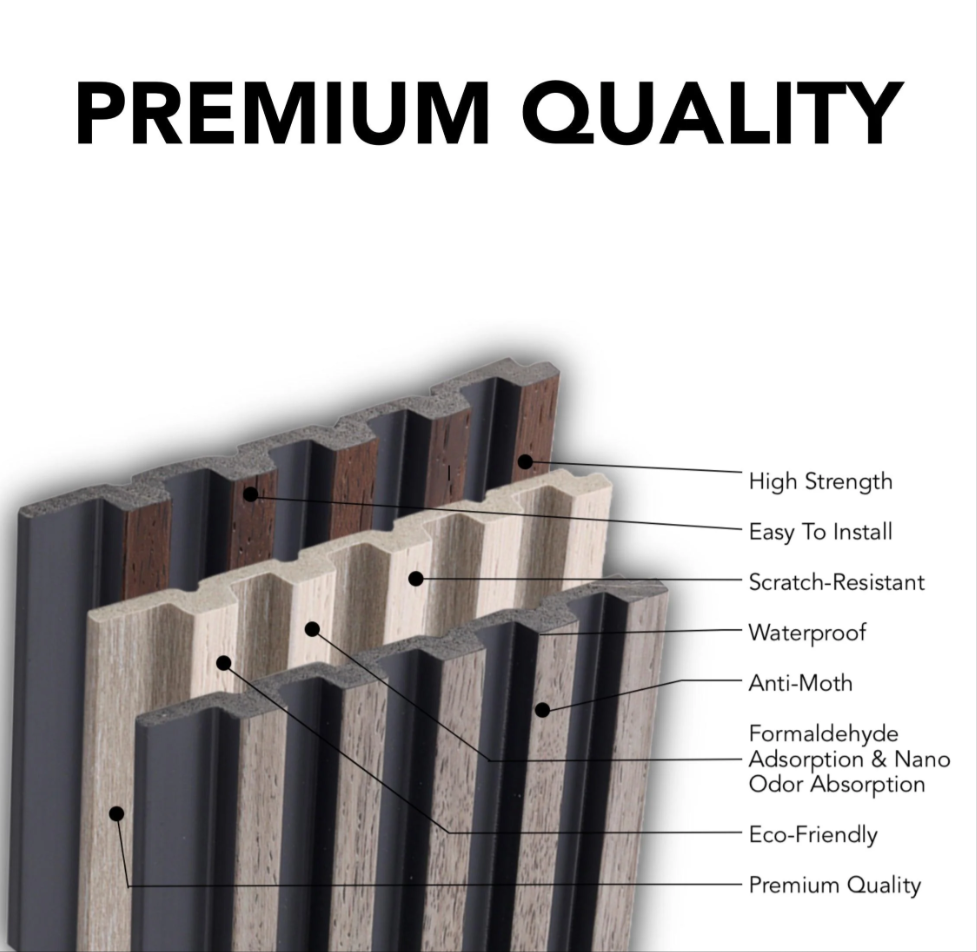
Not all PS panels are the same. Importers and contractors should verify:
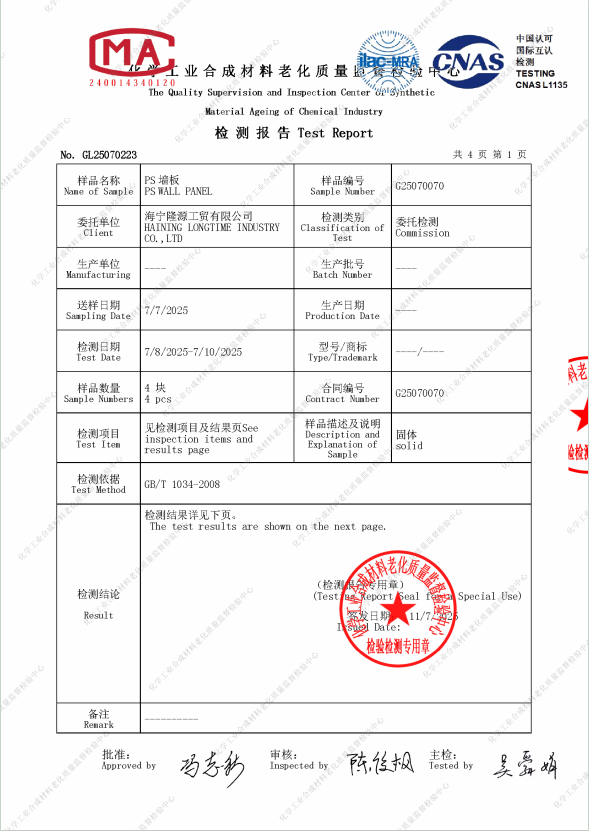
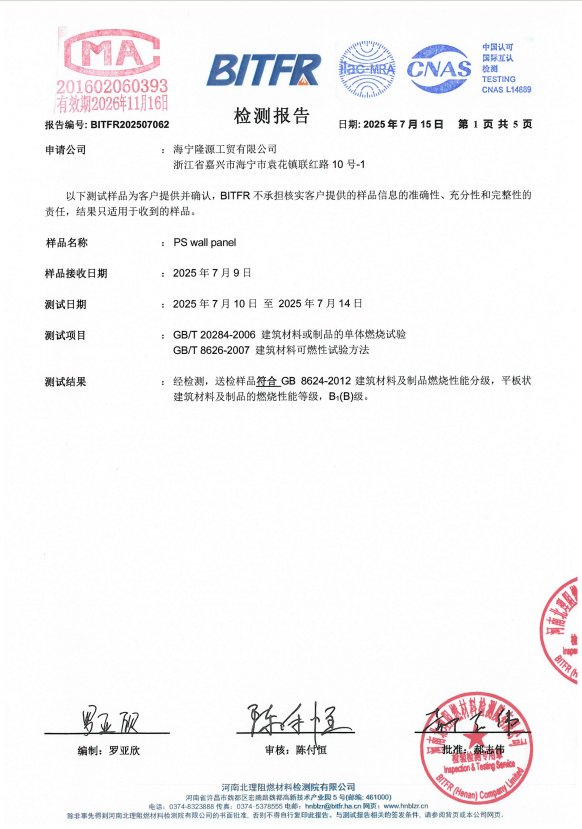
- B1 fire report (GB 8624 or EN 13501-1) – not just “fire retardant” claims.
- Water absorption ≤0.5% – tested by accredited lab.
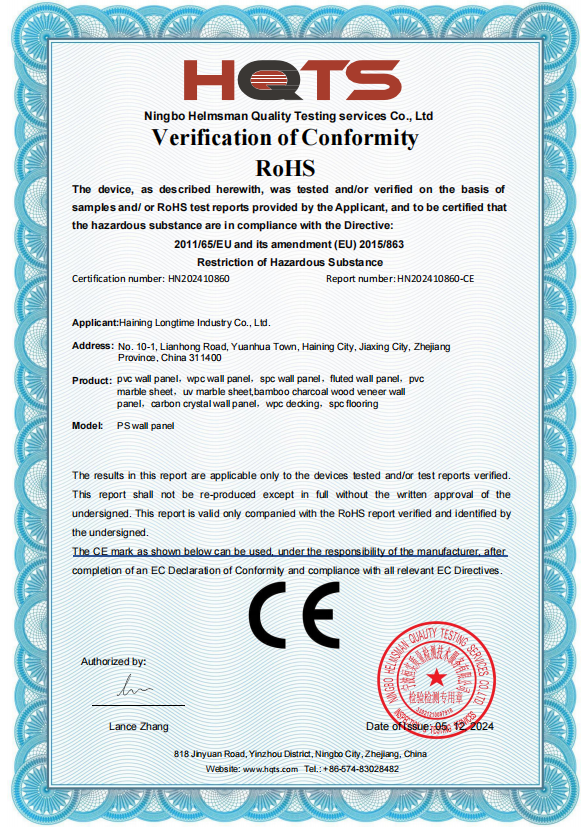
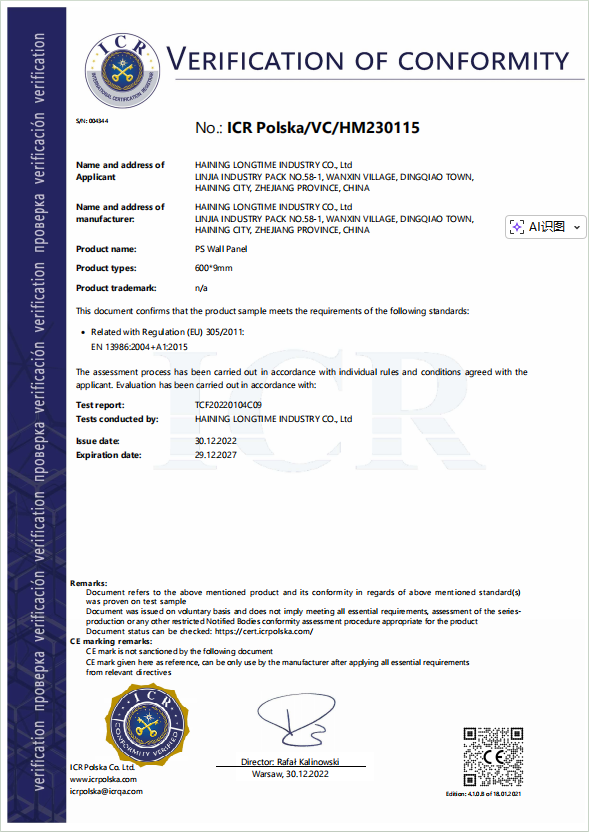
- CE certificate with EN 13501-1 and EN 717-1.
- Formaldehyde “not detected” – actual values, not “qualified”.
- Batch traceability – each pallet labeled with production date and material lot.
7.Product qualification(产品认证)
FAQ
- Where is your factory located?
NO.10-1 LIANHONG ROAD, YUANHUA TOWN, HAINING CITY, ZHEJIANG PROVINCE, CHINA. - Are PS panels suitable for outdoor use?
No. PS panels are designed for interior walls. For covered balconies with no direct rain and limited UV, light colors perform well. For open air exposure, ceramic tiles or specialized exterior panels are better. - Can PS panels be installed over existing tiles?
Yes. Clean the tiles, apply construction adhesive, and press the PS panel onto the tile surface. No need to remove old tiles. - How do PS panels compare to ceramic tiles for bathroom walls?
Tiles are excellent for wet zones (shower stalls). PS panels are excellent for dry zones (vanity areas, toilet walls). PS panels are warmer to touch, have no grout lines to clean, and install much faster. For large hotel bathrooms, many specifiers now use tile inside the shower and PS for the rest. - Do PS panels require any special maintenance?
No. A damp cloth with mild soap (if needed) is enough. Do not use abrasive scrubbers or acetone-based solvents.
Summary
PS wall panels are not a replacement for everything. But for hotel guest rooms, rental apartments, office lobbies, healthcare facilities, and residential renovations where fire safety, waterproofing, zero formaldehyde, and low maintenance are priorities, they are increasingly the first choice.
With B1 fire rating, ≤0.5% water absorption, CE certification, and formaldehyde “not detected,” PS panels meet the documentation requirements of global tenders. And with adhesive or nail-on installation over existing walls, they turn a week-long renovation into a one-day job.
For specifiers, contractors, and importers looking to reduce long-term maintenance costs while improving occupant safety, PS wall panels are worth a serious look.