

 English
 Español
PS Wall Panels: From Industrial Raw Material to Mainstream Interior Decoration – What Did It Do Right?
When most people hear “polystyrene” (PS), they think of food packaging, disposable cutlery, and appliance housings. Few associate this material with high-end wall decoration. Yet over the past five years, PS wall panels have been rapidly gaining ground in the global interior renovation market.
They are not the cheapest, nor the most expensive. But they are being adopted in more and more hotels, homes, offices, and rental properties. What did they do right?
1. Transforming an “Engineering Plastic” into a Decorative Panel
The inherent properties of PS – high rigidity, dimensional stability, non-absorbent, easy to shape – have long been proven in industrial applications. However, early attempts to use it for wall decoration suffered from limited patterns, poor scratch resistance, and lack of fire ratings.
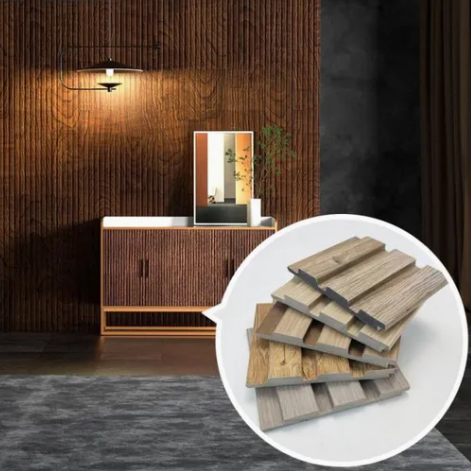
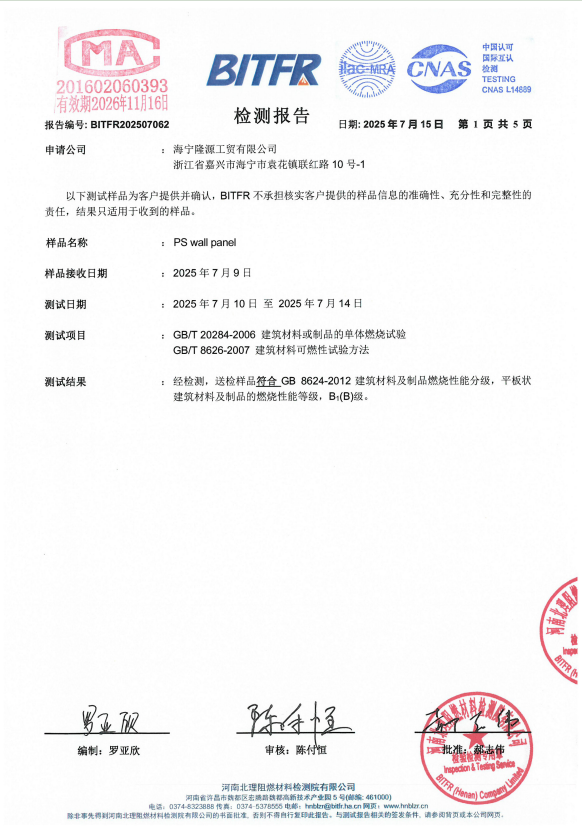
The turning point came with the maturity of high-definition lamination and UV-curing technology. By laminating a scratch-resistant, UV-stable printed layer onto a PS substrate and applying synchronized embossing, PS panels gained realistic wood and stone textures. Surface hardness increased from ≤B to HB-F, dramatically improving scratch resistance. Meanwhile, the addition of flame retardants made PS substrates achieve B1 fire rating.
These technical upgrades transformed PS panels from an “industrial substitute” into a true “decorative material” – one that mimics the look of natural wood, stone, fabric, and metal while outperforming those materials in stability and maintenance.
2. Hitting the Weak Spots of Traditional Materials
Much of the growth of PS wall panels comes from addressing the pain points of conventional materials.
- Latex Paint
Paint needs to be redone every 3-5 years. Stripping, putty, sanding, painting, and airing out take at least a week – the room cannot be used. PS panels go directly over old walls, finish in one day, and last a decade without rework. Material cost is higher, but total cost over ten years is lower. - Wallpaper
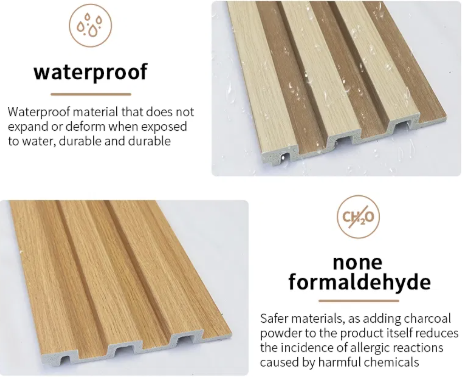
Wallpaper is afraid of moisture, scratches, and stains. Bathroom dry zones, kitchen backsplashes, and hallway corners eventually curl or mold. PS panels are waterproof, moisture-resistant, scratch-resistant, and stain-resistant – a damp cloth restores them to like new. - PVC Panels
PVC panels are cheap, but they yellow in two years, become brittle in three, and a fingernail leaves a white mark. PS panels are harder, more aging-resistant, and have a higher fire rating. They cost 20-40% more, but last three to five times longer. - Ceramic Tiles
Tiles themselves are excellent, but they are heavy, time-consuming to install, and grout lines get dirty. For accent walls and dry-zone walls, PS panels install much faster and have no grout to worry about.
PS panels do not win every single battle. But they strike the best balance between visual appeal, durability, installation convenience, and long-term cost-performance.
3. Boost from Renovation and DIY Trends
Two global trends are amplifying the advantages of PS panels.
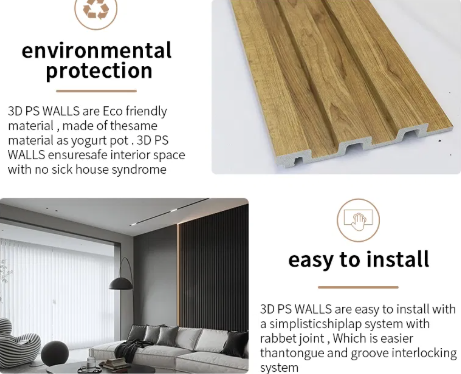
First, surging demand for renovation. Europe, the US, Japan, and China have all entered an era of existing-home renovations. Homeowners do not want to strip walls, move out, or wait for weeks. PS panels can be applied directly over old walls. The adhesive method is dust-free and odorless – perfect for occupied spaces.
Second, the rise of DIY culture. In North America, Europe, and Australia, more homeowners are tackling renovations themselves. PS panels can be cut with a utility knife, installed with a caulk gun, and aligned automatically by the tongue-and-groove system – the entry barrier is extremely low. YouTube is full of tutorials, some with millions of views, further educating the market.
4. Global Market Performance – Which Regions Are Growing?
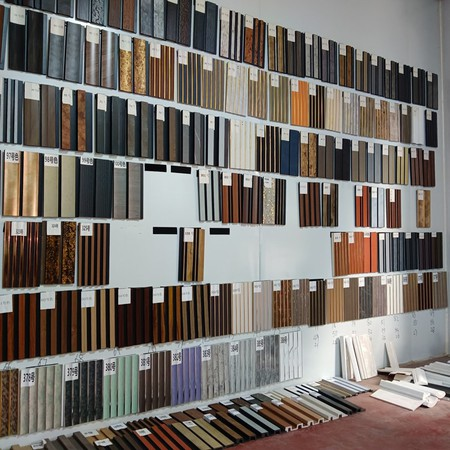
| Region | Driving Factors | Performance |
| Middle East | Many hotel projects, strict fire codes, high labor costs | PS panels (B1 fire rating, fast installation, low maintenance) are rapidly replacing paint in hotel renovations |
| Southeast Asia | Humid tropical climate, widespread mold issues | ≤0.5% water absorption makes PS panels a “mold killer” – clear trend away from wallpaper |
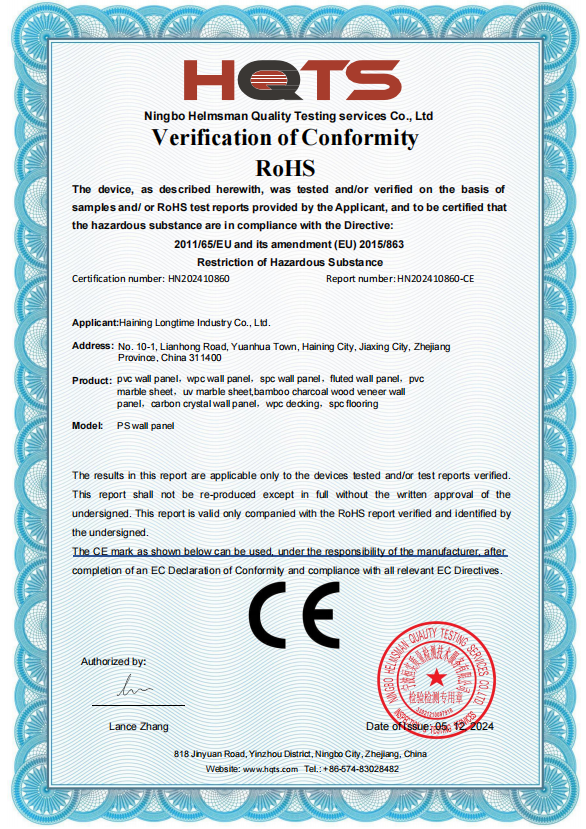
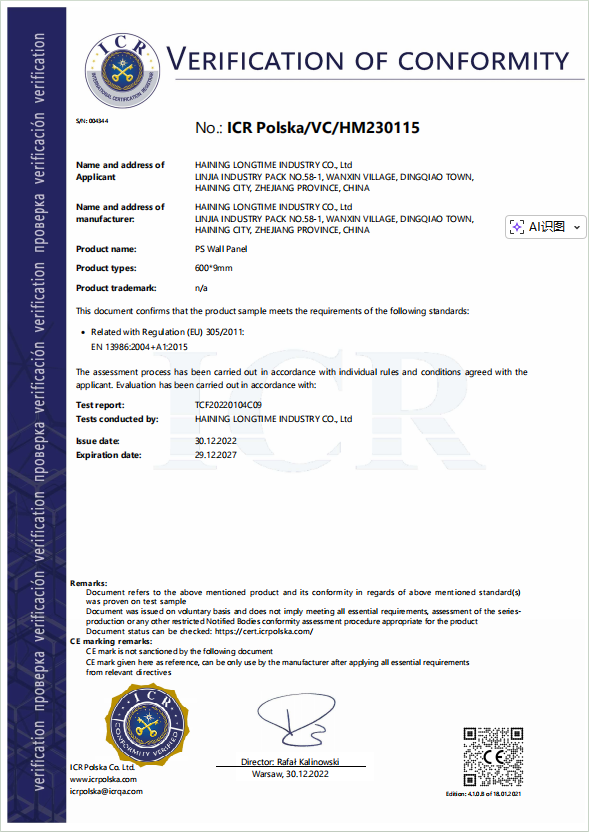
| Europe | Strict environmental regulations, CE as a hard requirement | PS panels (zero formaldehyde, recyclable) align well with local values |
| North America | Huge DIY market, strong renovation demand | Click-lock wall panel sales are growing over 20% annually at big-box stores like Home Depot |
| China | Existing-home renovations, young owners value hassle-free solutions | PS panel DIY tutorials are popular on social media, with increasing cases for rentals and owner-occupied homes |
5. Limitations of PS Wall Panels
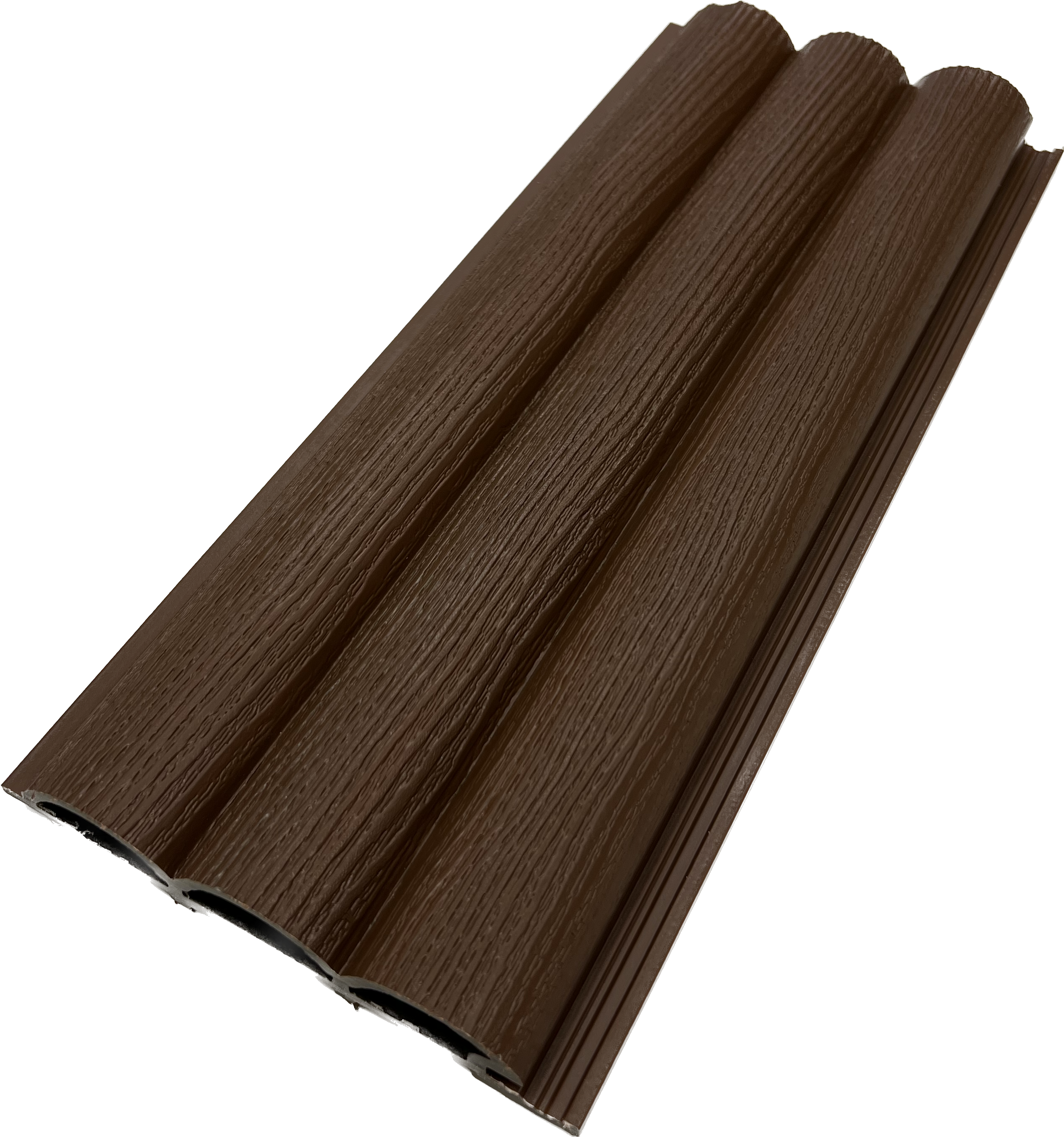
No material is universal. PS panels have limitations that need to be recognized:
- Not heat-resistant above 100°C– not recommended directly behind a cooktop; use ceramic tiles or stainless steel.
- Printed texture– while high-definition printing is very realistic, those who demand “every piece is naturally unique” will still prefer real stone or wood.
- Higher cost than low-end PVC– for extremely price-sensitive projects, PS panels are not the cheapest option.
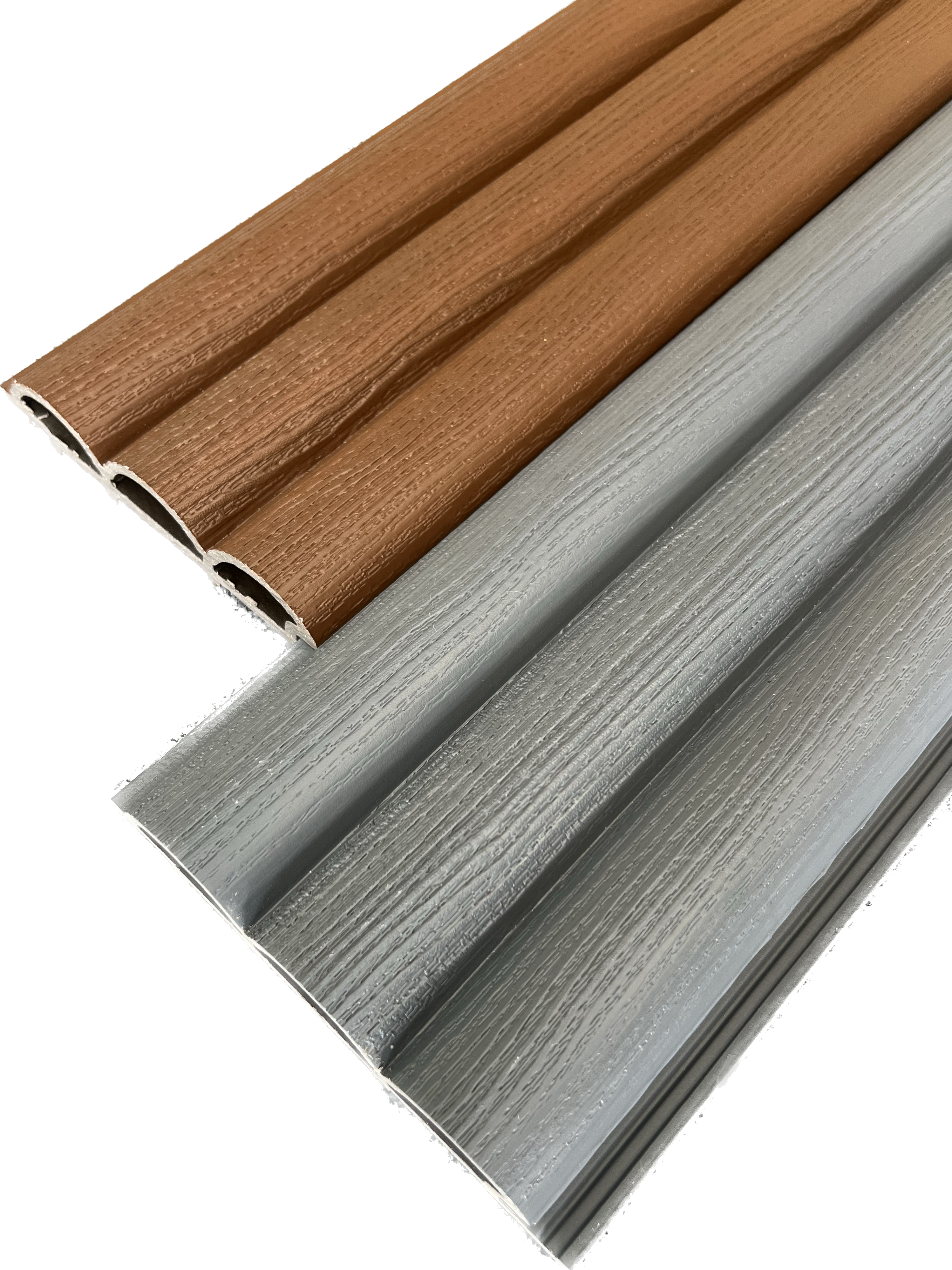
Acknowledging limitations actually makes the recommendation more credible. Customers don’t need a “miracle material”. They need the right material for the right place
6. What to Look for When Sourcing PS Panels
For contractors, wholesalers, and importers, evaluate PS panels along four dimensions:
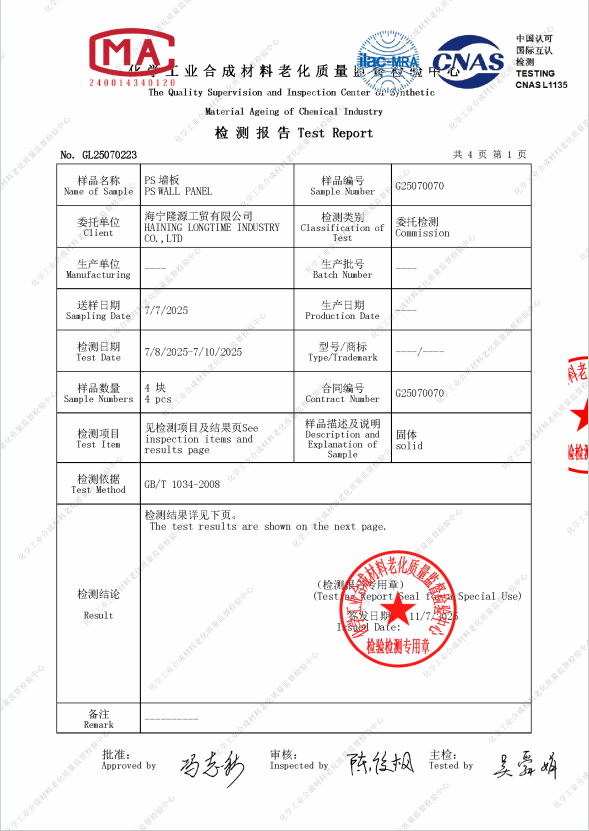
- Test reports– B1 fire rating, water absorption ≤0.5%, formaldehyde “not detected”, CE certificate – all are essential. Ask for actual values, not just “qualified”.
- Surface quality– Check printing resolution (at least 1200 DPI), synchronized embossing alignment, and uniform UV coating.
- Customization capability– Can they cut to project dimensions? Label by room number? Provide OEM/ODM?
- Batch traceability– Can each batch be traced back to raw material and production records?
7. Summary
The rise of PS wall panels is not an accident. They did not invent a new material. Instead, they took the performance advantages of a mature industrial polymer and, through process improvements, turned them into a practical solution for interior decoration – and they happened to ride the waves of global renovation trends, DIY culture, and stricter fire codes.
PS panels are not the “best” wall material – because no single material fits every scenario. But for projects that need fast completion, minimal future maintenance, fire and water safety, and a moderate budget, PS panels are one of the most balanced choices on the market today.
For samples, quotations or technical specifications, please contact:
Haining Longtime Industry Co., Ltd
Official website: https://www.longyuanpanels.com/
WhatsApp: +86 173 7761 1682
Email: [email protected]
Samples Policy: We provide samples, catalogues and fastener demonstration units free of charge; shipping costs are payable on delivery.