

 English
 Español
PS Wall Panel Installation Guide: Adhesive vs. Nail-On – Which Method Is Right for You?
One of the biggest advantages of PS wall panels is flexible installation. You can choose the adhesive method or the nail on method. But what are the differences? Which one costs less? Which is more secure? This article clears everything up.

Part 1: Quick Overview of the Two Methods
| Comparison Factor | Adhesive Method | Nail-On Method |
| Tools required | Caulk gun, construction adhesive, utility knife, level | Nail gun + compressor (or hand nails), level, utility knife |
| Wall surface requirement | Smooth, dry, grease-free (tiles, paint, old panels are fine) | Substrate that can hold nails (wood studs, steel studs – concrete needs steel pins) |
| Curing / fixing time | 24 hours full cure | Instant |
| Noise | None | Nail gun makes noise |
| Removability | Difficult (panel cannot be removed intact) | Easy (panels can be taken off one by one) |
| Single panel replacement | Hard (needs adhesive removal) | Simple (pull nails, replace panel) |
| Substrate requirements | Tolerant | Needs nail-holding substrate |
| DIY friendliness | Very high | Medium (requires nail gun equipment) |
| Total cost (tools + supplies for 20m²) | ~$30-45 (adhesive + gun) | ~$70-140 (nail gun + compressor rental/purchase, or manual nailer) |
Part 2: Detailed Pros and Cons
| Aspect | Adhesive Method | Nail-On Method |
| Pros | Quiet, no power tools needed, works on tile/smooth walls; adhesive allows ~20 mins of adjustment | Instant fix – no waiting; removable and reusable; strongest hold |
| Cons | Difficult to remove; panels cannot be reused; needs 24h curing time | Requires nail gun equipment; some noise; nails may show (but covered by next panel) |
Part 3: Recommended Use Cases
| Project / Scenario | Recommended Method | Why |
| Bathroom dry zone (tile walls) | Adhesive | Cannot nail into tile – adhesive is easiest |
| Old latex paint walls | Either | Both work if substrate is sound; adhesive is quieter |
| Wood stud partition wall | Nail-on | Most secure; panels can be removed |
| Light steel stud wall | Nail-on (special self-drilling screws) | Nail-on is more reliable |
| Large flat wall area | Adhesive (saves time and effort) | No need to borrow a nail gun; DIY-friendly |
| Commercial space that may need restyling | Nail-on | Removable – easy future renovation |
| Rental property renovation (one-time install) | Adhesive | Low cost, one-and-done |
| Underfloor heating room | Nail-on (adhesive may age faster with heat) | Long-term heat can make adhesive brittle |
Part 4: Step-by-Step Comparison
Adhesive Method Steps
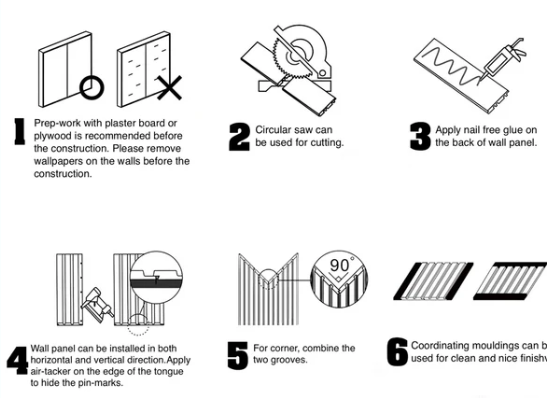
- Clean the old wall – make sure it is dry and grease-free.
- Apply construction adhesive in an “S” or dot pattern on the back of the PS panel (spacing about 20-30cm).
- Press the panel onto the wall and adjust position using a level (you have about 20 minutes of working time).
- Use tape or temporary supports to hold the panel in place. Wait 24 hours for full cure.
- Remove tape, apply sealant at joints (optional).
Nail-On Method Steps
- Clean the old wall and locate studs (if no studs, add a wood furring strip backing).
- Start from the bottom left corner. Align the first panel with a level.
- Drive nails into the groove at the edge of the panel using a nail gun (nail heads will be hidden by the next panel).
- Lock subsequent panels into place, align, and nail.
- Finish with trim strips at top and bottom.
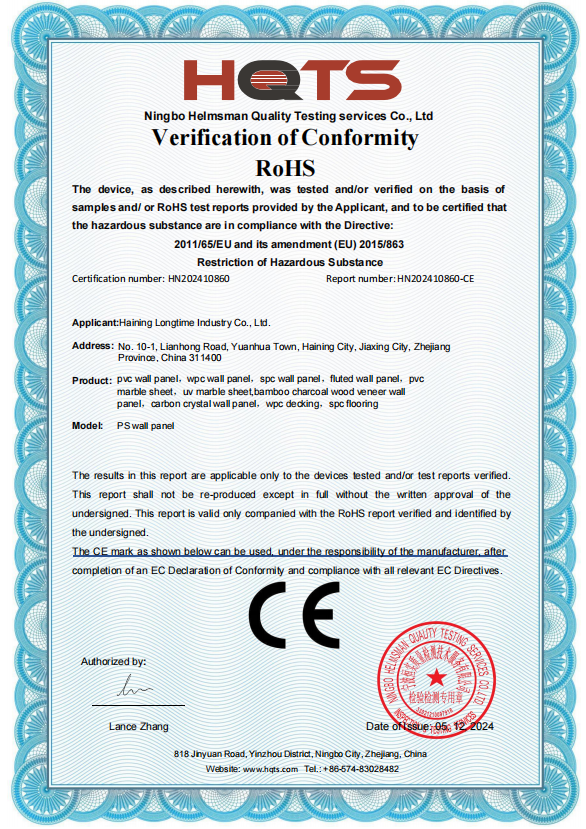
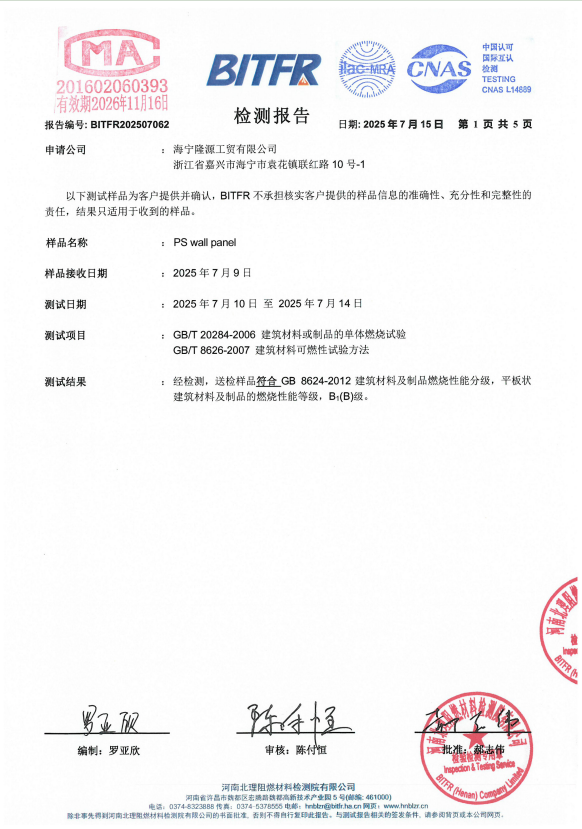
Part 5:Product Qualification
Part 6: Frequently Asked Questions
Q1: Is the adhesive method strong enough? Will panels fall off?
A: Yes, if you use good quality construction adhesive, a clean and dry wall, proper application, and allow 24 hours curing, the bond is very strong. PS panels are lightweight – adhesive holds the weight easily. Do not use on damp or greasy walls.
Q2: What about visible nail heads with the nail-on method?
A: PS panels use a tongue-and-groove design. Nails are driven into the groove on the edge of the panel, and the next panel completely covers the nail heads. No nails are visible on the surface.
Q3: Can I mix both methods?
A: Yes. Many people use adhesive as the main method and add a few nails every few panels for extra security, especially when they worry about long-term adhesive aging.
Q4: Can I use the adhesive method on walls with underfloor heating?
A: Prolonged heat can accelerate adhesive aging and brittleness. We recommend the nail-on method for underfloor heating rooms, or use a high-temperature-resistant specialty adhesive.
Q5: I want to install myself with no experience. Which method should I choose?
A: Adhesive method. As long as you can use a level and a caulk gun, it is almost foolproof. The nail-on method requires familiarity with a nail gun and nailing straight.
Q6: Where is your factory located?
A: Our company is located at No. 10-1 Lianhong Road, Yuanhua Town, Haining City, Zhejiang Province, China.
Summary – Which Method to Choose?
| Your Situation | Recommended Method |
| Wall is tile or smooth surface | Adhesive |
| You have no power tools | Adhesive |
| You want to change style later or remove panels | Nail-on |
| You own a nail gun and the wall has wood backing | Nail-on |
| You worry about long-term adhesive aging | Nail-on or mixed method |
| You want lowest tool cost and one-time installation | Adhesive |
One sentence: The adhesive method is best for most DIY beginners and one-time installations. The nail-on method is for those who want maximum security, removability, and already have the tools.
Data based on common installation practices. Always follow your specific product’s instructions.
For samples, quotations or technical specifications, please contact:
Haining Longtime Industry Co., Ltd
Official website:www.ltpvcfactory.com
WhatsApp: +86 17757302351
Samples Policy: We provide samples, catalogues and fastener demonstration units free of charge; shipping costs are payable on delivery.