

 English
 Español
Not Just Easy to Install, But Also Beautiful: PS Wall Panel Color & Space Matching Guide
In the first two articles, we covered why PS wall panels are better than other materials and how to install them yourself. But a good installation doesn't always mean a good look. Many customers buy the right product but end up with a rental-apartment vibe or a karaoke-room style just because they chose the wrong color or texture.
Don't worry. This article is all about: what colors and textures to choose for different spaces, and how to put them together for a premium, timeless result. No magic – just rules you can follow.
1. Core Principle: Main Color First, Then Texture
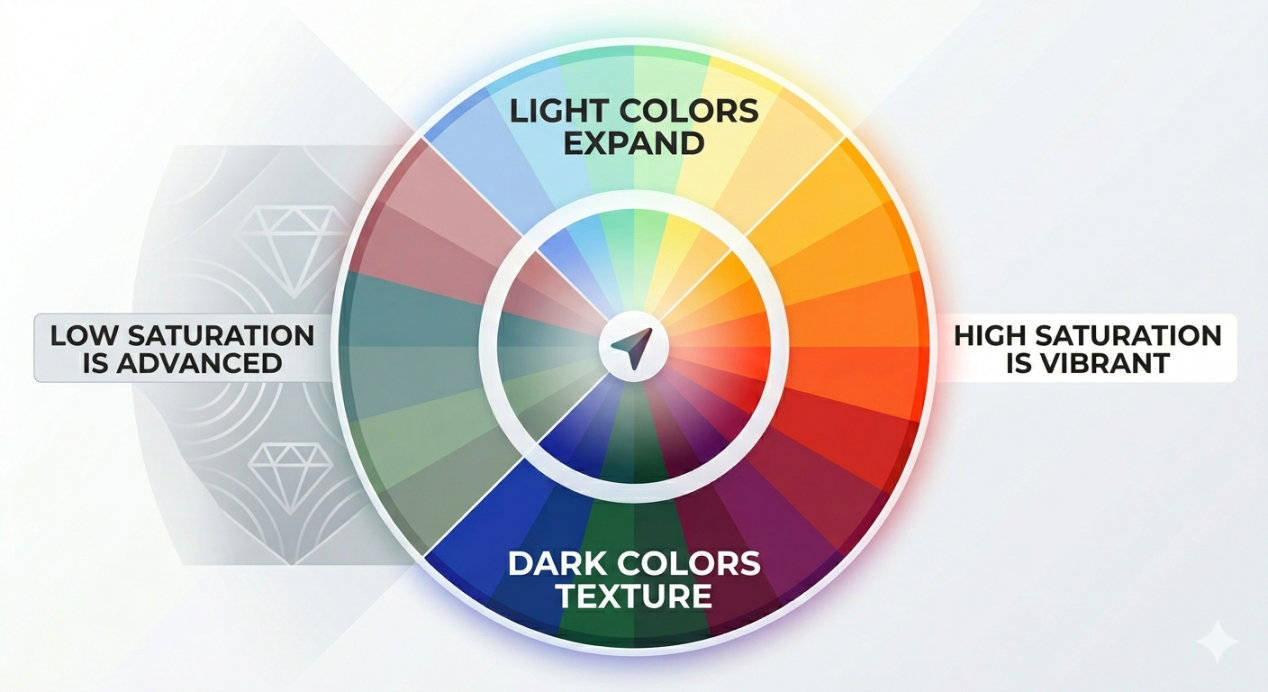
Three rules that work for every room:
- Light colors (off-white, light gray, cream) → Make a space look larger and brighter. Good for small rooms or spaces with little natural light.
- Dark colors (charcoal, walnut, dark green) → Create depth and a sense of stability. Good for large rooms or accent walls.
- Low-saturation colors (sage green, dusty blue, milk tea beige) → Most timeless, least likely to look dated, and forgiving when paired with furniture.
For textures:
- Bold textures (heavy wood grain, large stone veins) → Best for large walls, add visual impact.
- Subtle textures (fine fabric, micro-cement look, light emboss) → Good for small areas or whole-room coverage – gentle, not overpowering.
2. Living Room: The Focal Point – Do One Accent Wall
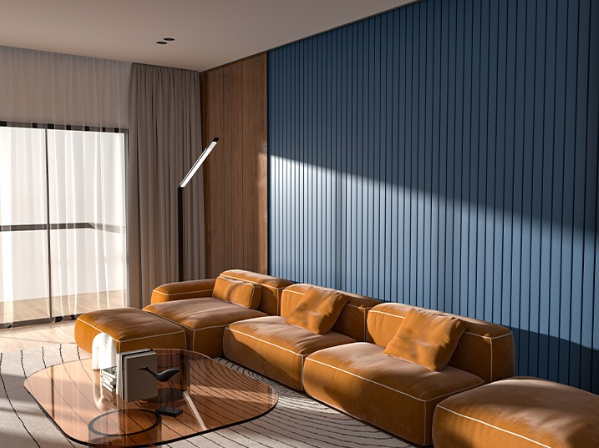
The living room is the face of your home. Avoid busy, chaotic looks. Two foolproof approaches:
- Option A: TV accent wall with stone-look (white marble, Calacatta)
Effect: Makes the space look expensive and airy. Works with any sofa color.
Note: Use stone-look panels only on one wall – the other three walls should be plain latex paint or light-colored PS panels.
- Option B: Sofa accent wall with wood-look (light oak, smoked wood)
Effect: Warm, natural. Fits Japanese, modern, or rustic styles.
Matching: Choose straight grain or semi-cathedral grain. Avoid overly busy parquet patterns.
Living room tip: If living area < 20m², choose light stone or cream textured panels for the accent wall. If living area > 30m², you can go bold with dark gray concrete-look or dark wood grain.
3. Bedroom: Quiet, Sleep-Friendly, and Cozy
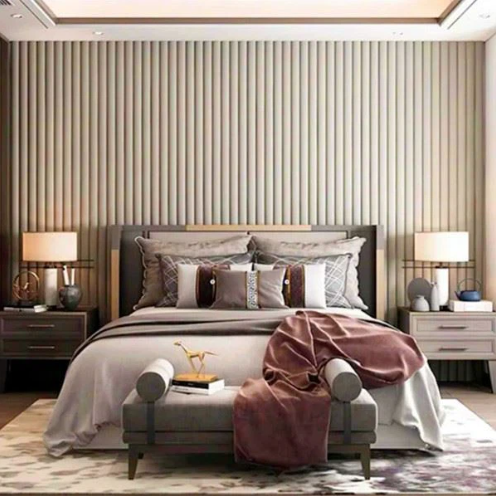
The bedroom is not about showing off – it's about relaxation. Tone down both color and texture.
Recommended colors: Milk tea, oatmeal, dusty blue, sage green, light linen.
Recommended textures: Fabric feel, fine linen, micro-cement, matte skin-touch (no pattern).
Not recommended: Glossy, high-shine, large patterns, pure black (makes the room feel oppressive).
Installation tip: Panel only the headboard wall – either full height or half height (90-110cm). Leave the upper part blank or use wall art for more depth.
4. Dining Room / Kitchen (Non-cooking area): Warm, Appetite-Enhancing Colors
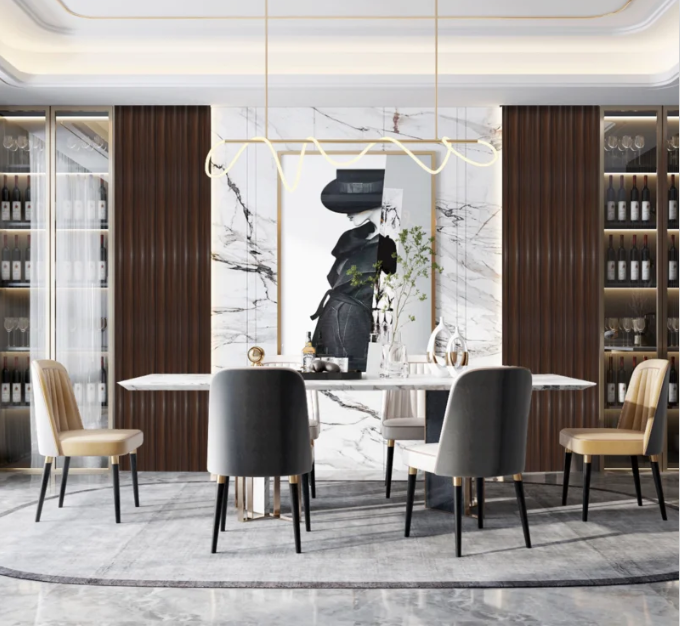
In dining and kitchen areas, color affects appetite and mood. Warm tones work better than cool tones.
Recommended colors: Cream yellow, light oak, blush beige, off-gray.
Recommended textures: Fine wood grain, slat / ribbed texture, small subway-tile pattern (2.5D).
Not recommended: Cold gray, navy blue, large black areas (look cold and unappetizing).
For an open-kitchen island back wall, try brick-look or small tile-look PS panels – they give the clean feel of ceramic tile without grout lines, and are easy to wipe down.
5. Basement / Balcony / Hallway: Waterproof + Brighten
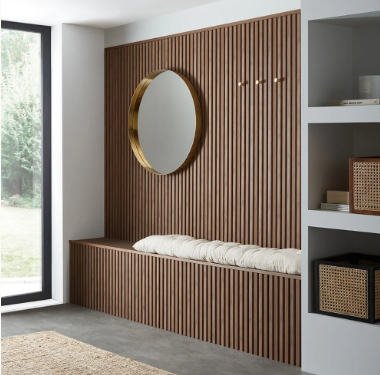
These spaces often have low light, high humidity, and small footprints. The strategy is clear:
Color: The lighter, the better. White, light beige, light gray are best. Avoid dark colors.
Texture: No texture or very fine texture (e.g., micro-cement, eggshell). Large patterns look messy in dark spaces.
Function: PS panels are naturally waterproof and moisture-resistant, fine for balconies and basement dry areas. For sunny balconies, avoid prolonged direct sun exposure on dark colors – light colors are more fade-resistant.
For hallways/corridors: Use vertical grain (vertical stripes, vertical wood grain) to visually raise the ceiling and make a narrow hallway feel less cramped.
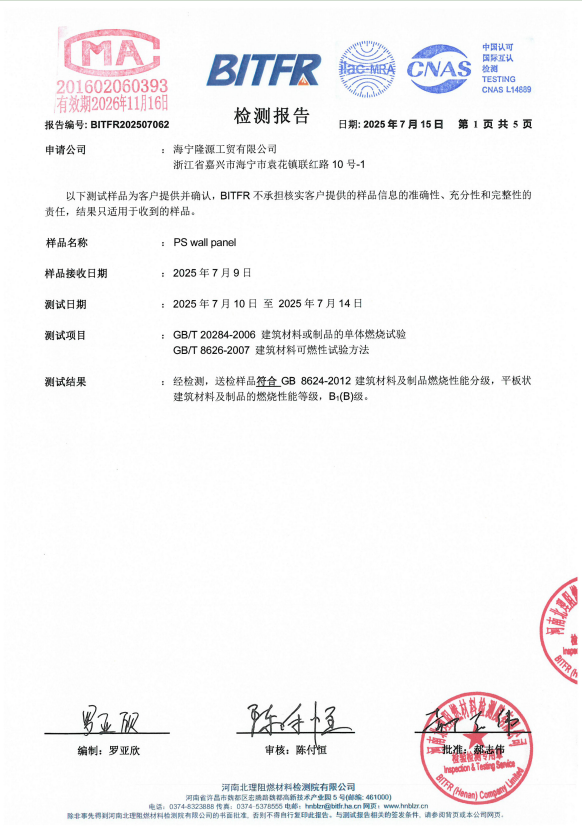
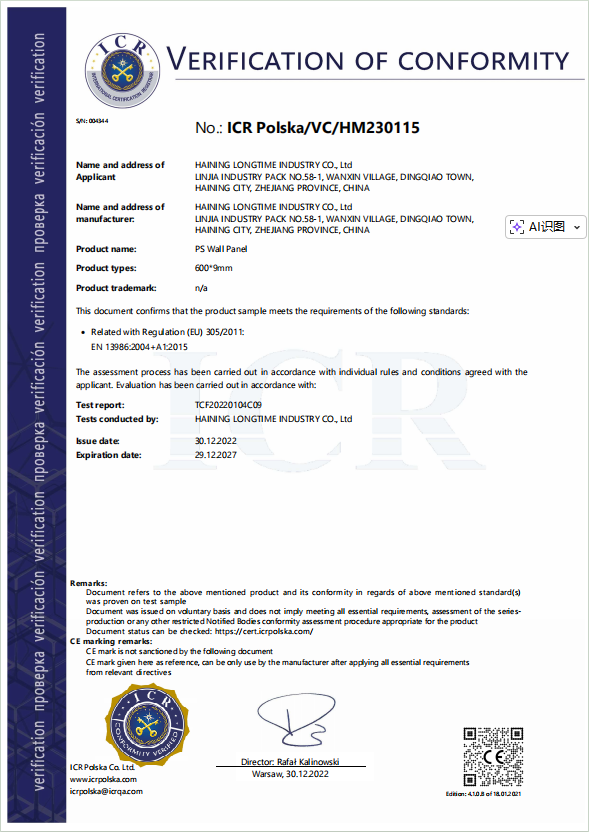
6. Product Qualification
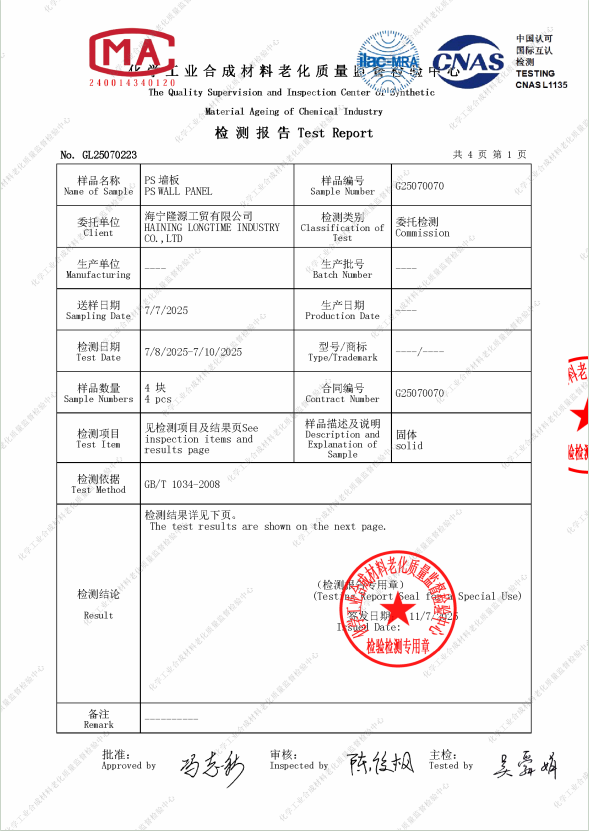
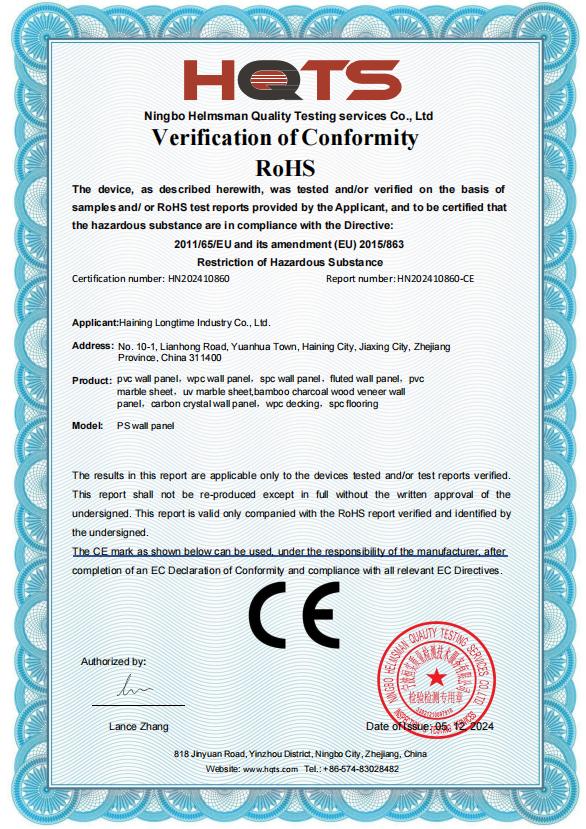
7. Ready-to-Use Color Formulas (Copy These)
| Style | Accent Wall PS Panel | Other Walls | Soft Furnishing Accents |
| Modern minimalist | White / light gray micro-cement | Same or lighter | Black, white, gray, orange accent chair |
| Natural Japanese | Light oak, straight grain | Off-white | Rattan, linen, plants |
| Italian minimalist | Dark gray matte slate / smoked wood | Light gray | Leather, metal, dark glass |
| Cream / Milk tea style | Milk tea fabric texture / solid matte | Slightly lighter | Beige, brown, fluffy textiles |
| French light luxury | Light plaster-line pattern / white slat | Cream white | Gold, velvet, crystal chandeliers |
| Industrial / Wabi-sabi | Micro-cement gray / concrete texture | Same | Dark gray, raw wood, linen |
Note: Follow either "light wall, medium floor, dark furniture" or "dark wall, medium floor, light furniture". Avoid having all three too dark or too light.
8.Faq
Q1. Where is your factory located?
Our company is located at No. 10-1 Lianhong Road, Yuanhua Town, Haining City, Zhejiang Province, China
Q2. How long does shipping take?
Samples usually ship within 5–7 business days. For bulk orders, production takes about 15–20 days after order confirmation, depending on the quantity and customization.
Q3. Can I remove and reinstall them later?
Yes – if you install them without glue (using click-lock or screw fasteners), you can take them down and reinstall them somewhere else. If you use strong glue, the panels might get damaged when removed. So if you plan to move or change styles later, choose a glue-free installation.
Q4. Are PS panels more expensive than traditional wall materials?
Compared to real wood veneer or natural stone, PS panels are much cheaper. Compared to regular decorative panels, they're about the same or slightly higher. But that little extra cost gets you light weight, built-in insulation, super easy installation – things traditional materials can't offer at the same price. All in all, great value for money.
Q4. How do you install them?
Clean wall → cut panels → apply adhesive → press onto wall → level. No special tools.
Q5. Can I paint them?
Yes, if primed. Use latex or acrylic paint.