

 English
 Español
Many people choose WPC wall panels precisely because of the advantage of low maintenance. But in fact, low maintenance does not mean no care at all. Proper daily care and timely handling of small issues can keep the panels looking like new for over a decade. And these tasks are very simple, taking only a few minutes each time.
This article does not discuss complex theories. It directly tells you how to clean, how to maintain, and how to repair scratches and stains yourself.
1. Daily Cleaning: Three Simple Steps
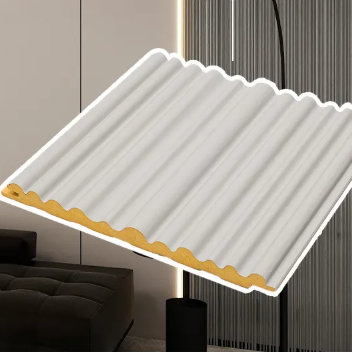
The surface of WPC wall panels is smooth and dense, making it difficult for dust and stains to adhere. Daily cleaning requires only three things: a soft cloth, clean water, and a neutral cleaner.
Step 1: Use a feather duster or dry cloth to remove surface dust. If the wall is not dirty, this step is enough.
Step 2: For fingerprints, water spots, or light stains, wipe with a damp cloth dipped in clean water. Wring the cloth so it does not drip. Although WPC panels are waterproof, standing water can leave limescale marks on the floor.
Step 3: For grease or stubborn stains, add a little neutral dish soap to water, wipe with a soft cloth, then wipe again with a clean damp cloth to remove any cleaner residue, and finally dry with a dry cloth.
What not to use: steel wool, the rough side of a scouring pad, strong acids or alkalis (such as toilet bowl cleaner), chlorine bleach, or paint thinner. These can damage the surface wear layer or cause fading.
Outdoor wall cleaning is even simpler: rinse with clean water once or twice a year to remove dust and leaves. For bird droppings or stubborn stains, gently scrub with a soft brush.

2. Daily Maintenance: Just These Three Points
First, avoid hard object impacts and scratches. Although WPC panels are harder than solid wood, a sharp corner of a heavy object can still leave a dent. When moving furniture, be careful not to push or slide it directly against the wall.
Second, avoid long-term shading on outdoor walls. If a section of an outdoor panel is shaded for a long time by a flower pot, air conditioner unit, or similar object, the shaded and exposed areas may show a slight color difference. This is normal uneven light exposure and will gradually recover after the shading object is removed.
Third, clean up standing water promptly. Although the panels themselves do not absorb water, if the bottom of an outdoor panel sits in standing water for a long time, dirt may accumulate or moss may grow on the back. A drainage gap should have been left during installation. In daily use, be careful not to let soil or leaves block this gap.
3. Simple Repairs: Do-It-Yourself Solutions for Common Problems
WPC panels are very durable, but after long use, small issues may still appear. You can solve the following problems yourself.
Problem 1: Light scratches on the surface
Cause: Sharp objects such as keys or knives scratching the wall.
Repair method: Use fine sandpaper, 400 to 600 grit recommended. Gently sand the scratched area. Sand in the direction of the wood grain, not back and forth randomly. After sanding, wipe away the dust with a damp cloth. The scratch will become noticeably lighter or disappear. If the sanded area has a different gloss level, rub it vigorously a few times with a clean dry cloth to restore the gloss.
Problem 2: Stubborn stains on the surface (such as ink, paint, marker)
Repair method: First apply alcohol or essential balm to the stain and let it sit for one or two minutes, then wipe with a soft cloth. If that does not work, lightly sand off a thin layer of the surface with fine sandpaper. Because the color of WPC panels runs throughout the material, sanding will not reveal a white layer. Only sand the stained area, do not expand the range.
Problem 3: Light dirt in the joints
The tongue-and-groove joints between WPC panels may accumulate dust, especially horizontal joints. Use an old toothbrush dipped in neutral cleaner, brush along the gap, then wipe clean with a damp cloth. Do not use sharp tools to pick at the gaps, as this may damage the clips.
Problem 4: Local blackening on outdoor walls (mold or moss)
Cause: Long-term dampness, poor ventilation, uncleaned dust.
Repair method: Use a soft brush dipped in diluted bleach or a specialized mold remover to brush the blackened area, then rinse thoroughly with clean water. Note that bleach has a bleaching effect. Test it on an inconspicuous area first to confirm it does not cause fading. After rinsing, let the wall air dry. For severe mold, repeat once.
Problem 5: Slight loosening or noise from a panel
Cause: Screws were not tightened during installation, or furring strip spacing is too wide, leaving the middle of the panel unsupported.
Repair method: Locate the loose area. Press the panel at the joint with your hand to identify the exact loose point. If the edge is loose, add a screw into the slot at the edge of the panel, then cover the screw head with a matching color touch-up pen. If the middle of the panel is loose due to excessive furring strip spacing, the panel must be removed, the furring strips tightened or added, and the panel reinstalled. This situation is rare and usually occurs when installation was not done according to specifications.
4. Things You Do Not Need to Do
People accustomed to maintaining solid wood or ceramic tiles may instinctively do some unnecessary things. The following are not needed:
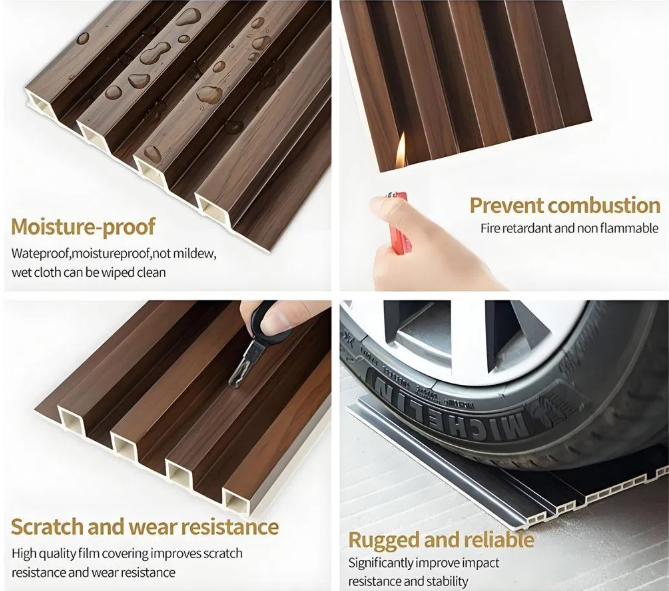
Do not wax. The surface of WPC panels is not a painted finish. Waxing actually attracts dust and makes the wall dirty.
Do not paint. The color of WPC panels runs throughout the material. It will not fade to the point of needing repainting. Even if UV-resistant outdoor models fade slightly over time, the fading is uniform across the whole panel and not noticeable.
Do not perform regular sealing. Solid wood requires annual sealing with wood wax oil or varnish to close pores. WPC panels do not have this need.
D
o not apply insect treatment. WPC panels are inherently termite-proof. No spraying or mothballs are needed.
5. When to Call a Professional
The following situations are not recommended for DIY. Contact an installer or the manufacturer instead:.
- Large-area deformation or warping. This is usually caused by not leaving expansion gaps during installation or by using substandard panels. Removal and reinstallation are required.
- Panel cracking or large holes. A heavy sharp object impact may crack a panel. If a single panel is damaged, purchase a replacement of the same model and have a professional replace it.
- Abnormal color fading. If an outdoor panel shows noticeable uneven fading within one year, it may be a product quality issue. Contact the manufacturer.
Summary
Caring for WPC wall panels is simpler than for any other wall material. Wipe off dust daily, occasionally deal with stubborn stains, and avoid scratches from hard objects. They will last for many years. Even if light scratches or small dirty areas appear, you can fix them yourself in a few minutes.
For samples, quotes or technical consultation, please contact:
Official Website: http://www.ltpvcfactory.com
WhatsApp: +86 17757302351
Email: [email protected]
Sample Policy: Free samples and brochures are provided, with freight collect.