

 English
 Español
How to Identify WPC Wall Panel Quality: A Quick Guide from Beginner to Expert
The WPC wall panel market is growing rapidly, but product quality varies significantly among manufacturers. Some low-priced products look similar to genuine ones at first, but problems appear after a year or so: fading, warping, surface peeling, or even unpleasant odors.
If you are considering buying WPC wall panels, learning to identify quality is a very practical step. This article does not rely on complex instruments. You only need your eyes, your hands, and your nose to filter out most low-quality products.
Method 1: Examine the cross-section to determine the wood powder to plastic ratio
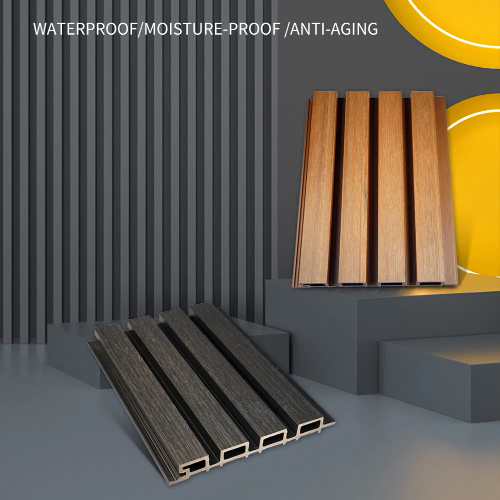
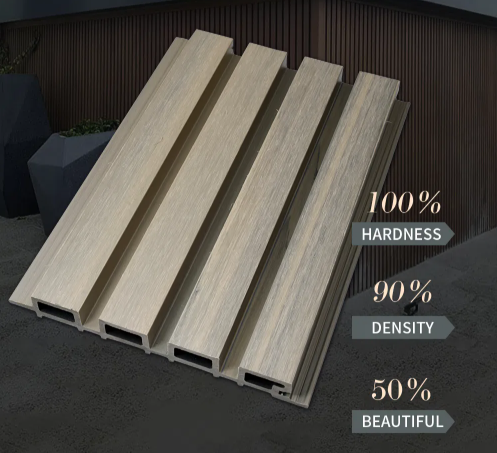
A good WPC wall panel should have a uniform, dense cross-section with no visible bubbles. The color should be light brown or beige-gray, with fine wood fibers evenly distributed throughout the plastic matrix.
Low-quality products often show the following characteristics: many bubbles (poor extrusion process), dark gray or black color (excessive use of recycled plastic), obvious layering (uneven mixing), or an overly smooth cross-section (too little wood powder, heavy plastic smell).
After obtaining a sample, cut a piece with a saw or utility knife and look at the cross-section. A good cross-section feels somewhat like a dense chocolate bar – fine and uniform. If you see shiny plastic granules clustered together, the mixture is insufficient, and such panels are prone to warping.
Method 2: Smell the panel to detect poor-quality recycled plastic
A great WPC panel should have only a faint wood powder smell, or almost no smell at all. If you open the package and detect a sharp plastic odor, sour smell, or burnt smell, the manufacturer likely used poor-quality recycled plastic or substandard additives.
Place a sample in a closed small space, such as a plastic bag or a drawer, and smell it after half a day. If there is a noticeable unpleasant odor, do not buy it, especially for indoor use.
Note: Brand new WPC panels may have a very faint plastic smell that disappears after a few days of ventilation. But if the smell is sharp and persistent, it is a quality issue.
Method 3: Inspect the surface to check the realism of the wood grain
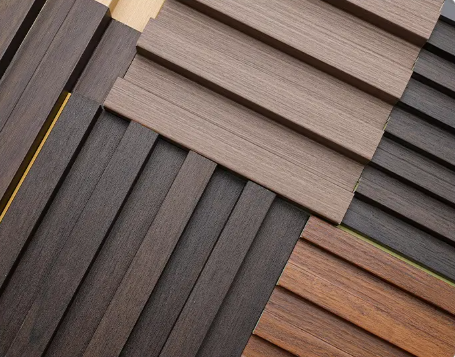
Use your fingers. High-quality WPC panels have embossed wood grain – the texture is pressed into the surface by a mold. When you run your finger across it, you can clearly feel the of the grain. Low-quality products usually have printed wood grain on a flat surface – smooth to the touch with no texture.
Use your eyes. Observe whether the wood grain repeats. Due to process limitations, printed wood grain typically shows identical patterns at regular intervals. Embossed wood grain, while still having some regularity, feels more random and closer to natural wood. Place two samples side by side. If the patterns are exactly the same, they are most likely printed.
Use your fingernail. Gently scratch an inconspicuous area with your fingernail. Printed wood grain may lose color or show scratch marks. Embossed wood grain will not, because the color is mixed into the material, not printed on the surface.
Method 4: Measure density by feeling the weight
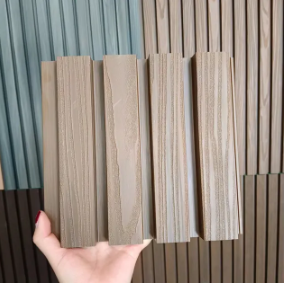
The density of WPC panels is typically between 1.2 and 1.4 grams per cubic centimeter. For panels of the same thickness and size, heavier usually means more wood powder and plastic filler, and a denser material. Lightweight panels may be over-foamed or skimped on material.
Take samples from two different manufacturers, with the same size and thickness, and weigh them in your hands. Be cautious of the noticeably lighter one.
Also, try bending the edge of the sample. Good quality WPC has some toughness and is not easy to break. Low-quality products are either brittle (snap easily) or too soft (bend and do not return to shape).
Method 5: Perform a water resistance test
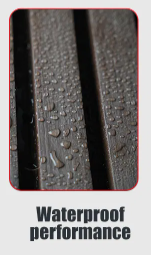
This test is simple. Soak a WPC panel sample in water for 24 hours. A good quality WPC panel should absorb no water at all. After taking it out and wiping it dry, the weight should not change, and the dimensions should not change.
If the product is low-quality, with too high a wood powder ratio or insufficient plastic encapsulation, it may absorb a small amount of water, increase in weight, or even swell slightly at the edges. Although WPC is generally waterproof, poor-quality products can still develop problems under long-term moisture exposure.
In addition, observe the color of the water after soaking. If the water turns yellow or cloudy, it indicates impurities or additive leaching from the panel.
A simple scoring table
You can use the following table to score candidate products. Each item has a maximum of 2 points, total 12 points. Products scoring 10 or above can be bought with confidence. Scores of 7 to 9 require caution. Scores below 6 are not recommended.
- Uniform, dense cross-section with no bubbles: 2 points
- Mild or no odor: 2 points
- Three-dimensional wood grain that can be felt by touch: 2 points
- Moderate weight, not too light: 2 points
- No change after 24 hours of water immersion: 2 points
- Complete test reports and proper labeling: 2 points
Several cheap traps to watch out for
Trap 1: Price far below market average. The current market price for WPC panels is roughly between 60 and 150 RMB per square meter. If you encounter WPC panels priced at 20 or 30 RMB per square meter, they are either PVC foam boards masquerading as WPC or made from recycled waste. Do not buy.
Trap 2: Claiming indoor and outdoor use without a UV resistance label. Many indoor panels are sold by merchants as suitable for outdoor use, only to fade within half a year. For outdoor use, you must see a clear UV resistance label or test report.
Trap 3: Claiming environmental friendliness without a certificate. Any manufacturer can claim to be green, but only test reports are real evidence. Conclusions like formaldehyde not detected and VOC need a stamped report from a third-party testing agency.
Summary
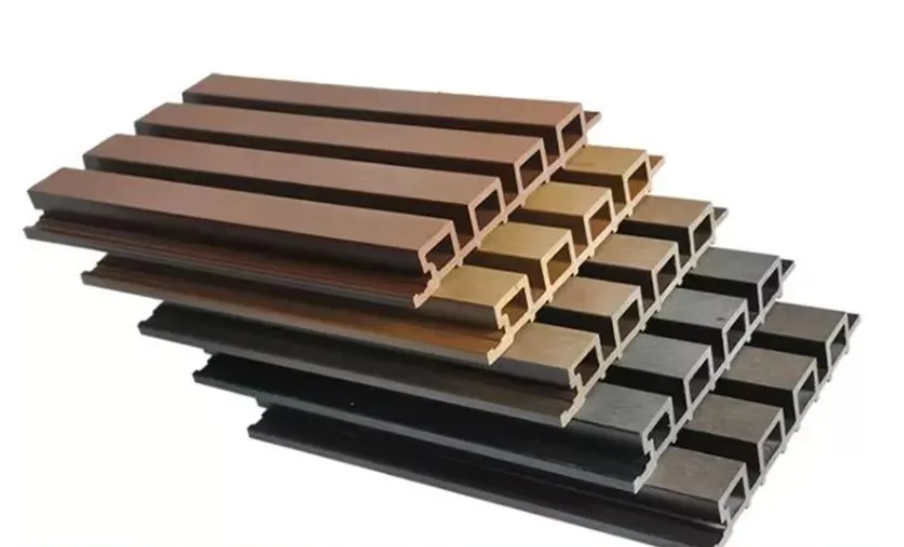
Identifying WPC wall panel quality is not difficult. No professional equipment is needed. Just spend a few minutes doing a few simple tests. Examine the cross-section, smell the panel, feel the surface, weigh it, soak it in water, and check the certificates. After these six steps, good and bad will be clear.
Requesting samples from the seller before purchasing is a very important step. Do not rely solely on online pictures and videos. Get the sample in your hands, test it yourself using the methods above – that is more reliable than any advertisement.
We offer free samples. You can perform the tests as described and then decide whether to buy. Contact customer service to request samples, and we will provide the batch test report for your inspection.
For samples, quotes or technical consultation, please contact:
Official Website: http://www.ltpvcfactory.com
WhatsApp: +86 17757302351
Email: [email protected]
Sample Policy: Free samples and brochures are provided, with freight collect.