

 English
 Español
It all started with an email last March.
Our (Haining Longtime Industry Co., Ltd.) export team received an inquiry from Catalina, a Chilean architect. The subject line was direct: "Valparaíso hillside house – timber cladding destroyed by sea air, need something that lasts." She attached more than thirty photos: a century-old house on Cerro Alegre hill in Valparaíso, its exterior clad in traditional local pine boards. In the photos, the boards showed extensive blackening and warping, grey-green moss and mold had grown deep into the joints, and several boards had even fallen off, exposing the rotten framework underneath. The classic result of Pacific salt spray, hillside humidity, and day-night temperature swings working in combination.
Catalina wrote in the email: "The owners, Mr. and Mrs. Mendoza, are from Santiago. This house is their weekend getaway, built in the 1920s. They've replaced the exterior twice in the past fifteen years – each time with pine and clear varnish – and each time it failed within seven to eight years. Salt spray seeps through the joints, the wood rots from the inside out, and the surface looks okay until you pry it open and find everything black inside. They want to hang some old family photos on the wall now, but the wall won't even hold a nail. Do you have something that the Pacific breeze can't touch and salt spray can't eat through, while still keeping the house's original character?"
After reading the email, I knew exactly what Catalina was up against. Valparaíso's climate is brutal on timber – high humidity year-round, Pacific sea breeze carrying salt spray, significant day-night temperature swings on the hillside, and dozens of sea fogs and rainstorms every year. Catalina later told me that she had drawn up a simple table for the Mendozas, laying out the pitfalls upfront:
| Material Option | The Mendozas' Concern | Catalina's Field Experience |
| Pine cladding (one more replacement) | Already burned twice, don't want a third | In Valparaíso's climate, pine rots every 7-8 years – salt spray is timber's natural enemy |
| Fiber cement board (coated) | Too industrial, doesn't match a century-old house | Coating ages in 5-8 years under salt spray – once damaged, absorption spikes |
| PVC foam board | Worried it deforms under the sun | Coastal salt spray + UV – ordinary PVC gets brittle within years |
| WPC co-extruded cladding | Can it survive salt spray? Is the texture natural? | Catalina had seen samples in Santiago but never used it by the sea |
In other words, before contacting us, the Mendozas and Catalina had already looked into every possible option. The conclusion was consistent: either it can't handle salt spray, or the texture is wrong, or both. Catalina's email carried a sense of "one last try."
Samples, Doubts, and a Video
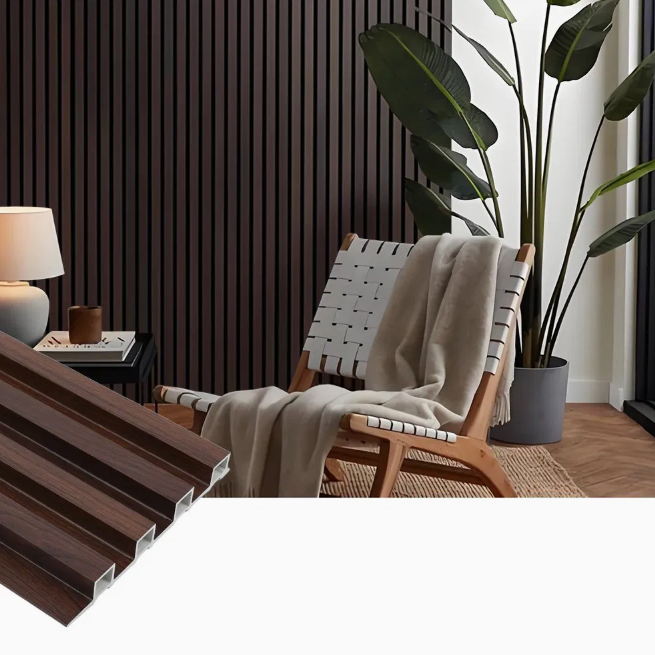
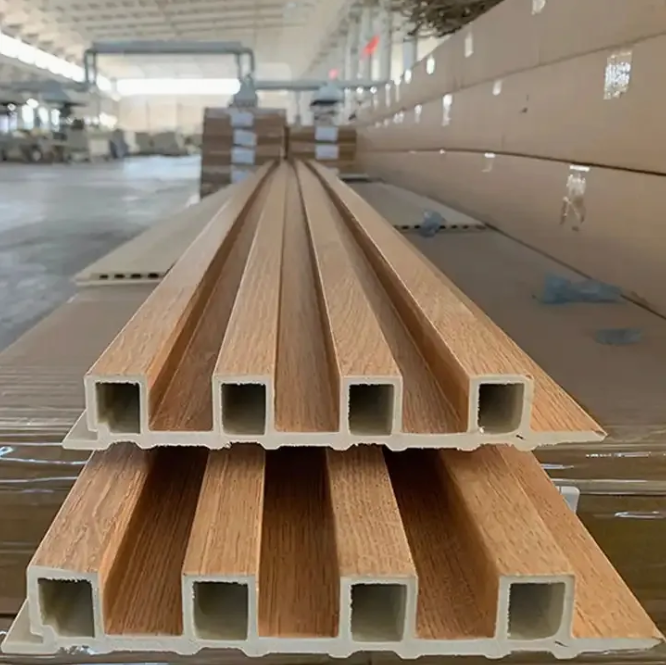
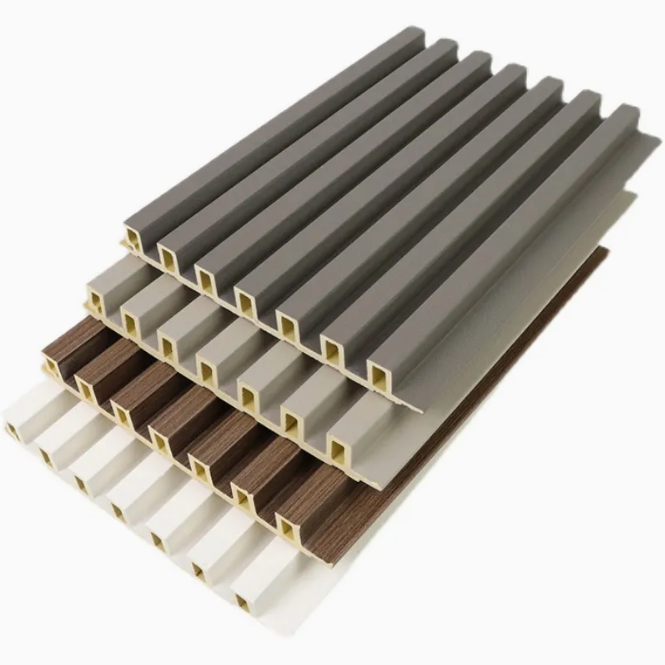
We sent Catalina cut samples of our LT-WPC-WP165 co-extruded cladding in warm pine color with synchronized wood-grain embossing. Three weeks later, she messaged us saying the Mendozas had placed the samples on the stone table in the house's courtyard, side by side with their old pine boards, and let them weather a full week of Pacific sea fog and hillside drizzle.
Diego's exact words, relayed through Catalina: "Sea fog beads up on the surface and rolls off – it doesn't soak in like pine. The texture is three-dimensional too – it feels warm like wood. But our biggest concern is Valparaíso's sea fog – there are over two hundred foggy days a year here, and the wind carries salt. A lot of so-called weather-resistant materials don't even last five years here."
Facing this practical question, we didn't send a lab report. Instead, we pulled a real installation video from our factory archive – the same product installed in 2020 at a beachfront holiday home in Arica, northern Chile, shot in August 2025, five years after installation. The wall had endured five years of intense sun and salt spray on the Atacama Desert coast. The color had mellowed slightly compared to new, but the wood-grain texture was intact – no warping, no mold, no fading to that ugly chalky grey.
Diego's response: "If it survives Arica, it survives Valparaíso." We all breathed a sigh of relief on our end.
An Incident That Surprised Catalina During Installation
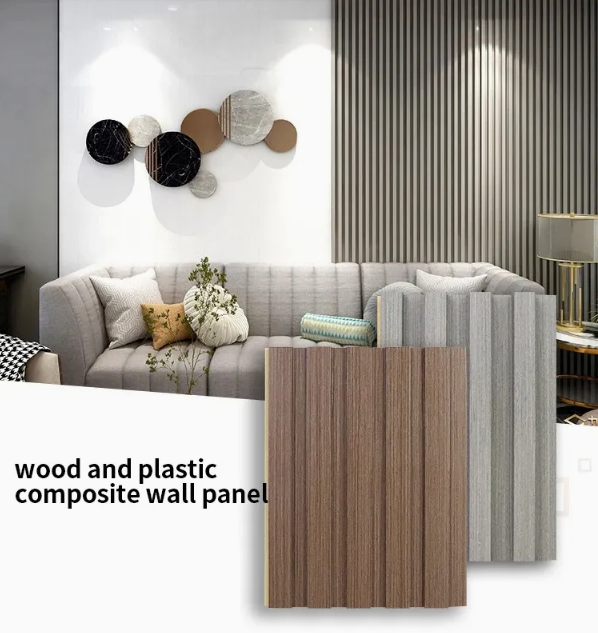
The hillside heritage house required 72 square meters of exterior wall renovation, including the main facade and side gable walls. Catalina's crew planned to finish in five days. Here's the actual timeline:
| Day | Work Content | Time / Notes |
| Day 1 | Remove damaged old pine boards, inspect wall moisture barrier, repair substrate framework | Completed as planned – old boards were rotten, came off quickly |
| Days 2-3 | Install new furring strips for leveling, lay insect mesh and bottom starter profiles, begin panel installation | On schedule – one person about 16-18㎡ per day |
| Day 4 | Panel installation completed, install inside/outside corner trims | Ahead of schedule |
| Day 5 | Clean protective film, install top flashing, final walkthrough | Passed |
On the afternoon of Day 3, something happened that Catalina remembered well. She called and asked: "What's the arrow on the back of your panels for?"
We explained: that's an installation direction indicator – the tongue and groove on WPC panels are directional. Installing with the arrow pointing up ensures proper drainage, preventing sea fog condensation and rainwater from pooling in the grooves. This detail is especially important in Valparaíso's foggy, rainy coastal environment. Catalina paused for two seconds, then said: "I've been in architecture in Chile for twelve years and never seen a manufacturer print installation direction on the back. You've thought of every detail."
What Exactly Were the Specs of the Panels They Chose?
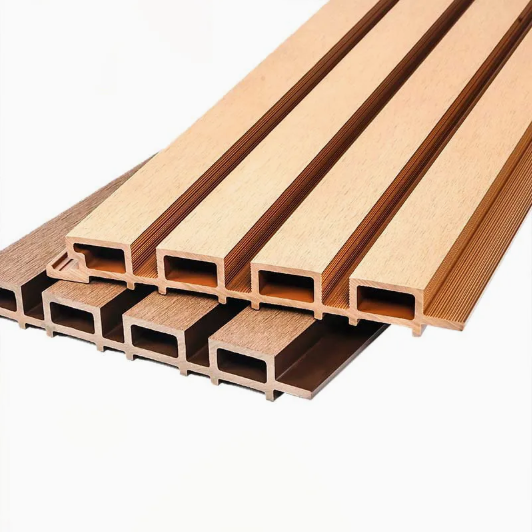
The model is our LT-WPC-WP165 co-extruded series in warm pine color. When communicating with Catalina, I picked four points most relevant to her project:
- Water absorption: below 0.8%.Valparaíso has frequent sea fog year-round, with humidity often above 80%. Ordinary pine has water absorption of 10%-20% – once sea fog condensation gets in, it doesn't come out. WPC barely absorbs water – sea fog condensation only stays on the surface, and the breeze dries it off.
- Surface layer thickness: ASA co-extruded layer no less than 0.5mm.The salt spray + UV combination by the sea is a nightmare for coatings. The ASA co-extruded layer is specifically designed to resist UV and salt spray corrosion – no chalking, no fading, no peeling. Aluminum composite panels typically have only a 0.02-0.03mm coating – an order of magnitude thinner.
- Salt spray test: color difference of only 2.1 after 2000 hours of neutral salt spray.While Valparaíso's salt spray isn't as intense as tropical islands, it's constant year-round. 2000 hours is equivalent to 83 consecutive days of extreme salt spray – a huge safety margin that real-world use will never reach. This data was the answer to Diego's question about salt spray.
- Wind load resistance: ≥28 MPa bending strength.Valparaíso's hillsides often experience strong sea winds. WPC's bending strength is more than sufficient to handle heavy wind loads – none of the loosening that plagues pine.
Full specifications are as follows:
|
Parameter |
Value | Plain English Translation |
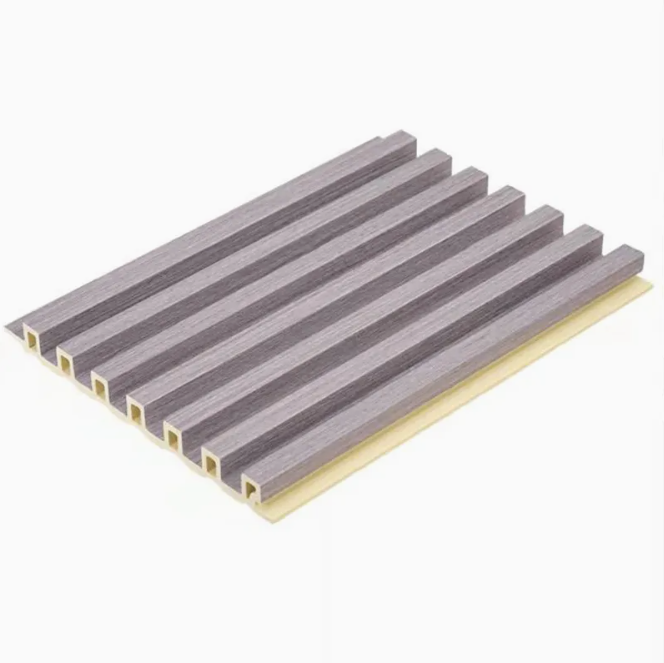
| Cross-section dimensions | 165mm × 21mm | Width-to-thickness ratio suitable for cladding, visually close to traditional timber proportions |
| Unit weight | Approx. 2.9 kg/m | Lightweight, friendly to furring strip load |
| Co-extruded surface | ASA alloy, thickness ≥0.5mm | Surface resists sun and salt spray – no chalking, no fading |
| 24h water absorption | ≤0.8% | Sea fog and rain can't penetrate – no breeding ground for mold |
| Bending strength | ≥28 MPa | Hillside sea breeze can't budge it |
| Salt spray test 2000h color difference | ΔE<2.1 | Minimal effect from sea salt spray |
| Xenon lamp aging 2000h color difference | ΔE<5 | Color change invisible to the naked eye after years of exposure |
| Flame retardancy | B1 grade, self-extinguishing | Fireplace sparks won't ignite the wall |
| Factory warranty | 25 years (non-load-bearing walls) | Longer than most home loans |
Three Options, One Table – The Total Cost Breakdown
Catalina later told me that the Mendozas' final decision wasn't because of any single impressive feature. It was because they laid out the total cost of all three options on the table and did the math:
| Comparison | Haining Longtime WPC Co-extruded Cladding | Pine Cladding (One More Replacement) | Fiber Cement Board (Coated) |
| Salt spray resistance | Excellent, 2000h ΔE<2.1 | Timber doesn't resist salt spray – rots in 7-8 years | Once coating fails, absorption spikes, salt spray accelerates aging |
| Water absorption | <0.8% | 10%-20% | Spikes when coating fails |
| Texture | Synchronized embossed 3D wood grain, warm feel | Natural wood grain – most beautiful, but highest maintenance | Blurred texture, cold and hard feel |
| Maintenance cost (20 years) | Almost zero | Replacement every 7-8 years, approx. 5,000-8,000 USD each time | High-pressure wash + recoat every 5-8 years |
| Installation method | Hidden clips, individual panel replaceable | Exposed nails, removal damages boards | Nailed, heavy panels |
| 20-year total cost | Medium-high initial + zero maintenance = Best value | Medium initial + ongoing replacement = Highest hidden cost | Medium initial + periodic recoating = Hidden high cost |
| Best for | Coastal owners who want a one-and-done solution | Owners willing to maintain regularly and pursue tradition | Projects accepting periodic maintenance |
Catalina's exact words: "This house is on a hill, with wind coming off the Pacific carrying salt and fog. Every time we replaced the exterior before, Mr. Mendoza would tell me 'this time it should last longer' – and every time it was disappointment. Now with WPC installed, he stood on the balcony and told me – 'Catalina, I finally don't have to think about this wall anymore.'"
Diego Sent a Photo Later
In April this year, as autumn arrived in Chile, Diego sent a photo – the house's new exterior glowing warm pine in the sunset, with Valparaíso's colorful hillside city in the background and the blue Pacific stretching to the horizon, and the old family photos he had always wanted to hang now mounted on the wall. He added a caption: "First winter without worrying about the walls. The photos are up. The house feels like home again."
For those of us in the building materials business, receiving feedback like this feels better than getting an order.
It also confirmed one thing for us: along South America's Pacific coast where salt spray, high humidity, and hillside winds combine, the real value of WPC cladding isn't about "looking good." It's that a nearly century-old house can finally be passed on with confidence.
If You're Also by the Sea and Tired of Exterior Maintenance
We don't rely on sales pitches. We recommend getting samples to see, touch, soak in salt water, and test in the sun yourself. That's how Diego was convinced.
Haining Longtime Industry Co., Ltd. has been manufacturing WPC wall panels for over 15 years, exporting to more than 50 countries worldwide, including Chile, Peru, Argentina, Mexico, Brazil, and other markets across the Americas. Our factory is located in Haining City, Zhejiang Province, China, with five large-scale production bases ensuring consistent quality and reliable supply.
Tell us where your project is, how far from the sea, what your local climate is like, and what color and texture you're looking for. We'll match the right specifications based on your actual situation.
- For samples, color swatches, or installation drawings, email our export team directly with "Coastal Cladding Inquiry" in the subject line. We'll reply with specific selection recommendations within 24 hours.
- Or visit our website at http://www.ltpvcfactory.comto submit your project information online.
For samples, quotes or technical consultation, please contact:
Official Website: http://www.ltpvcfactory.com
WhatsApp: +86 17757302351
Email: [email protected]
Sample Policy: Free samples and brochures are provided, with freight collect.