

 English
 Español
It all started with an email last August.
Our (Haining Longtime Industry Co., Ltd.) export team received an inquiry from Erik, a Swedish builder. The subject line was restrained but the content was resigned: "Archipelago cottage – timber facade failed again." He attached more than twenty photos: a traditional red Swedish summer cottage in the Stockholm archipelago, its exterior timber in terrible condition. Paint was peeling off in large sheets, black mold had grown deep into the board gaps, and several boards had warped and deformed, with clear freeze-crack marks visible along the edges. The classic result of island climate combined with Nordic winters.
Erik wrote in the email: "The owners, Mr. and Mrs. Andersson, are from Stockholm. This cottage has been in their family for generations – they come here for a few weeks each summer. They've replaced the exterior three times in the past ten years. Every time it was pine with red paint, and every time it failed within five years. Peeling paint, cracked boards, moldy joints – we've tried different paint brands and different application methods, but under this climate, the only difference is whether it fails in three years or five. Do you have something that means we don't have to keep staring at paintbrushes every year?"
After reading the email, I knew exactly what Erik was up against. The extreme climate of the Swedish archipelago is brutal on building materials – winter temperatures drop below -20°C, frequent freeze-thaw cycles cause moisture to freeze and expand repeatedly inside the boards, and summers bring long hours of sunlight and rain. Erik later told me that he had drawn up a simple table for the Anderssons, laying out the pitfalls upfront:
| Material Option | The Anderssons' Concern | Erik's Field Experience |
| Traditional red-painted pine | Already burned three times, don't want a fourth | Fails every 3-5 years in archipelago climate – freeze-thaw cracks paint and warps boards |
| Pressure-treated timber | Heard it's chemically treated, worried about toxins | Better than pine, but still cracks in Swedish winters – maintenance cycle only extends by a year or two |
| Fiber cement board (coated) | Looks too industrial, doesn't match traditional summer cottage | Coating ages in 5-8 years under freeze-thaw, absorbs water after damage, freeze-cracks anyway |
| WPC co-extruded cladding | Can you make it in Swedish red? Is the texture natural? | Erik had seen samples on a project in Norway but never used it in Sweden |
In other words, before contacting us, the Anderssons and Erik had already looked into every possible option. The conclusion was consistent: either it can't handle freeze-thaw, or the texture doesn't match a traditional cottage, or both. Erik's email carried a sense of "one last try."
Samples, Doubts, and a Video
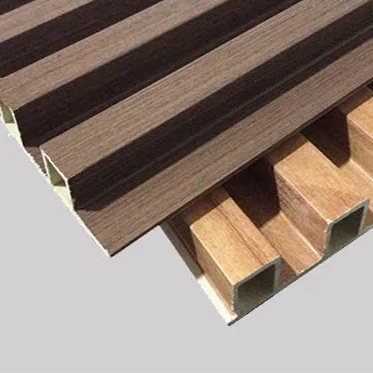
We sent Erik cut samples of our LT-WPC-WP165 co-extruded cladding in Swedish red (Falu red), with synchronized wood-grain embossing – the color matched to the standard tone of traditional Falu red paint. Three weeks later, he messaged us saying the Anderssons had placed the samples next to the original red-painted boards, comparing them for several days. They even poured water over them and let it freeze to see the effect.
Lars's exact words, relayed through Erik: "The color is almost identical to traditional Falu red, and the texture is three-dimensional – it doesn't feel like plastic. But our biggest concern is winter – can you guarantee it won't crack at -20°C?"
Facing this practical question, we didn't send a lab report. Instead, we pulled a real installation video from our factory archive – the same product installed in 2020 on a fjord holiday home in Bergen, Norway, shot in July 2025, five years after installation. The wall had endured five Norwegian winters of severe cold and freeze-thaw cycles. The color had mellowed slightly compared to new, but the wood-grain texture was intact – no cracking, no warping, no mold.
Lars's response: "If it survives Bergen winters, it survives Stockholm archipelago." We all breathed a sigh of relief on our end.
An Incident That Surprised Erik During Installation
The summer cottage had 68 square meters of exterior wall. Erik's crew planned to finish in five days. Here's the actual timeline:
| Day | Work Content | Time / Notes |
| Day 1 | Remove damaged old boards, inspect wall moisture barrier, repair substrate framework | Completed as planned |
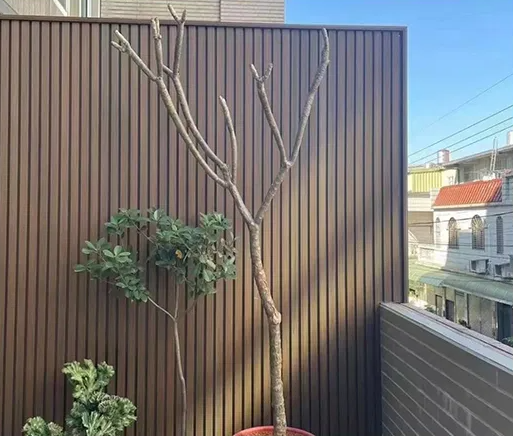
| Days 2-3 | Install new furring strips for leveling, lay moisture barrier and bottom starter profiles, begin panel installation | On schedule – one person can install about 16-18㎡ per day |
| Day 4 | Panel installation completed, install inside/outside corner trims and window surrounds | Ahead of schedule |
| Day 5 | Clean protective film, install top flashing, final walkthrough | Passed |
On the afternoon of Day 3, something happened that Erik remembered well. He called and asked: "What's the arrow on the back of your panels for?"
We explained: that's an installation direction indicator – the tongue and groove on WPC panels are directional. Installing with the arrow pointing up ensures proper drainage, preventing rainwater and meltwater from pooling in the grooves. This detail is especially important in a snowy, freeze-thaw-heavy environment like Sweden. Erik said: "I've been in this business for 20 years and never seen a manufacturer print installation direction on the back. You've thought of every detail."
What surprised Erik even more was the panel's performance during low-temperature installation. That morning the temperature was only 5°C, and he worried that WPC might become brittle and hard to cut in the cold. But with a fine-tooth saw, the edges came out clean and neat – no chipping at all. We told him that HDPE-based WPC has a brittle temperature below -40°C – Swedish winters, while cold, are nowhere near that extreme.
What Exactly Were the Specs of the Panels They Chose?
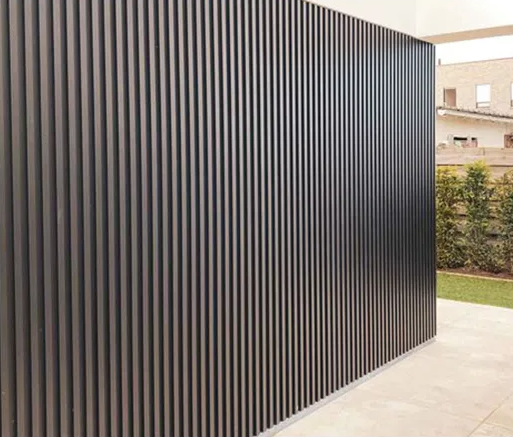
The model is our LT-WPC-WP165 co-extruded series, custom-colored in Swedish red (Falu red). When communicating with Erik, I picked four points most relevant to his project:
- Water absorption: below 0.8%.In the Swedish archipelago, moisture penetrating boards and repeatedly freezing and thawing is the main cause of exterior wall failure. Ordinary pine has water absorption of 10%-20% – water gets in, freezes, expands, and cracks the boards within a few winters. WPC barely absorbs water – freeze-thaw cycles have almost no effect on it.
- Surface layer thickness: ASA co-extruded layer no less than 0.5mm.Sweden's summers are short but intense, with strong UV plus reflection from snow and ice – this combination is extremely damaging to ordinary coatings. The ASA co-extruded layer is specifically designed to resist UV and extreme temperature swings – no chalking, no fading.
- Freeze-thaw testing: 2000 cycles (-40°C to +70°C) with no cracking.Winter lows in the Swedish archipelago hover around -20°C – our test temperature is far more severe than actual use conditions. This data was the answer to Lars's question about -20°C.
- Linear coefficient of thermal expansion: ≤3.5×10⁻⁵/°C.Sweden's winter-to-summer temperature range is 40-50 degrees. This coefficient means each meter of panel changes length by less than 1.5 millimeters between seasons – the recommended expansion gaps are more than sufficient.
Full specifications are as follows:
|
Parameter |
Value | Plain English Translation |
| Cross-section dimensions | 165mm × 21mm | Width-to-thickness ratio suitable for cladding, visually close to traditional timber proportions |
| Unit weight | Approx. 2.9 kg/m | Lightweight, friendly to furring strip load |
| Core material | 60% wood fiber + 35% HDPE + 5% additives | Recycled plastic + wood fiber, no preservative chemicals |
| Co-extruded surface | ASA alloy, thickness ≥0.5mm | Surface is extremely UV and weather resistant – freeze-thaw won't damage the core |
| 24h water absorption | ≤0.8% | Almost no water absorption after a day of soaking – water can't get in, so it can't freeze and crack |
| Bending strength | ≥28 MPa | Strong enough for wind pressure and snow loads |
| Freeze-thaw cycles | 2000 cycles (-40°C~70°C) | Far more severe than Swedish winters |
| Xenon lamp aging 2000h color difference | ΔE<5 | Color change barely visible after years of sun + snow reflection |
| Flame retardancy | B1 grade, self-extinguishing | Fireplace sparks won't ignite the wall |
| Factory warranty | 25 years (non-load-bearing walls) | Longer than most home loans |
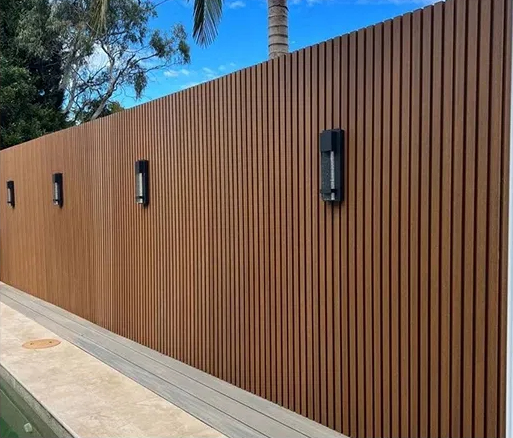
Three Options, One Table – The Total Cost Breakdown
Erik later told me that the Anderssons' final decision wasn't because of any single impressive feature. It was because they laid out the total cost of all three options on the table and did the math:
| Comparison | Haining Longtime WPC Co-extruded Cladding | Traditional Red-Painted Pine | Fiber Cement Board (Coated) |
| Freeze-thaw durability | 2000 cycles no cracking | Fails in 3-5 years | Coating ages in 5-8 years, cracks after freeze-thaw |
| Water absorption | <0.8% | 10%-20% | Spikes when coating fails |
| Texture | Synchronized embossed 3D wood grain, warm feel | Natural wood grain, but requires constant maintenance | Blurred texture, cold and hard feel |
| Color retention | ASA co-extruded, no fading or chalking | Needs repainting every 3-5 years | Needs recoating every 5-8 years |
| Maintenance cost (20 years) | Almost zero – just rinse with water | Approx. 30,000-50,000 SEK per repaint every 3-5 years | High-pressure wash + recoat every 5-8 years |
| Installation method | Hidden clips, individual panel replaceable | Exposed nails, removal damages boards | Nailed, heavy panels, heavy dust during cutting |
| 20-year total cost | Medium-high initial + zero maintenance = Best value | Low initial + ongoing maintenance = Hidden high cost | Medium initial + periodic recoating = Hidden high cost |
| Best for | Owners who don't want to repaint and do the math | Owners willing to maintain regularly and pursue tradition | Projects requiring fire safety and accepting periodic maintenance |
Erik's exact words: "This cottage is meant for relaxation, not for stress. Every summer you come here for vacation, and the first thing you do is spend days inspecting the exterior, touching up paint, repairing boards – that's not a vacation. Once WPC is installed, you don't touch it – that's what a real summer cottage should be."
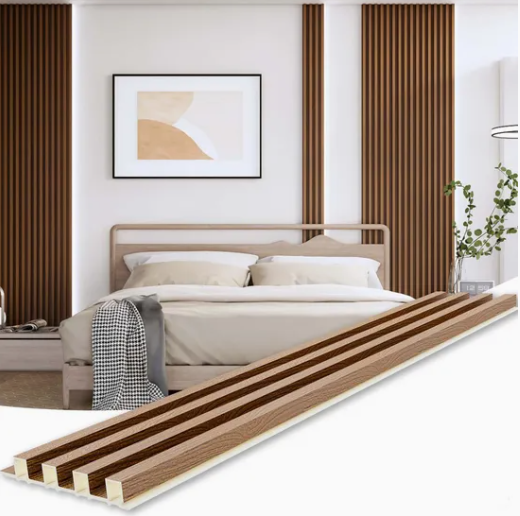
Lars Sent a Photo Later
In June this year, as summer arrived in Sweden, Lars sent a photo – the red cottage standing out against the archipelago's blue sky and green trees, the new Falu red wall glowing warmly in the sunlight. He added a caption: "First summer without a paintbrush in my hand. My wife says I'm much nicer to be around now."
For those of us in the building materials business, getting feedback like this feels better than getting an order.
It also confirmed one thing for us: in extreme climates like the Swedish archipelago where freeze-thaw cycles are the norm, the real value of WPC cladding isn't about "looking good." It's that it turns "painting the house every summer" from a chore into something you never have to think about.
If You're Also Tired of Exterior Maintenance in Cold Northern Climates
We don't rely on sales pitches. We recommend getting samples to see, touch, soak, and freeze yourself. That's how Lars was convinced.
Haining Longtime Industry Co., Ltd. has been manufacturing WPC wall panels for over 15 years, exporting to more than 50 countries worldwide, including Sweden, Norway, Finland, Canada, the United States, and beyond. Our factory is located in Haining City, Zhejiang Province, China, with five large-scale production bases ensuring consistent quality and reliable supply.
Tell us where your project is, what your winter low temperatures are, whether it's owner-occupied or a vacation home, and what color and texture you're looking for. We'll match the right specifications based on your actual situation – including custom colors like traditional Swedish Falu red.
- For samples, color swatches, or installation drawings, email our export team directly with "Cold Climate Exterior Inquiry" in the subject line. We'll reply with specific selection recommendations within 24 hours.
- Or visit our website at http://www.ltpvcfactory.comto submit your project information online.
For samples, quotes or technical consultation, please contact:
Official Website: http://www.ltpvcfactory.com
WhatsApp: +86 17757302351
Email: [email protected]
Sample Policy: Free samples and brochures are provided, with freight collect.