

 English
 Español
How a Napa Valley Winery Got Its Facade Transformed – Owner Said "Visitors Think We Built a Whole New Building"
It all started with an email last May.
Our (Haining Longtime Industry Co., Ltd.) export team received an inquiry from Robert, the owner of a winery in Napa Valley. The subject line was direct: "Winery facade – looks like it's 100 years old (and not in a good way)." He attached more than twenty photos: a 1980s tasting room with an exterior made of antique cultured stone. After four decades of sun exposure and Napa Valley's extreme day-night temperature swings, the stone had developed extensive cracking, fading, and localized spalling. In several spots, you could even see the bare cement substrate underneath.
Robert wrote in the email: "We host over 20,000 visitors a year. The tasting room facade is the first impression. Right now, it looks like an abandoned barn, not a place that sells $200 bottles of wine. We've tried repairs, re-grouting, and coatings – nothing has fixed it permanently. Is there something that can make this wall look like 'old money' without major demolition?"
After reading the email, I knew exactly what Robert was dealing with. In Napa Valley, a winery's image is its pricing power. When visitors drive an hour from San Francisco and the first thing they see is a dilapidated wall, their expectations for the wine drop immediately. Robert later told me that he had drawn up a simple table, laying out the pitfalls of each option upfront:
| Material Option | Robert's Concern | The Real Pain Point |
| Natural cultured stone (replacement) | Construction time too long – can't shut down the winery | Demolition + reinforcement + installation = at least 45 days – tasting room would have to close |
| Antique stone-look coating (spray-on) | Texture not good enough for the winery's vibe | Coating cracks within years, repairs look like patches |
| Artificial cultured stone (cement-based) | Too uniform, too new – lacks history | Repetitive texture, uniform color – clearly factory-made |
| PU stone (polyurethane imitation stone) | Does it look like plastic? Can it replicate century-old stone? | Never used before, needs verification |
In other words, before contacting us, Robert had already looked into every possible option. The conclusion was consistent: either the timeline is too long and hurts business, or the texture doesn't match the winery's price point, or both.
Samples, Doubts, and a Video
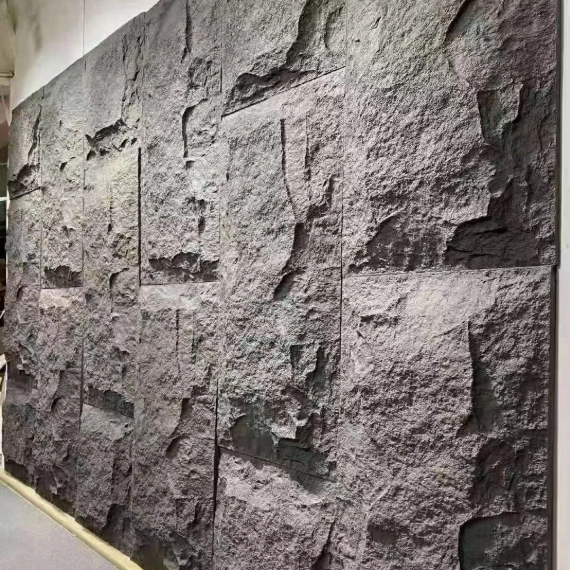
We sent Robert samples of our LT-PU-Stone H006 aged stone series – a weathered sandstone color resembling stone commonly found in California's Sonoma region, featuring natural holes, moss marks, and irregular edges, size 600×600×40mm. Two weeks later, he messaged us saying they had placed the samples next to the winery's oldest stone wall, comparing them side by side for days. They even poured red wine over them to test for staining.
Robert's exact words: "The holes and weathering marks look almost identical to the old wall, and the color is very close. But once installed, won't the joints look fake?"
In response, we sent an installation video from our factory: two workers applying adhesive and installing PU stone on a flat wall, with uniform 10mm joints. After grouting, the overall effect looked completely natural. Robert's response: "If this can fool Napa wine tourists, it'll work for us."
What Happened During Those Two Weeks of Installation
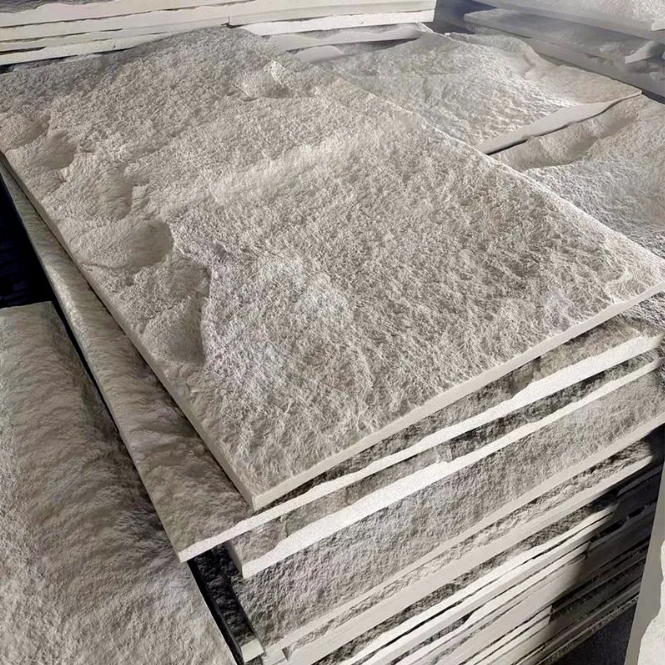
The tasting room had 145 square meters of exterior wall. Robert gave the crew two weeks (to avoid peak tasting season), and they actually finished in 12 days. Here's the actual timeline:
| Day | Work Content | Time / Notes |
| Days 1-2 | Clean old wall of dust and loose material, repair substrate cracks | Completed as planned |
| Days 3-8 | Layout marking, apply structural adhesive, install PU stone | On schedule – peak day reached 25㎡ installed |
| Days 9-11 | Continue installation, handle window openings, corners, and trims | All smooth |
| Day 12 | Final inspection, grouting, cleaning, final walkthrough | Passed – winery operations unaffected |
Robert called on Day 6: "We were hosting tasting groups all weekend. The work was happening on the back side – guests didn't notice anything. In the past, every renovation meant shutting down for a week. This time we didn't have to."
PU stone requires no demolition, no cement curing time, no heavy machinery. It's low-noise and low-dust, and work can be done in sections. The winery stayed open, visitors kept tasting, and the wall quietly became new.
What Exactly Were the Specs of the PU Stone They Chose?
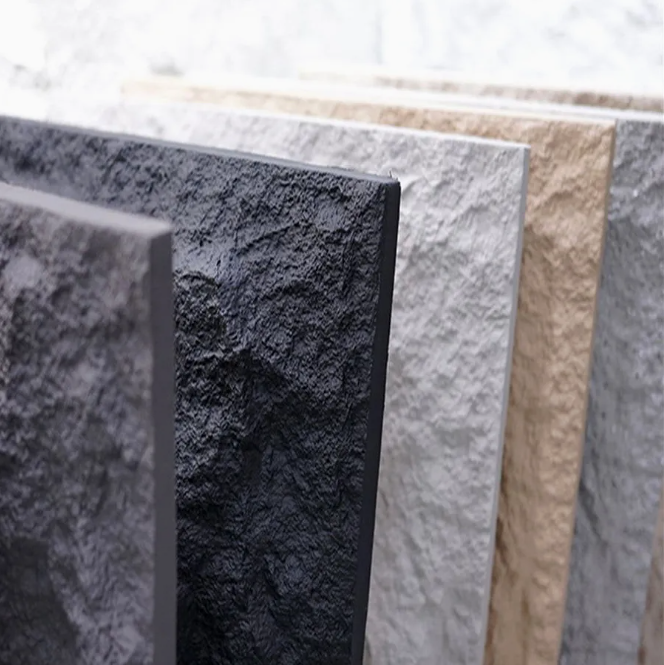
The model is our LT-PU-Stone H006 aged stone series. When communicating with Robert, I picked four points most relevant to his project:
- Weight: only about 5 kg per square meter.Natural cultured stone weighs 25-30 kg per square meter – PU stone is only one-fifth to one-sixth the weight. The old wall required absolutely no reinforcement, saving time on structural inspection and strengthening.
- Texture source: molded from a historic building.Our molds didn't come from newly quarried stone – they came from a weathered stone wall on a century-old building in California's Sonoma region. Natural holes, moss marks, weathered edges – not artificially distressed, but actual marks of time reproduced.
- Installation method: direct overlay, no demolition required.PU stone is bonded directly onto the old wall with structural adhesive – no need to remove the existing cultured stone. No demolition = no debris = no noise = no shutdown.
- Custom color: matched to the winery's existing tones.Based on the photos and color samples Robert sent, we specially formulated a weathered Sonoma sandstone color, allowing the new wall to blend perfectly with the winery's existing stone elements.
Full specifications are as follows:
| Parameter | Value | Plain English Translation |
| Material | High-density polyurethane + weather-resistant surface layer | Rigid polyurethane, not foam |
| Texture | Molded from century-old building, weathered sandstone color | Authentic marks of age |
| Dimensions | 600×600×40mm | Medium format, suitable for cultured stone effect |
| Unit weight | Approx. 5 kg/m² | 1/5 to 1/6 the weight of real stone |
| Installation method | Structural adhesive bonding | No demolition, no reinforcement, no shutdown |
| 24h water absorption | ≤0.5% | Irrigation moisture won't penetrate |
| Fire rating | B1 grade, self-extinguishing | — |
| UV resistance | Weather-resistant surface layer | Napa Valley sun won't cause significant fading |
| Factory warranty | 10 years (non-load-bearing walls) | — |
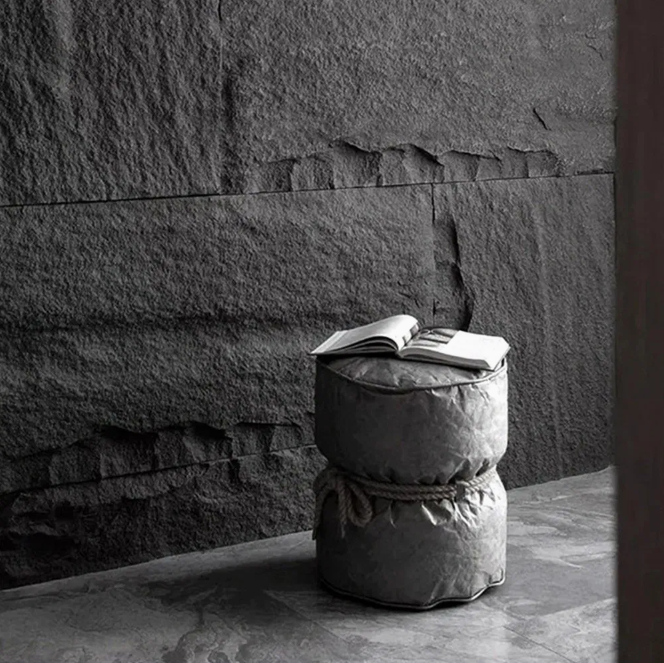
Three Options, One Table – The Total Cost Breakdown
Robert later told me that his final decision wasn't because of any single impressive feature. It was because he laid out the total cost of all three options on the table and did the math:
| Comparison | Haining Longtime PU Stone | Natural Cultured Stone (Replacement) | Stone-Look Coating (Spray-on) |
| Construction time (145m²) | 12 days | 45 days | 15 days |
| Demolition required | No – direct overlay | Yes – demolition + removal | No – direct spray |
| Business impact | Minimal | Tasting room would need to close for at least a month | Medium (noise, odor) |
| Texture realism | Molded from century-old building, authentic weathering | Natural texture, but new stone lacks character | Flat coating, no three-dimensionality |
| Durability (20 years) | Almost no maintenance required | Requires periodic waterproof sealing | Requires recoating every 5-8 years |
| 20-year total cost | Medium initial + zero maintenance = Best value | High initial + ongoing maintenance = Highest cost | Low initial + periodic recoating = Hidden high cost |
| Best for | Wineries and commercial spaces wanting image upgrade without shutdown | New construction or high-budget rebuilds | Budget-limited projects accepting periodic maintenance |
Robert's exact words: "We sell experiences, not grape juice. When guests drive an hour and a half from San Francisco, if the first thing they see is a crumbling wall, their mental price for that bottle of wine drops by half automatically. After the PU stone was installed, guests kept asking me 'did you guys build a whole new building?' – that sentence alone was worth every cent of the material cost."
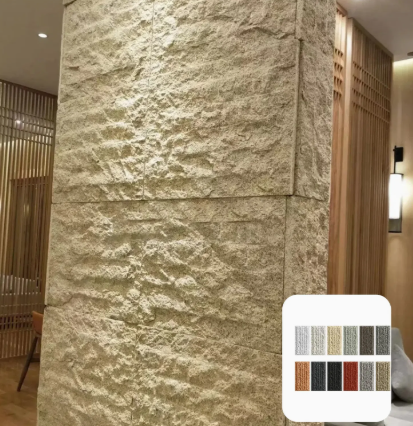
Robert Sent a Message Later
In May this year, Napa Valley entered its peak tourist season. Robert sent a photo – the tasting room's new stone wall glowing warm sandstone in the California sun, with a few visitors' cars parked nearby. He added a caption: "Guests keep asking who our architect was. I tell them it's not an architect, it's a Chinese factory. They don't believe me."
For those of us in the building materials business, receiving feedback like this feels better than getting an order.
It also confirmed one thing for us: in commercial spaces where image is pricing – wineries, boutique hotels, high-end retail – the real value of PU stone isn't about saving money. It's that it turns an old wall into a business card.
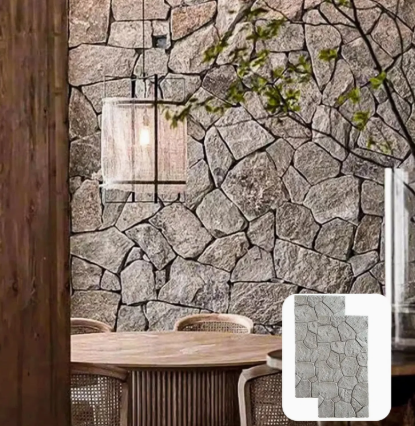
If You're Also Running a Space That Needs an Image Upgrade
We don't rely on sales pitches. We recommend getting samples to see, touch, and test for yourself. That's how Robert was convinced.
Haining Longtime Industry Co., Ltd. has been manufacturing PU stone and related decorative materials for over 10 years, exporting to more than 40 countries worldwide, including the United States, Australia, the United Kingdom, France, and beyond. Our factory is located in Haining City, Zhejiang Province, China.
Tell us where your project is, whether it's a winery, hotel, or retail space, and what stone texture and color you're looking for. We'll match the right style based on your actual situation.
- For PU stone samples, color swatches, or installation drawings, email our export team directly with "Commercial Facade Inquiry" in the subject line. We'll reply with specific selection recommendations within 24 hours.
- Or visit our website at http://www.ltpvcfactory.comto submit your project information online.
For samples, quotes or technical consultation, please contact:
Official Website: http://www.ltpvcfactory.com
WhatsApp: +86 17757302351
Email: [email protected]
Sample Policy: Free samples and brochures are provided, with freight collect.