

 English
 Español
More and more consumers ask one question when renovating: Is this material environmentally friendly? For WPC wall panels, the answer is relatively positive. But what exactly makes them environmentally friendly – is it just marketing or solid fact? This article explains the logic clearly.
1. Why are WPC wall panels considered an environmentally friendly material?
The environmental friendliness of WPC wall panels is mainly reflected in three aspects: raw material source, production process, and safety in use.
Regarding raw materials, the wood fiber in WPC panels comes from offcuts, sawdust, and shavings from wood processing plants, not from logging natural forests. These waste materials would otherwise be burned or landfilled. The plastic component uses HDPE or PVC, a large proportion of which comes from recycled post-consumer plastic such as water bottles and shampoo bottles. Reputable manufacturers clearly label the recycled content ratio, typically above 60%.
Regarding the production process, WPC panels are manufactured using a hot-extrusion process without adding adhesives. Traditional MDF or plywood require urea-formaldehyde resin and other formaldehyde-containing glues, while WPC panels rely on high temperature to fuse wood powder and plastic together, with very few chemical additives. Wastewater and exhaust gases generated during production are treated before discharge, meeting environmental protection requirements.
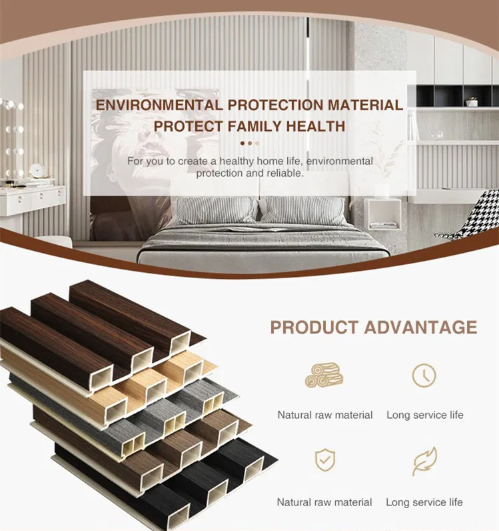
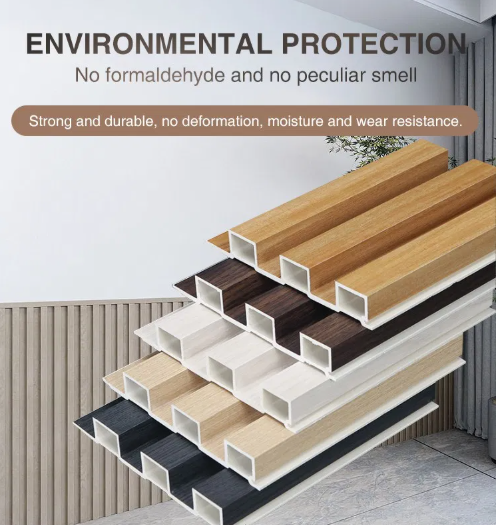
Regarding safety in use, WPC panels contain no formaldehyde and do not release harmful gases indoors. The surface is not painted, so there is no VOC off-gassing issue. Even in high-temperature environments, they do not produce unpleasant odors. This is an important consideration for families with pregnant women, infants, or elderly members.

2. Environmental comparison between WPC panels and common materials
For a more intuitive understanding, WPC panels can be compared with several common wall materials.
Solid wood wainscoting: Natural wood itself is non-toxic, but it requires cutting down trees. If the source is unclear, it may come from illegally logged natural forests. Additionally, the paint or wood wax oil on the surface contains VOCs, and there is an odor during application and drying. Solid wood has a high carbon footprint due to high energy consumption in transport and processing.
Latex paint: VOC emissions per square meter are low, but latex paint contains film-forming agents, preservatives, and other chemical components, requiring ventilation after application. The paint buckets are hazardous waste and can pollute the environment if improperly disposed of. Furthermore, latex paint needs to be reapplied every five to eight years, repeatedly generating waste.
Wallpaper: Wallpaper itself may not contain formaldehyde, but applying it requires a large amount of adhesive, which is one of the main sources of indoor formaldehyde. Wallpaper has a short service life, and when replaced, the old wallpaper and adhesive residue are difficult to recycle and typically end up in landfills.
PVC foam board: Completely waterproof but made from petroleum-based materials, which are non-renewable. The production process has energy consumption and emissions. PVC itself is non-toxic, but low-quality products may use lead salt stabilizers, posing heavy metal risks. PVC is difficult to degrade after aging.
WPC panels: Main raw materials are recycled waste, reducing deforestation and plastic pollution. The production process uses no glue and contains no formaldehyde. Long service life reduces replacement frequency. The product itself can be recycled – after disposal, it can be crushed and re-extruded into new panels.
From a life cycle assessment perspective, the overall environmental impact of WPC panels is lower than that of solid wood and PVC, but higher than purely inorganic materials such as ceramic tiles. However, the firing process for ceramic tiles consumes a great deal of energy.
3. Environmental certifications available for WPC panels
If you want to purchase a product with verifiable environmental credentials, pay attention to the following certifications.
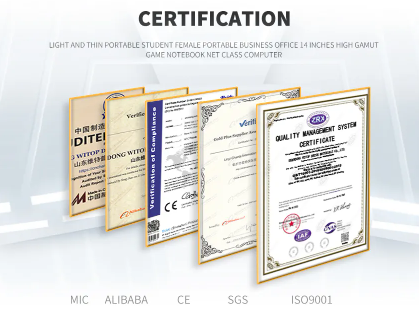
FSC certification: Forest Stewardship Council certification, proving that the wood raw material comes from sustainably managed forests. If the wood powder in WPC panels comes from FSC-certified wood processing waste, it is a plus.
GREENGUARD Gold certification: A low VOC emission certification from UL in the United States. The Gold level is suitable for schools and hospitals. Products with this certification are tested in dynamic environmental chambers and have extremely low VOC emissions, safe for human health.
E0 grade or CARB Phase 2: Formaldehyde emission standards. E0 grade requires formaldehyde emissions below 0.05 mg per cubic meter. CARB Phase 2 is a stricter standard from the California Air Resources Board. Reputable WPC panels can achieve formaldehyde not detected.
ISO 14001 environmental management system certification: Proves that the manufacturer has systematic environmental management measures, including wastewater and exhaust gas treatment, solid waste recycling, etc.
SGS test report: Reports issued by third-party testing agencies. You can check specific test results such as formaldehyde content, VOC content, heavy metal content, etc.
When purchasing, do not rely solely on the word environmentally friendly written on the seller's website. Request a stamped copy or scanned copy of test reports.
4. Application of WPC panels in green buildings
In green building rating systems such as LEED and BREEAM, using WPC panels can contribute to earning points.
In LEED v4.1, using materials with recycled content can earn points in the Materials and Resources category. The recycled wood powder and recycled plastic in WPC panels can be counted. Additionally, WPC panels contain no formaldehyde, helping to earn points for low-emitting materials. If the product is GREENGUARD Gold certified, it directly proves compliance.
For projects pursuing green building certification, it is recommended to choose WPC panels with environmental certifications and keep product specification sheets and test reports as documentation.
5. Some claims that need clarification
Regarding the environmental friendliness of WPC panels, some exaggerated or incorrect claims exist in the market. Here are a few clarifications.
- Claim 1: WPC panels are 100% biodegradable. In fact, the plastic portion of WPC takes a very long time to degrade and is not biodegradable in the composting sense. A more accurate term is recyclable, not biodegradable.
- Claim 2: WPC panels are zero-carbon. Any industrial production has carbon emissions, and WPC is no exception. It is more accurate to say that its carbon footprint is relatively low compared to solid wood and PVC.
- Claim 3: WPC panels are completely non-toxic. Reputable products are indeed non-toxic, but low-quality products may contain harmful additives. Therefore, the key is to choose qualified products, not to blindly believe that all WPC is non-toxic.
6. How to choose environmentally friendly WPC panels
If environmental friendliness is an important consideration for you, follow these steps.
- Step 1: Ask the seller for test reports. Focus on formaldehyde content (should be not detected), VOC content, and heavy metal content (lead, cadmium, mercury, etc.).
- Step 2: Ask about the recycled content ratio. Reputable manufacturers will disclose this honestly, typically between 60% and 80%. Higher ratios are more environmentally friendly but may affect strength and color consistency – a balance is needed.
- Step 3: Check for GREENGUARD or similar certifications. Certified products are more reliable.
- Step 4: Smell the sample. If there is no pungent odor when opening the sample package, the additives have been properly used.
- Step 5: Inquire about the manufacturer's recycling policy. Some manufacturers offer old panel recycling services, where discarded panels can be sent back to the factory for reprocessing.
Summary
WPC panels are a relatively environmentally friendly wall material, especially suitable for consumers who want the beauty of wood while reducing environmental impact. Their main environmental value lies in using recycled waste, containing no formaldehyde, having a long service life, and being recyclable. However, be rational and do not believe exaggerated claims such as zero-carbon or completely biodegradable.
Choosing certified products with test reports is the only way to achieve both good looks and environmental responsibility.
All of our WPC products come with SGS test reports and GREENGUARD Gold certification. The recycled content ratio is clearly marked on the factory report. Contact customer service to request them.
For samples, quotes or technical consultation, please contact:
Official Website: http://www.ltpvcfactory.com
WhatsApp: +86 17757302351
Email: [email protected]
Sample Policy: Free samples and brochures are provided, with freight collect.