

 English
 Español
A common situation we see: a customer sends a photo of a living room that looks stunning — marble flooring, floor-to-ceiling windows, a large leather sofa — then reveals the real concern: the TV sound is messy and conversations echo across the room. This is not an isolated case. Hard surfaces such as tile, glass and painted drywall bounce sound waves around, turning a beautiful living space into an acoustically uncomfortable one.
The conclusion is simple: you do not need a full recording studio build-out. Placing acoustic wall panels on the right wall, with the right base material and finish, can reduce echo, improve dialogue clarity and give the room a more intentional design feel. As a wall panel factory serving wholesale buyers, project contractors and interior designers, we often help clients translate a design idea into a workable product selection. The key is to know which wall to treat, what performance level is needed, and which visual direction fits the space.
Why Acoustic Wall Panels Belong in a Living Room
Conclusion first: the main goal is to control reverberation and improve speech clarity, not to fully soundproof the room. The right panel choice makes the space sound as good as it looks.
In a typical living room, the main reflective surfaces are the floor, windows and plain walls. When sound waves hit these surfaces, they bounce back and become audible as echo. You notice it when the TV dialogue becomes less intelligible, when loud music feels harsh, or when children running across the room create an unexpected level of noise.
- TV dialogue is difficult to understand even at a high volume.
- Music playback feels thin or boomy.
- Conversations in the room seem to carry the sound of the room itself.
- Noise from an adjoining hallway or kitchen disturbs the living area.
By choosing a panel structure with acoustic properties — for example, a slat panel with a polyester felt backer or a WPC composite board — you address the reflective surface directly. The material absorbs mid-to-high frequency sound, while the slatted profile helps scatter remaining reflections. This combination works effectively on a large wall without requiring a floor-to-ceiling installation.
Common living room panel sizes: 1220 × 2440 mm and 1220 × 2800 mm
Recommended thickness range for acoustic use: 8 mm to 12 mm
Typical fire rating available: B1 grade
Living Room Acoustic Panel Ideas That Solve Real Problems
Always start from the function of the wall, then choose the finish. Below are scenarios we see most often in residential projects.
Media Wall Ideas for Movie Nights
For a TV wall, the priority is both optical comfort and sound control. A slatted design keeps the wall visually textured without making the room feel darker. The WPC akupanel style with a polyester felt base is a proven choice because it reduces flutter echo behind the TV and adds a warm natural look. modern WPC akupanel slat panels work well for this purpose.
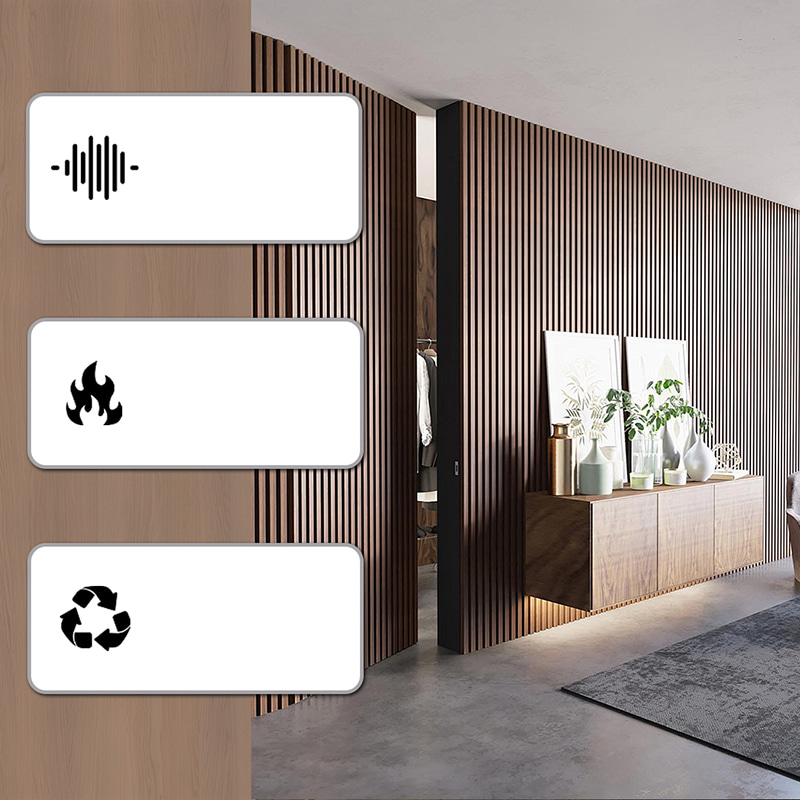 WPC Slatted Acoustic Wall Panels for TV Wall Sound ControlThese WPC akupanels feature a polyester felt base and a slatted design that reduces flutter echo behind a TV while adding a warm natural look. They offer sound absorption and are made from eco-friendly wood-plastic composite with waterproof properties.View Product →
Full-Wall Feature Behind the Sofa
When the sofa wall dominates the visual field, a solid and continuous surface creates order in the room. Bamboo wood fiber integrated panels deliver a smooth finish and a reasonably even acoustic benefit across the entire wall. Unlike some delicate decorative boards, these panels resist impacts from daily use and can be wiped clean easily. An eco-friendly bamboo wood fiber wall panel is a practical example for a family living room because it balances visual impact, durability and installation cost.
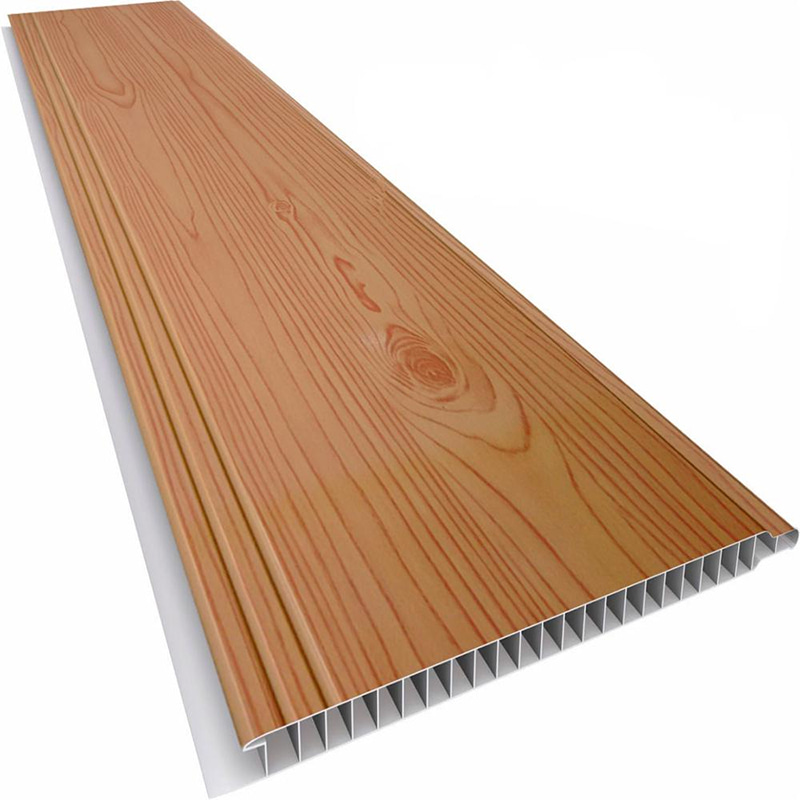 Bamboo Wood Fiber Integrated Wall Panels for Smooth WallsThese bamboo wood fiber composite panels provide a smooth, durable surface with sound insulation up to 25dB. Their impact resistance and easy cleaning make them suitable for family living rooms where a continuous wall finish is desired.View Product →
Open-Plan Separation with Fluted Panels
In an open living and dining arrangement, noise from one zone travels into the other. A fluted wall divider behaves like a partial acoustic screen. fluted WPC interior cladding wall panels offer a decorative slat pattern that matches modern furniture, while the composite core keeps the structure stable. For readers comparing panel options before ordering, this article on how to choose the right wall panel for your home covers the basics in more depth.
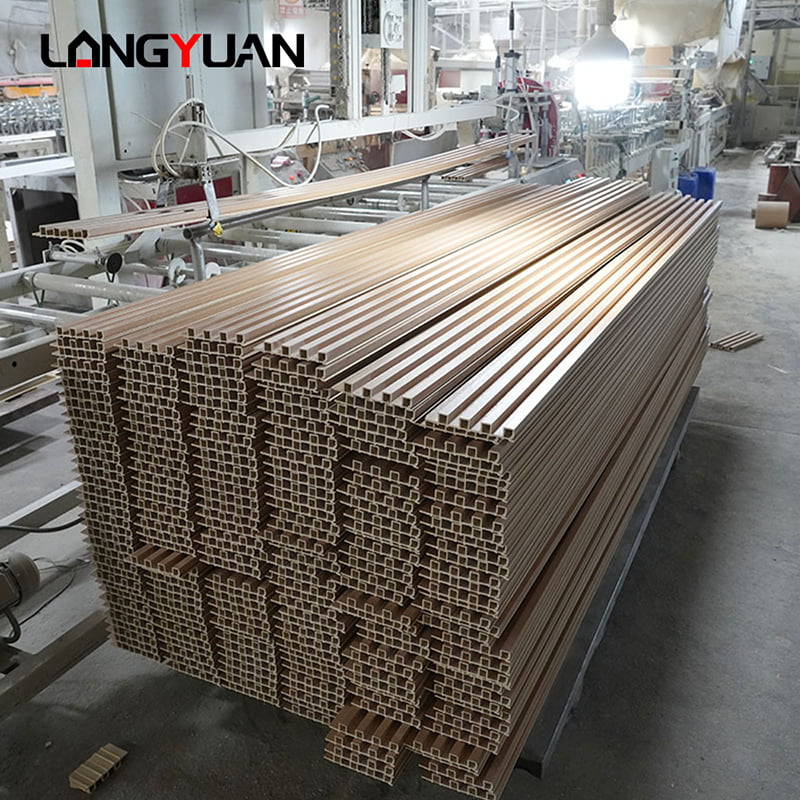 Fluted WPC Interior Cladding Panels for Acoustic DividersFluted WPC panels serve as decorative room dividers with a sound-absorbing effect. Their wood-plastic composite core ensures stability, while the fluted pattern complements modern furniture in open-plan layouts.View Product →
Reading Corner or Study Nook
A quiet corner for reading is often exposed to the noise of the rest of the living room. Applying a single accent panel with an absorbent backing can make a noticeable difference. The construction matters more than the surface: choose a board with a foam or felt layer that performs at speech frequencies, rather than a purely decorative laminate.
Echo Control in the Ceiling Area
In rooms with high ceilings, the ceiling contributes a significant part of the reflected sound. If the ceiling is flat and hard, a simple application of grooved or grille-style panels can break the reflection path. This works especially well in a living room connected to a staircase or atrium.
How to Choose the Right Material Before You Order
Conclusion first: the material decision affects acoustic performance, installation method, fire safety rating and the final look. Do not start with the colour; start with the base structure.
| Material | Acoustic Benefit | Best For | Fire Rating | Maintenance |
|---|---|---|---|---|
| WPC acoustic slat panels | High (with felt backer) | TV walls, feature walls | B1 grade available | Wipe clean |
| Bamboo wood fiber panels | Medium | Full-wall installation | B1 grade available | Wipe clean |
| PVC wood grain panels | Low to medium | Accent walls | B1 grade available | Wipe clean |
| SPC wall panels | Low to medium | Bathroom or high-humidity rooms | Flame retardant | Wipe clean |
In our factory, the most common living room panel sizes are 1220 × 2440 mm and 1220 × 2800 mm, with thicknesses from 3 mm up to 18 mm. For acoustic use, the usual range is 8 mm to 12 mm for WPC boards and 9 mm to 12 mm for bamboo wood fiber boards. Thicker panels tend to absorb slightly more low-frequency sound but also become heavier and more expensive to ship.
Fire Rating and Safety Requirements
For residential projects, a B1 fire rating is usually sufficient. If the project includes a hotel or commercial space, the requirement may be stricter. We can produce panels with a B1 fire-proof surface coating on the PVC or WPC base. Verify the exact certification with your supplier before placing a bulk order.
Surface Finishes and Custom Colors
The surface layer determines how the room feels. Wood grain films, carbon crystal surfaces, UV marble prints and self-adhesive films are the main options. For a living room, wood grain remains timeless, while plain matte colours suit a cleaner modern style. Our facility supports custom color matching and custom printing films for bulk orders.
Installation Considerations That Save Time and Money
Installation is often where projects go wrong. A qualified installer will assess the wall condition before mounting. In most cases, adhesive is enough for flat, dry walls. For uneven surfaces, a metal or wood frame provides a reliable base, although it reduces the effective room area by a few centimetres.
- Measure the wall surface accurately.
- Check flatness with a straightedge and sand any uneven spots.
- Apply adhesive in a snake pattern or use concealed clips.
- Press the panel firmly and check alignment.
- Leave a small gap at the edges to accommodate expansion.
- Clean the surface after installation with a dry cloth.
Lighting can dramatically affect the perceived quality of an acoustic panel. If you install slat panels behind the TV, consider a subtle LED strip or spotlight. The light creates depth and highlights the texture without increasing the noise level. For more installation detail, see our how to install PVC wall panels guide.
Frequently Asked Questions
Q1: Do acoustic wall panels actually reduce noise in a living room?
Yes. They reduce echo and reverberation, which makes the noise in the room feel quieter and speech clearer. They do not block sound travelling through walls; for that, structural insulation is required.
Q2: Can I install acoustic panels myself?
In many cases, yes. Lightweight PVC or WPC panels can be installed with adhesive or clips. However, we recommend hiring a professional if the wall is uneven or if the panels are large.
Q3: What panel thickness is best for a living room?
For acoustic performance, 8 mm to 12 mm is a practical range for WPC-based panels. For a full-wall decorative look, 9 mm bamboo wood fiber panels are common. Thicker panels are possible but heavier.
Q4: Do acoustic panels require special cleaning?
No. A soft dry cloth is usually enough for laminated or coated surfaces. Avoid aggressive chemical cleaners because they may damage the surface film.
A living room should not force you to choose between looking stylish and sounding comfortable. The right wall panel solution, chosen with a clear understanding of the wall to treat and the performance to achieve, delivers both. If you are planning a residential project or a batch order for distribution, spend time on the base material first, then select the surface finish. Our team works with wholesale buyers and project contractors to confirm the panel specification, verify the fire rating and arrange samples before mass production.